

Which rare devotional items do you really recognize?
Last updated: October 29, 2026
Quick Summary
You can identify rare devotional items by looking for limited production, fragile materials, and provenance, such as a signed piece or a pilgrimage inscription. Ten types of objects with identifying features include the 18th-century XL rosary, bronze crucifixes, plaster angel wall consoles, and the wax bust of Mary by Charles Mailard.
- A signed wax bust of Mary by Charles Mailard costs €35 in our collection.
- An 18th-century XL rosary is 136 cm long, with an 8 cm Lourdes cross.
- An antiquarian Missale Romanum from 1920 is listed at €990.
- Never clean porous materials such as plaster, wax, and celluloid with water.
- An unusually low price for a rare object always calls for extra scrutiny.
Table of contents
- What makes devotional items rare and collectible
- Ten rare devotional items and how to identify them
- How to identify antique religious objects by patina, wear, and casting seams
- Identifying old rosaries: beads, centerpiece, and cross
- Collecting pilgrimage medals: pilgrim badges and travel relics
- Compare wooden or plaster religious statues
- Common forgeries and replicas by object type
- How to safely clean and store a rare devotional object
- Frequently Asked Questions
What makes devotional items rare and collectible
Identifying rare devotional items starts with understanding why some objects are scarce and others are not. Devotional items are religious objects used by believers in their devotions, from rosaries and statues of saints to pilgrimage medals and reliquaries.
Scarcity usually results from limited production. A plaster statue from a small monastery workshop is rarer than a mass-produced cast. Fragile materials such as wax, celluloid, and plaster also survive less often than bronze or porcelain. Provenance completes the picture: a signed piece or an object with a pilgrimage inscription tells a story collectors seek.
Rarity versus market value: realistic price estimates
Rarity and market value do not always go hand in hand. An object can be unique and still fetch little if there is hardly any demand for it.
Realistic prices in our collection vary. A signed wax bust of Mary by Charles Mailard costs €35, while an 18th-century XL rosary sells for €320. An antiquarian Missale Romanum from 1920 is listed at €990.
Ten rare devotional items and how to identify them
Below are ten types of objects, each with features to look out for.
- 18th-century XL rosary - Pay attention to its length, the inscription on the cross, and the centerpiece. A Lourdes cross bearing "DE N DAME DE LOURDES SOUVENIR" and a puffed heart with an image of Bernadette point to a devotional item with a pilgrimage origin.
- Bronze crucifix from around 1800 - Solid bronze, an INRI inscription, and a finely crafted corpus. Workmanship on both sides is a sign of careful casting.
- Copper chalice and ciborium - A priest's set from the 1920s-30s can be identified by its proportions: the chalice is for wine, the ciborium for communion. Belgian copperware often has a warm, even patina.
- Plaster angel wall console - Hollow plaster, heavy, with hanging hooks. This kind of church furnishing from around 1890 is rare outside a church setting.
- Missale Romanum - Red leather, gold lettering, and gilt edges. Check the title page and publisher to determine the date.
- Silk icon of O.L.V. of Perpetual Help - Woven silk in an original frame, depicting Mary, the infant Jesus, and the archangels Michael and Gabriel.
- Fostoria "Silver Mist" Madonna - Frosted glass with a satin finish and the original factory sticker on the base.
- Leerdam Madonna by Steph Uiterwaal - Art Deco glassware from 1929, recognizable by its clean lines, even without a monogram.
- Rosary with reliquary - A cross that opens with a fine screw, with inscriptions that reveal its origins.
- Charles Mailard wax bust of the Virgin Mary - Cire figures from the 1930s, signed on the back.
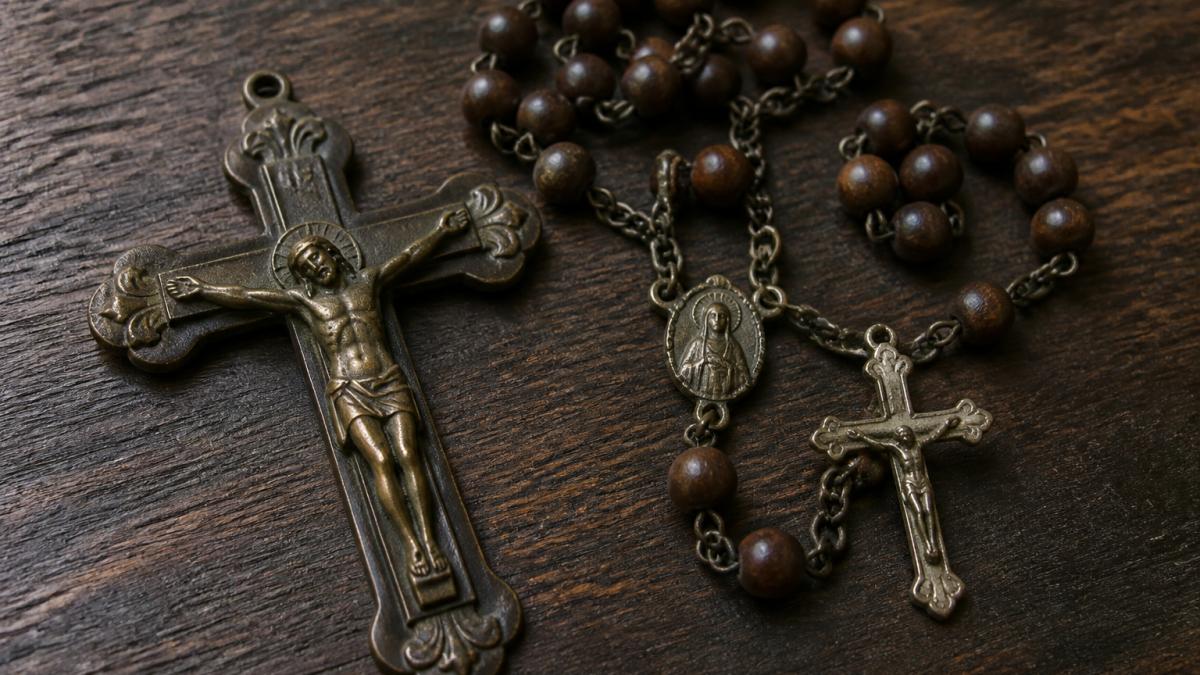
From an 18th-century XL rosary to Charles Mailard's wax bust of the Virgin Mary
Two contrasting pieces from the list show the breadth of religious objects. The rare 18th-century XL rosary is 136 cm long, with an 8 cm Lourdes cross and a centerpiece depicting the Basilica of Lourdes and the apparition to Bernadette. A piece like this tells both a story of production and one of pilgrimage.

At 10 cm tall, Charles Mailard's wax bust of the Virgin Mary is an intimate piece. This signed cire figure from the 1930s reflects the French tradition of devotional wax figures. Small and fragile, it is therefore rare to find one in pristine condition.
How to identify antique religious objects by patina, wear, and casting seams
Identifying antique devotional objects comes down to one question: is the wear consistent with the age? Patina is the natural aging layer on a surface, formed by time, light, and touch. On bronze, it should be deep and warm, not evenly applied.
Casting seams are useful clues in metalwork. Seams from hand casting are often irregular; machine-made work has cleaner lines. With plaster, look for grain texture and hollow walls. With wax and celluloid, hairline cracks and yellowing are good signs of age.
A common mistake is confusing wear with damage. Worn gilding exactly where hands hold the object is a sign of authenticity. Fresh scratches in a place no one touches call for an explanation.
Identifying old rosaries: beads, centerpiece, and cross
Identifying old rosaries requires attention to three components: beads, centerpiece, and cross. A rosary is a prayer cord with a fixed sequence of beads, and its finish is what reveals its age.
Wood, glass, or bone beads are often hand-turned and therefore not quite identical. The centerpiece may be simple or feature an ornate medallion, sometimes depicting Mary or a basilica. The cross often bears inscriptions referring to a pilgrimage site.
For a deeper explanation of the features of each component, we have written a separate guide on how to identify an antique rosary. It covers the details that distinguish a 19th-century example from a 20th-century copy.
Collecting pilgrimage medals: pilgrim badges and travel relics
Collecting pilgrimage medals is one of the most accessible ways to collect devotional objects. Pilgrim badges are small medals or insignia that pilgrims brought back from a holy site. They are small, often made of bronze or aluminum, and bear the name of the site.
Travel relics work the same way: a modest object that a believer brought back from a pilgrimage. Its value lies in its provenance, not its material. A medal with a legible inscription and a known destination is more interesting than an anonymous plaque.
Beware of fakes: modern reproductions often have sharp edges and an even color. Genuine pilgrimage souvenirs show gentle wear and a patina consistent with decades of use.
Compare wooden or plaster religious statues
Comparing religious statues made of wood or plaster comes down to weight, surface, and construction. Wood has a warmer tone and is lighter; plaster is heavy, cool, and often hollow. Each material requires a different inspection.
With wood, look at the grain, cracks, and woodworm. A genuine age crack follows the grain; a crack across it points to stress or repair. With plaster, check the inside: hollow plaster with a rough interior is typical of older handcrafted work.
The finish can also provide clues. Crazing in the polychrome finish is consistent with an old statue. A perfectly even coat of paint on a supposedly antique piece is a warning sign. For broader context on this subject, see our guide to comparing religious statues made of wood or plaster, with a step-by-step guide for each material.
Common forgeries and replicas by object type
Rosaries - Old beads are sometimes strung on new cords. Check the cord: a modern synthetic cord alongside 19th-century beads is a warning sign. The center piece and the cross should match the beads in patina. A cross with sharp edges and an even color points to a recent reproduction.
Bronze crucifixes - Artificial patina is a classic problem: it feels powdery and is evenly spread over the entire surface. Natural patina is deeper, more uneven, and follows the shape of the object. Also check the casting seams: irregular seams are typical of hand casting, while clean lines indicate machine production.
Plaster statues - Modern casts are sold with an aged paint finish. Look inside: hollow plaster with a rough interior is typical of older handcrafted work, while a smooth, closed back indicates a recent mold. Crazing in the polychrome finish is consistent with age; a perfectly even coat of paint is suspicious.
Wax busts - The biggest pitfall is a recent copy without the characteristic hairline cracks. If you want to check step by step whether an object is genuinely antique before buying, read our guide to checking the authenticity of antique religious objects. Genuine wax from the 1930s shows crazing and yellowing; a copy often has an even wax color and a smooth surface. Check the signature on the back and compare it with known examples.
Glassware - Look for the manufacturer's sticker and the sheen, which is satiny on genuine frosted glass. Reproductions often have a harder, shinier edge. Leerdam pieces are distinguished by their proportions and edge finish; copies often lack the precision of the original mold.
Missals and devotional items on paper - Check the title page, publisher, and any stamps or bookplates. An antiquarian Missale Romanum from 1920 often has an owner's stamp; missing or forged title pages are a warning sign. Also look at the gilt edges: they should be characteristic of the period and are often duller on copies.
How to safely clean and store a rare devotional object
Cleaning is where many collectors damage their finest pieces. The golden rule: clean as little as possible and never use water on porous materials. Plaster, wax, and celluloid absorb moisture and swell or warp.
Remove dust with a soft brush. Clean bronze and copper only when really necessary, using a dry cloth. Avoid polishes: they remove the patina and, with it, some of the value. Do not treat wood with oil unless you know what was used on it previously. Find practical storage and maintenance tips for your rare devotional items in our guide to preserving religious heritage.
| Object type | Cleaning | Storage | Biggest risk |
|---|---|---|---|
| Bronze and copper | Dry cloth, no polish | Dry, stable climate | Polishing away the patina |
| Plaster | Soft brush, never water | Dry, out of direct light | Moisture and crumbling |
| Wood | Keep dust-free, no oil | Stable humidity | Woodworm and cracks |
| Wax and celluloid | Dry clean only | Dark and cool | Heat and yellowing |
| Glass and porcelain | Lukewarm water, mild soap | Packed to prevent impact | Breakage during transport |
Frequently Asked Questions
What exactly are devotional items?
Devotional objects are religious items that support personal devotion: rosaries, statues of saints, crucifixes, holy water fonts, pilgrimage medals, and devotional prints. They are often smaller and more domestic than liturgical objects such as a chalice or ciborium. Within the Roman Catholic heritage, they form a broad category ranging from simple plaster figurines to precious 18th-century rosaries. Collectors find this variety especially interesting, because each object reveals its own manufacturing details, provenance, and signs of use.
How do you recognize an antique religious object?
Look for three things: patina, wear, and manufacturing details. Genuine patina is part of the surface and follows the object's shape, while an artificial coating often collects in corners and crevices. Wear should make sense: the beads of an old rosary are smooth where they have been handled often. Casting seams and irregularities point to old-fashioned handcraft. Combine this with the finish on the back, which is often overlooked on replicas. This is a reliable way to identify antique devotional objects.
How do you determine the age of a religious figurine?
A frosted-glass statue with its original factory sticker, such as the Fostoria Madonna, points to the mid-20th century. Signed pieces, such as Charles Mailard's wax bust of Mary from the 1930s, provide a direct clue.
What is the difference between a reliquary and a shrine?
For example, a rosary with a relic holder bears the inscription T.T Trappist, 3 fountains from Rome.
What should you look for when collecting religious objects?
Start with provenance and documentation, not just appearance. Ask about the item's history and record what you know. Compare religious statues made of wood or plaster by weight, sound, and finish before buying. Condition is especially important for fragile materials such as plaster and celluloid. Realistic price guides help you avoid overpaying: an antique bronze crucifix from around 1800 is in a different price range from a small plaster figurine. Store purchases in a dry place away from direct sunlight.
A rare devotional object deserves a collector who knows what to look for. At Chez Monique's 2nd Life, we check every piece for patina, wear, and provenance, and ship fragile statues in carefully reused packaging that we check for safety before transport. This gives every object a second life without it getting damaged along the way. Browse our collection and add a piece of history to your own home.
