

Collecting rare devotional items for beginners
Table of contents
- What exactly is devotionalia?
- Identifying an antique rosary: essential characteristics
- Where to buy devotional items: reliable sources
- Determining the Value of Religious Statues
- Maintaining Antique Devotional Objects
- Starting your collection: practical steps
- Avoiding common mistakes
- Frequently Asked Questions
Last updated: September 19, 2026
What exactly is devotionalia?
Devotionalia are religious objects used or collected for personal devotion and spiritual practices. They include everything related to faith and prayer: rosaries, statues of saints, holy water bottles, medals, prayer cards, and countless other objects that help people express their faith.
The word comes from the Latin 'devotio', meaning devotion. These objects have played a role in the Catholic faith for centuries, especially during what historians call the 'rich Catholic life', a period when religious practices were deeply intertwined with everyday life. Much of what you encounter today as antique devotionalia dates from that rich period of popular piety and personal religious practice.
What makes collecting devotionalia so special for collectors? They are not merely religious in nature; they tell stories. Each piece bears traces of use, time, and meaning. A rosary from the 1950s is more than just beads on a string; it is a witness to someone's daily prayers, journeys to holy places, and faith passed down from generation to generation.

At Chez Monique's 2nd Life, we understand that collecting devotionalia is about much more than collecting objects. It is about preserving cultural and spiritual heritage and giving these special pieces a second life in new homes where they can be appreciated once again.
Identifying an antique rosary: essential characteristics
Identifying an antique rosary requires knowledge of materials, craftsmanship, and the subtle signs that reveal authenticity. This is where many beginners struggle: they do not know what to look for. Below, we provide the key characteristics that will help you distinguish genuine antique rosaries from later reproductions.
Material and craftsmanship
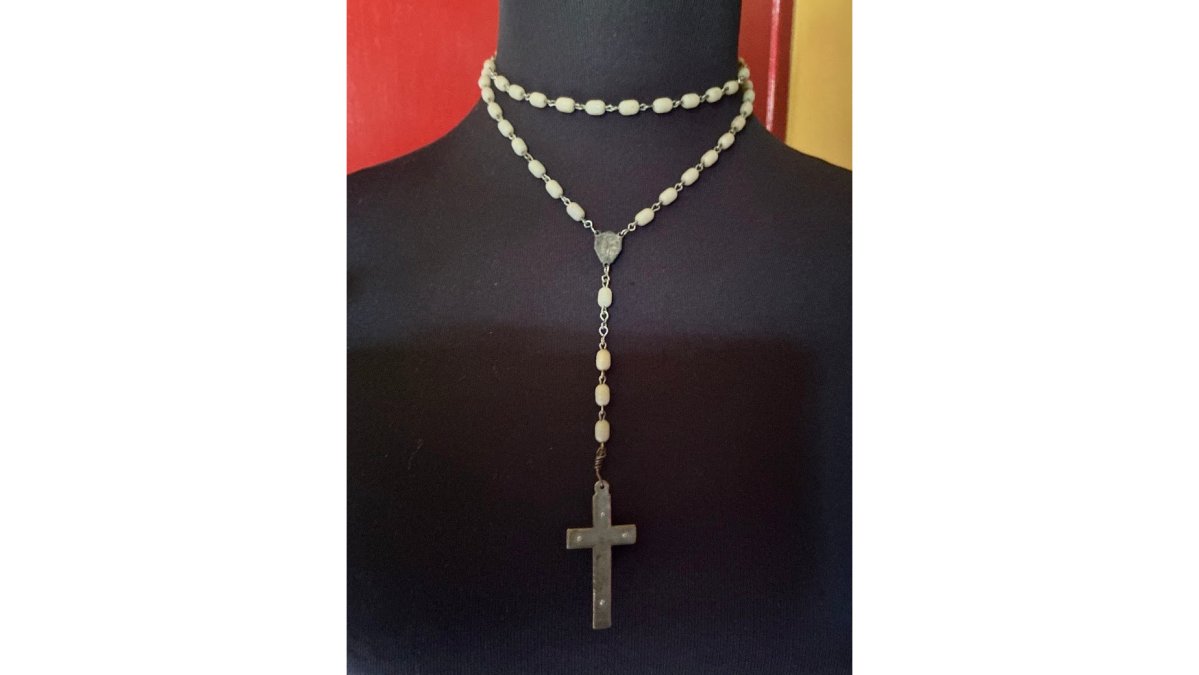
The material of a rosary reveals a great deal about its age and origin. Antique rosaries are usually made from natural materials: wood, bone, pearl, jade, coral, or semi-precious stones. Wooden rosaries, especially those from France and Belgium, are particularly sought after. They were often carved and polished by hand, which can be seen in small irregularities in the shape of the beads.
Plastic rosaries only appeared in the 1960s and later. If you find a rosary that is completely uniform, with perfectly round beads and no variation in color or texture, it is probably a later production. Antique wooden beads show natural variations; some are slightly larger, while others have subtle color differences resulting from the manufacturing process.

Also pay attention to the cross. On genuine antique rosaries, the cross is usually made of copper, silver, or another metal and is firmly attached. It often features fine engravings or reliefs. Cheap reproductions often have a loosely attached cross that comes off easily.
Patina and wear as indicators of authenticity
Patina is your best friend when determining authenticity. Genuine antique rosaries show signs of use, a sheen where thumbs and fingers have passed over them for years, small scratches in the wood, and a certain warmth in the color that only time can create.

Look at the thread or cord to which the beads are attached. On old rosaries, you will often see braiding or knots made by hand. The thread itself may show discoloration or even be partially worn. This is not a defect; it is evidence of authenticity.
The wear should be naturally distributed. If only the top of the beads is shiny while the underside is still rough, it has probably been artificially aged. Genuine wear results from decades of handling, not deliberate abrasion.
Where to buy devotional items: reliable sources
You have many options for buying devotional items, but not all sources offer the same quality or certainty. Beginners should be cautious, because the market is full of reproductions and forgeries.
Antique markets and flea markets are excellent sources. Here you will find genuine collectors and dealers who protect their reputation. They can usually tell you a great deal about the provenance and materials of their objects.
Auctions are another channel. Many auction houses have specialized categories for religious objects. The advantage is that items usually come with descriptions and photos.
Online marketplaces offer reach, but require caution. Always check the description carefully, ask for additional photos, and check the seller's feedback from the seller.
At Chez Monique's 2nd Life, we carefully select every piece. We understand that you are looking for genuine, high-quality devotional objects with character and history. Our collection includes antique rosaries, statues of saints, holy water bottles, and other religious objects.
Determining the Value of Religious Statues
The value of religious statues and devotional objects depends on multiple factors. This is where many beginners stumble: they think that only age matters, but that is not the case.
Provenance and history
Provenance, the documentable history of an object, can dramatically increase its value. A statue of a saint that can demonstrably be traced to a specific church or chapel, or that was part of a well-known collection, is worth more than a comparable piece without a clear history.
Lot (6) Lourdes Mary Holy Water Bottles →
Write down everything you know. Where did you buy it? What did the seller tell you about it? Do you have photos of packaging or labels? This information, however limited, helps establish its value.
Rarity and demand
An object is only valuable if there is demand for it.
| Factor | Impact on value | Example |
|---|---|---|
| Material (wood, bone, silver) | High | Wooden rosary with silver cross > plastic rosary |
| Age (1800-1900 vs. 1960-1980) | High | Rosary from 1850 > rosary from 1970 |
| Condition and patina | Average | Lightly used > heavily damaged |
| Provenance | Average to high | With documentation > without provenance |
| Rarity | High | Unique maker > mass production |
| Market demand | High | Sought-after motif > unpopular subject |
Maintaining Antique Devotional Objects
As soon as you start collecting devotional objects, you need to maintain them properly. Poor storage and maintenance can diminish the value and beauty of your collection.
Cleaning Without Damage
Many beginners make the mistake of wanting to clean their antique objects. Stop doing that. Antique devotional objects must be handled carefully. The patina you see, that sheen, those variations in color, is part of their authenticity and value.
Storage and Presentation
Store your devotional objects in a place where they are not exposed to direct sunlight. UV radiation can fade colors and damage materials. A display cabinet with indirect lighting is ideal.
Starting your collection: practical steps
Starting a collection of devotional objects can feel overwhelming. Here are the practical steps to help you create structure.
Step 1: Determine your collecting focus
You cannot collect everything. Determine your focus. Do you want to concentrate on rosaries? On statues of saints? On objects from a particular period, such as the 1950s? Or from a particular region, such as French devotional objects?
Step 2: Set a budget
Devotional objects can be inexpensive—you can find beautiful pieces for 15 to 40 euros—or expensive. A rare rosary can cost hundreds of euros. Decide how much you want to spend each month and stick to it.
Step 3: Learn about the market
Visit antique markets, auctions, and online platforms. Look, listen, and ask questions. You will quickly learn which prices are realistic, which sellers are reliable, and which objects have genuine value.
Step 4: Buy your first pieces
Start small. Buy objects that genuinely appeal to you, not just because they are inexpensive. Your first purchases form the foundation of your collection, so make them count.
Avoiding common mistakes
Beginners make some predictable mistakes. Here are the main ones, so you can avoid them.
Frequently Asked Questions
What exactly falls under the term devotional objects?
Devotional objects are religious items used for personal devotion or home altars, such as rosaries, statues of saints, holy water bottles, and prayer cards. These objects usually originate from the Roman Catholic tradition and have both spiritual and cultural value. They range from small medals to larger altar pieces and are sought by collectors for their historical significance and artistic value.
How can I recognize an authentic 19th-century rosary?
Authentic 19th-century rosaries display specific characteristics: hand-carved beads, natural patina, detailed copper or silver crosses, and no industrial production marks. Check the beads for irregularities and natural wear. Yellowing or brown discoloration on the metal indicates authenticity. Also pay attention to the materials: beads made of natural wood, bone, or semi-precious stones were common, not plastic.
How do I determine the value of antique religious statues?
Value depends on age, material, craftsmanship, condition, and provenance. An 18th-century ivory statue is far more valuable than a 20th-century plaster cast. Check for craftsmanship, signatures, and documentation. Auction houses and specialists can provide appraisals. Online databases and comparable sold items also offer insight. Damage can significantly reduce value, so proper preservation is crucial.
Where can I reliably buy rare devotional items?
Reliable sources include specialized antique dealers, reputable auction houses, and online platforms with verification systems. Chez Monique's 2e Leven offers a carefully curated collection of antique and vintage objects. Always check the provenance, photos, and descriptions. Avoid anonymous sellers without reviews. Invest in pieces with clear documentation and guarantees of authenticity.
How do I store and maintain antique religious statues?
Store devotional items in a dry place away from direct sunlight, as UV radiation fades colors. For wooden items or statues, use soft cloths and avoid harsh cleaners. Glass items should be cleaned carefully with lukewarm water and mild soapy water. For valuable pieces, consult a restorer. Check regularly for mold or insects. Maintain a stable temperature and humidity level to prevent warping.
What are the most sought-after devotional items for collectors?
Rosaries from the 19th and early 20th centuries are highly sought after, especially French examples from Lourdes. Religious statues made of plaster, wood, or stone from the same period are popular. Holy water bottles, prayer cards, and medals from pilgrimage sites are also in strong demand. Non-religious collectors appreciate these objects as vintage home decor. Rare or unique pieces with interesting provenance command higher prices.
Why do collectors choose Chez Monique's 2e Leven?
Chez Monique's 2e Leven carefully selects antique and vintage religious objects with attention to authenticity and quality. The collection includes rosaries, religious statues, and unique devotional items with a rich history. The shop operates sustainably by reusing packaging materials without compromising the safety of your purchase. Each item gets a second life in your interior.