

Why are antique statues expensive: Guide
Table of Contents
- Why Antique Statues Are Expensive: The Core Factors
- Factors Determining the Value of Religious Art
- Identifying Antique Statues: Distinguishing Between Authentic and Reproduction
- Appraisal of Antique Art: How the Price is Determined
- Art Nouveau and Art Deco: Styles that Determine Value
- Market Trends and Investment Value
- Maintenance, Restoration, and Value Preservation
- Frequently Asked Questions
Last updated: September 3, 2026
Why Antique Statues Are Expensive: The Core Factors
Antique statues are among the most sought-after objects in the art market, but their prices vary significantly. Why are they expensive? It's not just about age, but about authenticity, material, provenance, and market dynamics. An authentic religious statue from the 19th century is not merely old; it is a testament to craftsmanship, art-historical significance, and rarity.

Antique statues have multiple dimensions of value simultaneously. Below, we explore the factors that determine value, how to recognize authenticity, and how appraisal works. We also cover style periods like Art Nouveau and Art Deco, market trends, and what restoration means for value.
Factors Determining the Value of Religious Art
The price of antique statues is determined by a combination of factors that interact according to logical principles.
Authenticity and Provenance
Authenticity is the foundation of all value. A truly antique statue is many times more valuable than a reproduction. This is not only about physical characteristics but also about historical significance and provenance, the documentable history of ownership.
A statue with a clear line of provenance, for example, from a well-known private collection or museum, sells for much higher prices. Art-historical research determines authenticity based on stylistic features, material use, and working methods. Documentation is golden: a certificate of authenticity, old purchase papers, or photos from old catalogs significantly increase the value.
Material and Craftsmanship: The Direct Impact on Price
The material not only determines durability but also art-historical value and production costs, which are directly reflected in the price.
Bronze is traditionally the most valuable material. Bronze statues require casting, a labor-intensive process that demands expertise. Bronze is durable, noble, and the casting process is costly. Moreover, bronze statues are less susceptible to damage.
Marble is on par with bronze in appreciation, especially for religious statues (peer-reviewed research). Hand-carved marble statues of Mary or saints from the 18th and 19th centuries belong to the most expensive categories. The labor intensity of marble carving is enormous, and each piece is unique. However, a damaged marble statue can significantly decrease in value, as restorations remain visible.
Terracotta and pottery are cheaper than bronze or marble but can achieve significant values if they come from renowned potteries. Terracotta is fragile and breaks easily, which increases its rarity if it has remained intact.
Plaster is the most affordable material, but not without value. Plaster statues from the Art Deco period or by famous artists can fetch several hundred euros. However, plaster is susceptible to damage and moisture, which reduces its value.
Wood varies greatly in value depending on the type of wood, age, and craftsmanship. A hand-carved wooden statue from the 1930s is considerably more expensive than a cast plaster version. Exotic wood increases the value, but wooden statues are susceptible to woodworm, mold, and drying out.
Art glass, especially from recognized factories such as Glasfabriek Leerdam, can reach enormous values. The Large Madonna with Child by Steph Uiterwaal from 1929 exemplifies this: such a piece can cost €262.50 or more due to the recognized artist, prestigious factory, and rare material.

Craftsmanship is visible in details regardless of the material. Hand painting, fine sculpting of facial features, and delicate details significantly increase the value. The difference between routine work and a masterpiece is reflected in the price.
Rarity and Historical Context
Rarity is a driving force behind prices. The fewer existing copies of a particular statue, the higher its value. Historical context adds dimension. A statue of Mary from Portugal depicting Our Lady of Fátima has value due to its religious and cultural significance. This makes them interesting for collectors of religious history and interior designers seeking authentic, meaningful pieces.
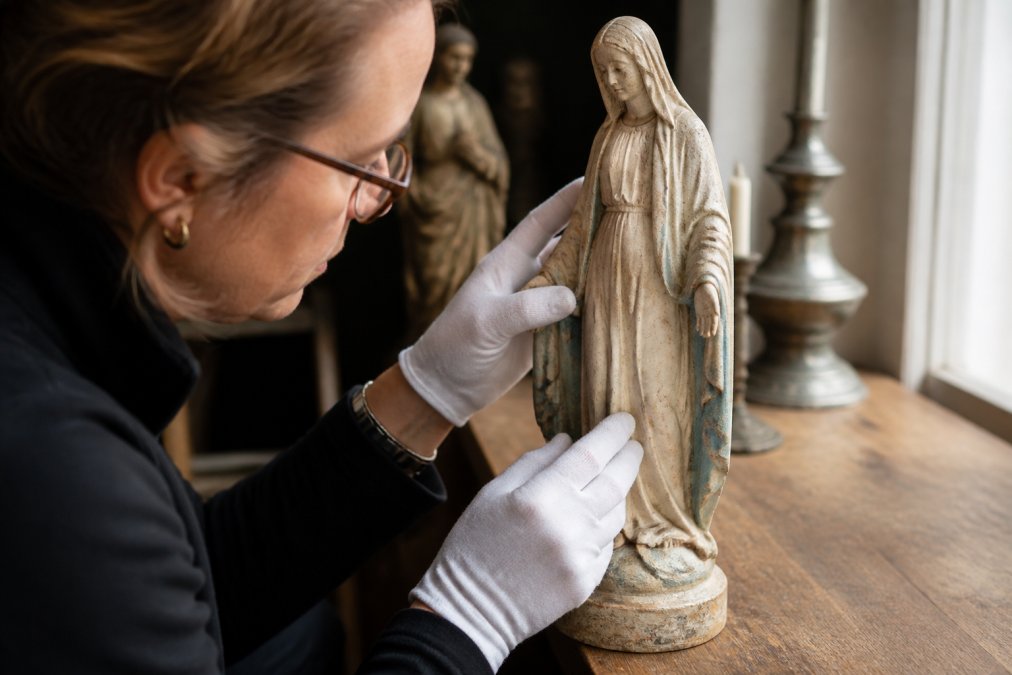
Identifying Antique Statues: Distinguishing Between Authentic and Reproduction
How do you know if what you see is real? This is essential for any potential buyer.
Visual Indicators of Authenticity
Patina and natural wear are initial clues. True patina looks organic, not uniform. On plaster, you sometimes see damage and repairs with visible seam lines or color differences. On wood, you see natural cracks and discoloration patterns that follow the grain. These cracks are random and irregular.
Modern reproduction techniques usually have too perfect a finish. A truly old statue does not look shiny and new. The surface feels rough. Where you hold the statue, you see traces of wear from hands that have touched it over the years.
Signatures and monograms must be consistent with what is known about the artist. A genuine signature is usually incised or cast into the material itself, not superficially applied. Painted signatures with modern paint are suspicious.
Material-Specific Identification Points
For plaster statues: Truly old plaster feels porous and absorbs moisture (getty.edu). Under UV light, modern plaster will react differently than old plaster. Old plaster may show small holes or bubbles where air entered during casting.

For wooden statues: Wood shows characteristic weathering. Check if edges are rounded by natural wear or sharp and recent. Truly old wood has a dark, deep color that is not uniform. Check for wormholes: these are small, round, and irregularly spread.
For terracotta and ceramics: Check the bottom. Truly old pottery has traces of the potter's wheel or hand-forming marks. The color of the bottom often differs from the top due to exposure to fire and smoke. Also, check for mineral deposits indicating exposure to moisture over long periods.
For bronze statues: Real bronze exhibits a characteristic green or brown patina (verdigris). This patina is not uniform. Check the weight: bronze is heavy, much heavier than plaster. If a statue sold as bronze is unexpectedly light, it is likely a reproduction.
Practical Tests You Can Do Yourself
The magnet test: Hold a strong magnet against the statue. Bronze does not react to magnets (si.edu). If the statue is magnetic, it is likely not real bronze.
The moisture test: Place a small drop of water on an inconspicuous spot. Truly old plaster slowly absorbs the water. Modern plaster or plastic does not.
The weight test: Compare the weight with similar statues. Real marble statues are much heavier than plaster versions of the same size.
The temperature test: Hold the statue against your cheek. Natural materials feel cold and warm up slowly. Plastic warms up faster.
Warning Signs for Forgeries
Beware of statues with too perfect a finish, modern glue or filler, no provenance documentation, illogical prices, or sellers unwilling to answer questions.
When Professional Expertise is Needed
For valuable statues (more than €500), professional research is advisable. Art-historical research can include material analysis, stylistic comparison, and provenance research. This protects you from costly mistakes.
Appraisal of Antique Art: How the Price is Determined
Appraisal is a methodical assessment, not a guess. An appraisal report from a recognized expert contains much more than just a number. It describes the object in detail: dimensions, material, condition, provenance, style period, and comparable sales.
Appraisers look at market value, what the object could fetch at an auction house or through private sale. Auction house versus private sale makes a difference. An auction house sometimes attracts higher prices due to visibility but also takes a commission.
Objective value is based on authenticity, rarity, condition, and market trends. Comparable sales are crucial. Appraisers look at what similar statues have recently fetched.
Art Nouveau and Art Deco: Styles that Determine Value
Certain art periods come with premiums. Art Nouveau (roughly 1890-1910) emphasizes organic forms, slender lines, and natural motifs. Artists like Steph Uiterwaal, who worked for Leerdam, created Art Deco works that are now highly sought after.
Art Deco (roughly 1920-1940) is more geometric and modernist. This style feels contemporary, which is attractive to interior designers. Many religious statues from the 1920s-1940s have Art Deco influences, which increases their collectible value. Currently, Art Deco statues are very popular, driving up prices.
Market Trends and Investment Value
The art market for antique statues is not static. Religious devotionalia have a niche audience, but that audience is passionate. Catholic collectors, religious institutions, and people interested in cultural history form stable demand.
Sustainability and reuse are emerging trends. More and more people are opting for vintage and antique objects due to environmental awareness. This increases the demand for antique statues, not only for their artistic value but also as a sustainable alternative to new decoration. International market trends also influence local prices. Dutch religious statues attract interest from international collectors, which can drive up prices.
| Trend | Impact on Value | Relevance for Collectors |
|---|---|---|
| Increasing interest in vintage decor | Positive | Growing demand increases prices |
| Sustainability and reuse | Positive | Antiques as a sustainable alternative |
| International demand for Dutch pieces | Positive | Higher bids at auctions |
| Fakes on the market | Negative | Authenticity is essential |
| Changing tastes in interiors | Variable | Certain styles more in demand |
Maintenance, Restoration, and Value Preservation
This is where many collectors make a mistake. Professional restoration by someone with expertise in antique statues can repair a damaged piece and add value. Amateur restoration is dangerous. If you try to repair a statue yourself with modern glue or paint, you can significantly reduce its value.
The condition of the object is a primary value factor. A statue in excellent condition is worth much more than the same statue with damage. This is why careful storage and shipping are crucial. Regular maintenance, careful dusting, protection from moisture and direct sunlight, helps preserve patina and condition.
Why antique statues are expensive is now clearer. It's about authenticity, rarity, craftsmanship, and the meaning they carry. Whether you are a collector, interior stylist, or someone looking for a meaningful religious object, understand these factors and you will make better choices.
At Chez Monique's 2e Leven, we help you find the right pieces. Our carefully selected collection of religious statues combines authenticity with sustainability. Discover our antique Madonna statues, wooden saint statues, and unique devotional items, each with its own story. View our collection and give these special objects a second life in your interior.
Frequently Asked Questions
What factors determine the value of an antique statue?
The value of antique statues depends on authenticity, material, age, rarity, and condition. Original signatures and documentation (provenance) significantly increase the value. Art historical research and appraisal reports can confirm authenticity. Style periods such as Art Deco and Art Nouveau are extra valuable. Craftsmanship and historical context also play an important role in the ultimate market value.
How do I recognize if an antique religious statue is authentic?
Check for signatures, stamps, and markings typical of the maker or period. Authentic statues show natural patina, wear, and discoloration. Examine the material: plaster, wood, or other material must be consistent. Fakes often have an unnatural finish and lack details. An appraisal report from an expert can confirm authenticity. Original documentation and provenance are strong indicators of authenticity.
Why do antique statues cost more than new replicas?
Antique statues are unique objects with historical value, craftsmanship, and authenticity that cannot be reproduced. They have collector's value, art historical significance, and are often rare. Replicas lack the patina, historical context, and investment potential. Original pieces increase in value, while replicas do not. The market value reflects the aesthetic, emotional, and economic value of the authentic object.
Does antique art still increase in value?
Yes, authentic antique art generally increases in value, especially pieces with good provenance, rarity, and art historical significance. Market trends show strong demand for religious devotional items and Art Deco pieces. The value depends on condition, authenticity, and collector interest. Well-maintained statues retain and increase their value. Investing in antique art requires knowledge of market trends and expertise to assess quality.
This article was written using GrandRanker