

Vintage ebony rosary with medal: identification and appraisal
Quick Summary
You can identify an old ebony rosary with a medal by the color and sheen of the beads, its weight, the wear, and the bead holes. Genuine ebony has a brownish-black matte sheen and feels heavy and cool, while Bakelite looks uniform and glossy.
- Examine the beads in daylight: genuine ebony is brownish-black with a matte sheen, while Bakelite is uniform and glossy.
- Ebony feels heavy and cool and warms up slowly; plastic warms up almost immediately.
- Natural wear and a slightly uneven hole point to genuine wood, while a mold seam indicates plastic.
- The Miraculous Medal is the most common type; check the back for engraved text, dates, or stamps.
- Clean the wood, metal, and medal separately, and never use abrasives or chemicals on an antique piece.
Table of Contents
- What makes an old ebony rosary with a medal special?
- How to identify an old rosary: assess the material and beads step by step
- Rosary with a Mary medal: what medals are found and what do they mean?
- Assessing the crucifix, corpus, and finish
- Antique rosary value: what factors determine the price?
- Caring for an ebony rosary, cleaning it safely, and recognizing damage
- Your next step: buying or selling an antique ebony rosary
- Frequently Asked Questions
Antique ebony rosary with a medal: how to identify and value it
Last updated: November 13, 2026
What makes an old ebony rosary with a medal special?
An old ebony rosary with a medal combines material, craftsmanship, and devotion in a single object. The difference between an ordinary rosary and an antique one often lies in the details: the beads, the finish on the crucifix, and the engraved medal.
Many people buy a rosary for sentimental reasons, for example because they want to preserve a family heirloom. Others collect them for their historical value. Each perspective has its own considerations. A rosary in good condition dating from the 1920s or 1930s can be a special piece for collectors.
The term "ebony" is sometimes used loosely in the trade. That is why it is wise to take a critical look at what it really is. In the following sections, we explain how to assess the material, date, and medal.
How to identify an old rosary: assess the material and beads step by step
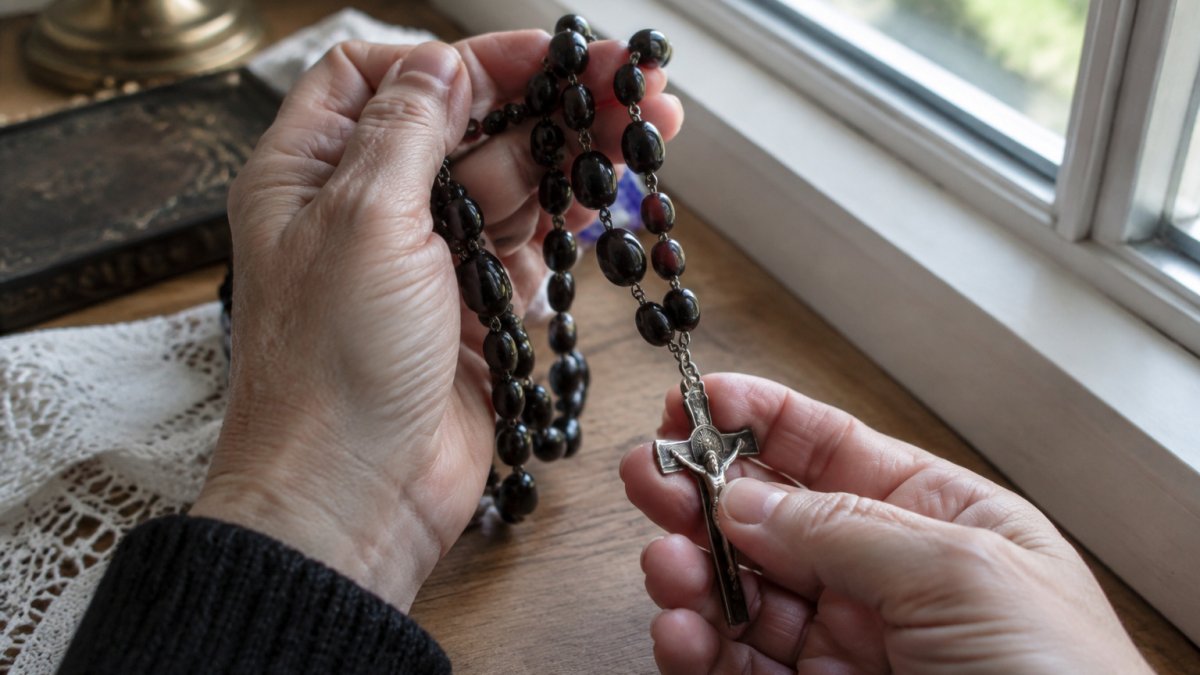
A careful assessment starts with the beads. Hold the rosary up to the light by a window and examine the beads closely. Genuine ebony has a deep, even color and a natural sheen that does not fade after years of use. Still, determining whether the beads are genuine ebony or an imitation such as Bakelite or another black wood is the trickiest step. Below is a practical four-step check, with the features that provide the most reliable guidance in practice. To read the full list, see the comprehensive list of features for identifying an antique rosary.
Step 1: Examine the color and sheen in daylight
Hold the beads next to a sheet of white paper and look at them in daylight, not under artificial light. Genuine ebony is not pitch black, but has a very dark brownish-black hue with a matte, natural sheen. Fine, slightly wavy grain lines are often visible under a loupe or magnifying glass, even though they are very fine in ebony. Bakelite, by contrast, is usually uniformly black or dark brown and has a smoother, almost glassy appearance. A second clue is the color inside the bead’s hole: with genuine wood, it is often slightly lighter or more matte than the outside, while plastic retains the same uniform color inside the hole.
Step 2: Weigh the bead and feel its temperature
Ebony is a dense wood, so it feels relatively heavy for its size. Compare the rosary with a familiar piece of wood or weigh a few beads on a kitchen scale. Bakelite feels lighter and warms up faster in your hand. A useful rule of thumb: set the rosary aside for a moment, then pick it up again. Genuine wood feels cool to the touch and warms up slowly; plastic feels warm almost immediately.
Step 3: Examine the wear and the hole
After years of use, small lines, pits, and irregularities appear on genuine wooden beads, especially around the hole through which the chain runs. This wear results from holding and praying with the rosary and is rarely as naturally present in imitations. Bakelite more often has a smooth, almost glassy finish without this natural grain. Also examine the hole: in wooden beads, it is often slightly uneven or has small burrs, while plastic usually has a neater, more regular hole. A third clue is the seam: plastic beads made in a mold sometimes have a visible mold seam, while wooden beads do not.
Step 4: Be cautious with destructive tests
A scratch test in an inconspicuous spot can help, but only if you intend to sell the rosary or are sure you know what you’re doing. On ebony, a scratch leaves a dark brown to black mark; on wood painted black, the lighter color underneath will show through. Never do this on a visible part of an antique piece without consulting an expert.
Please note: Never perform an abrasion test, clean an antique piece, or use chemicals on it without consulting an expert first. This could destroy the patina and, with it, the value.
Checking the date and provenance
Dating is more difficult than identifying the material. Look at the crucifix, how the beads are attached, and any stamps on the metal. French rosaries from the 1920s and 1930s often have a distinctive crucifix finish, sometimes with inlaid wood. Compare the piece with dated examples from catalogs or collections. Provenance is harder to establish, but an accompanying story, an old store tag, or a family document can significantly strengthen its credibility.
The overview below summarizes the four inspection steps, so you can quickly see what to look for.
| Step | What to do | What to look for |
|---|---|---|
| 1. Color and sheen | Examine the beads in daylight next to white paper | Real ebony: brownish-black, matte sheen; Bakelite: uniform, glassy appearance |
| 2. Weight and temperature | Weigh the beads and feel their temperature | Ebony feels heavy and cool; plastic warms up quickly |
| 3. Wear and drill hole | Check the wear and the bead hole | Natural wear and an unevenly drilled hole indicate wood |
| 4. Scratch test | Test only in an inconspicuous spot | Scratch leaves a dark brown to black streak; do not test without an expert |
Number of inspection steps for identifying ebony
Rosary with a Mary medal: what medals are found and what do they mean?
A Mary medal is the most common medal on antique rosaries. It often depicts the Blessed Virgin with outstretched hands, an image associated with the Miraculous Medal. Other medals depict Jesus, the Holy Spirit, or a patron saint.
The type of medal says something about the original owner's devotion. A Miraculous Medal carries a message of protection and prayer. A patron saint medal refers to personal devotion. For a collector, the combination of medal and beads is often the most important thing.
Check whether the medal is original on the reverse. Engraved text, dates, or small stamps often provide more clues than the front alone.
Assessing the crucifix, corpus, and finish
The crucifix is one of the most important parts of the rosary. Antique examples often have a metal corpus, the figure of Christ on the cross. Look at how sharp the details are. A well-cast corpus has clearly defined features, while later reproductions are often less distinct.
The finish reveals a lot about the quality. Patinated metal with an even, warm brown hue is a good sign. Heavy green or black deposits may indicate moisture or neglect, but do not always diminish the value entirely.
Also check the attachment of the crucifix to the chain. Loose links or a poorly attached crucifix are points of concern for a collector, especially for a piece you want to keep or pass on.
Antique rosary value: what factors determine the price?
The value of an antique rosary depends on several factors at once. Material, age, condition, completeness, and the medal all play a part. A complete rosary with its original medal and undamaged beads is generally more valuable than one with missing parts.
Demand also plays a role. Religious antiques have a specialized market, and prices can vary widely from seller to seller.
Our antique French rosaries are available for between €40.00 and €65.00, depending on the specific piece.
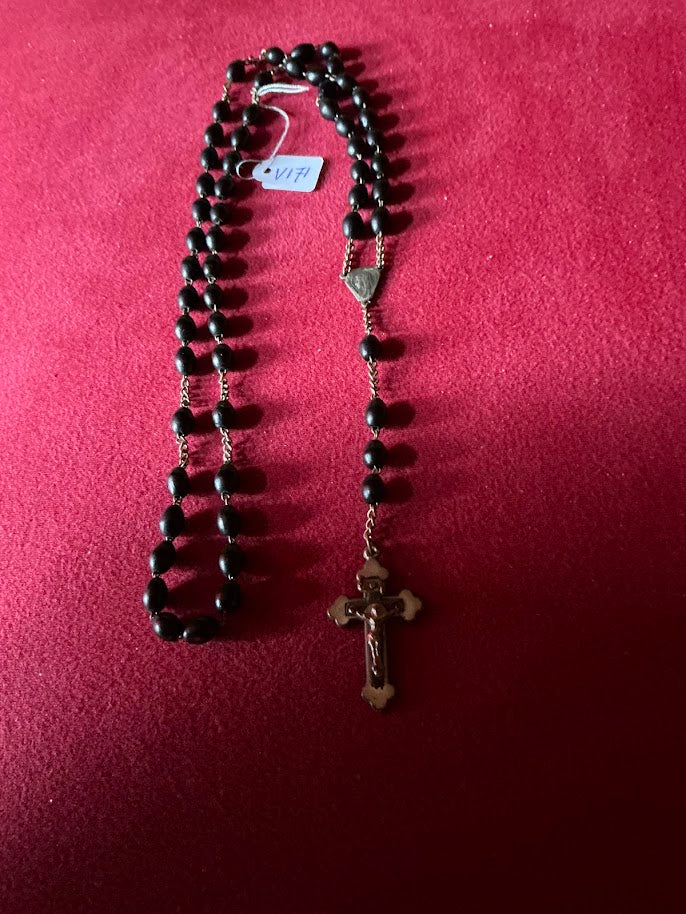
For example, the Antique French Rosary with Mary Medal and Ebony from the 1920s and 1930s is available for €47.50. This piece has black wooden beads, a cross inlaid with ebony, and a total length of 49 cm.
For a more detailed explanation of how to determine its value, read our tips on determining the value of an old rosary.
Caring for an ebony rosary, cleaning it safely, and recognizing damage
Proper care determines how long an antique rosary stays beautiful. Wood is sensitive to moisture, dry air, and direct sunlight. Store the rosary in a stable place, out of direct sunlight and away from radiators.
Safe cleaning: treat the wood, metal, and medal separately
Always clean the rosary’s components separately: the wooden beads, metal cross, and medal each require a different approach. Don’t use water or cleaning products on wooden beads. A soft, dry cloth or a soft brush is enough to remove dust. For stubborn dirt in the grain, you can use a slightly damp cloth, but wipe the beads dry immediately afterward and don’t leave them in contact with water.
Use a soft, dry cloth for the metal cross and medal. Avoid abrasive polishes, as they damage the patina that reveals the piece’s age. A cotton swab with a tiny amount of lukewarm water can help remove stubborn dirt from grooves, but dry the parts thoroughly afterward. Don’t store metal parts in direct contact with rubber or foam, as some materials can react with the metal.
Recognizing damage and having it repaired safely
Recognizing damage starts with a thorough inspection. Check each bead for cracks, especially around the hole the chain passes through. Inspect the links between the beads for loose or broken connections, and check that the cross is securely attached to the chain. A wobbly cross or loose link can usually be fixed easily by a professional, but don’t try to do this yourself with glue or pliers, as you could damage the original attachment.
It’s best to leave minor damage to the wood, such as a light scratch, as it is: the patina is part of its age. Larger cracks or missing beads require professional repair. Always keep loose parts safe, as they may come in handy during restoration.
Please note: Never use superglue or strong solvents on antique beads or medals. They can cause irreparable surface damage and diminish the piece’s collectible value.
Your next step: buying or selling an antique ebony rosary
Would you like to buy an antique ebony rosary? It’s a good idea to first decide which style and material suit you. At Chez Monique's 2e Leven, you’ll find a range of pieces to compare by size, medal, and condition.
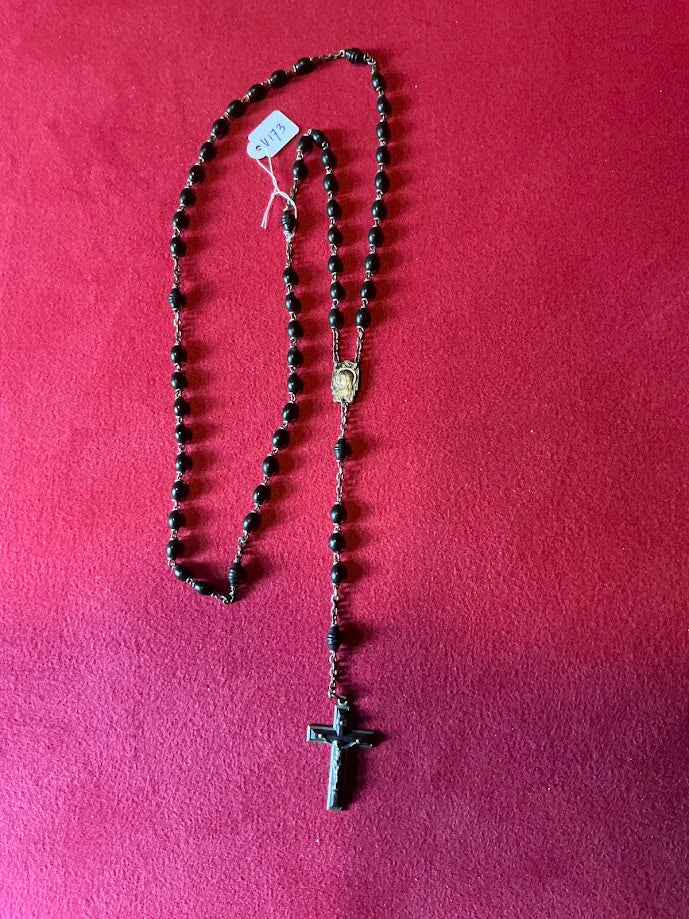
Our Antique French Rosary with Marian Medal and Ebony is a good starting point for collectors looking for a complete rosary with its original medal. For an alternative with a different finish, the Antique French Ebony/Bakelite Rosary is worth considering. Both pieces show how the material and medal shape the object's character.
Already have a rosary and want to care for it? Read our care guide for wooden rosaries for practical tips for beginners.
Frequently Asked Questions
How can you recognize an old ebony rosary?
Look for a dark, very dense wood with a smooth, slightly glossy finish and a weight greater than that of ordinary wooden beads. Ebony often has fine, even grain and a deep color that does not fade easily. Also check the wear on the beads: genuine old beads show a soft, uneven sheen from years of use. Consider the overall appearance of the cross, medal, and chain. If in doubt, it is wise to have it appraised by an expert.
What determines the value of an antique rosary?
The value of an antique rosary depends on its material, age, provenance, condition, and whether it has a medal. An ebony rosary with a recognizable Marian medal from the 1920s or 1930s is generally more sought-after than a later reproduction. Damage, missing beads, or a broken crucifix lower its value. Measurements, such as the total length and the length of the cross, help when comparing it with other pieces. Always ask for a clear description of its condition before buying.
Which medals are found on a rosary with a Marian medal?
A rosary with a Marian medal often features an image of Mary, sometimes on a Miraculous Medal or a medal depicting the Holy Spirit. On antique French examples from the 1920s and 1930s, the medals are often made of metal and finely engraved. The image on the medal helps with dating and understanding its devotional purpose. Check whether the medal is original by examining its finish and wear.
How do you safely clean an old rosary?
Use a soft, dry cloth to remove dust and avoid water or harsh cleaning products, especially on wooden beads and ebony. Do not soak the piece in liquid, as the wood may warp or the finish may be damaged. Metal parts can be carefully wiped with a slightly damp cloth and then dried immediately.
