

Wooden Rosary Care: Step by Step for Beginners
Table of contents
- Wooden rosary care: why it matters and what you need
- Cleaning a wooden rosary: step-by-step removal of dust and dirt
- Cleaning an antique rosary: handling old wood and copper with care
- Storing a rosary: protecting it from moisture, light, and vibrations
- Repairing a rosary: how to fix a worn cord and loose beads
- Safe hanging and display: fixings by wall type
- Common mistakes in caring for a wooden rosary
- Conclusion
- Frequently Asked Questions
Last updated: October 17, 2026
Wooden rosary care: why it matters and what you need
Wooden rosary care is the set of steps you take to keep a rosary’s beads, cord, and little cross clean, intact, and stable. It extends the life of every piece and prevents old wood from cracking or copper from developing a green patina.
At Chez Monique's 2e Leven, we’re often asked how to care for a piece like this. Many people are afraid to touch it in case they damage something. That’s a shame, because a few simple habits can keep a rosary beautiful for decades.
The basics of good care are simple: little moisture, little direct light, and no harsh products. Below, you’ll find step-by-step instructions on how to do it.
What you’ll need:
- A soft brush with natural bristles
- Two dry, lint-free cloths
- A slightly damp cloth
- Cotton swabs
- An acid-free box or fabric pouch
- A mild, non-foaming cleaning solution, if needed
Cleaning a wooden rosary: step-by-step removal of dust and dirt
The safest way to clean a wooden rosary is to clean it dry. Remove dust and loose dirt with a soft brush, without using water. Only then wipe the beads with a slightly damp cloth.
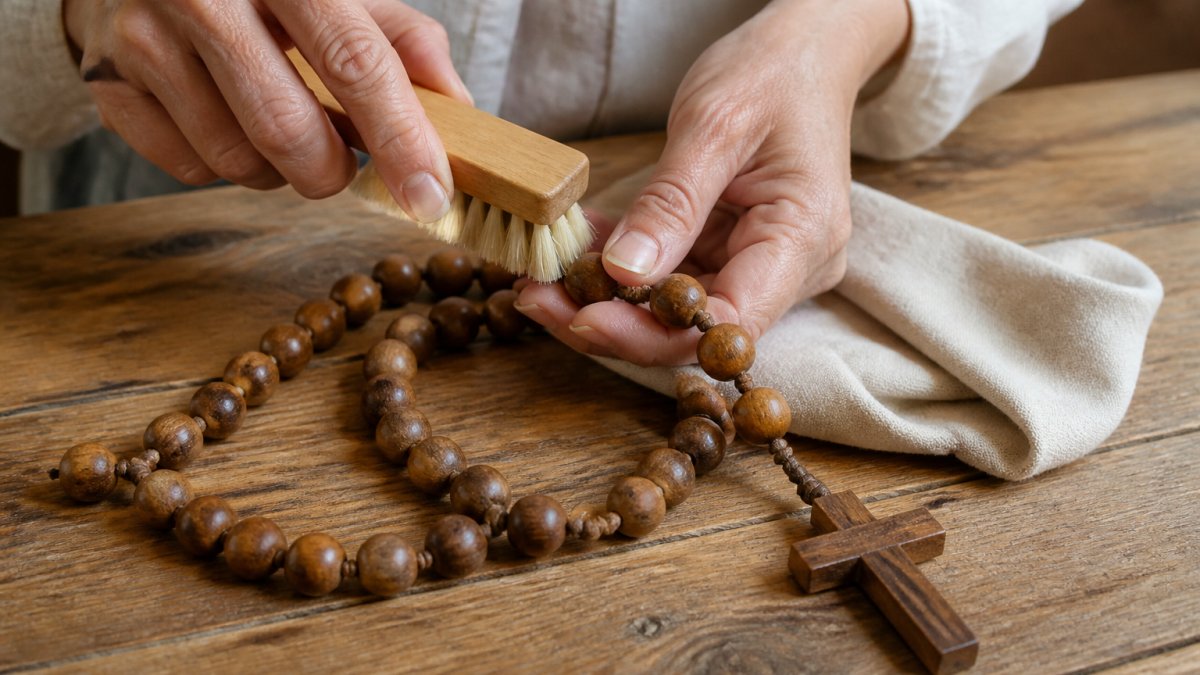
Here’s how to do it:
- Lay the rosary flat on a clean, dry cloth.
- Gently brush around each bead. Work from top to bottom.
- Wipe the cord and the little cross with a dry cloth.
- Use a slightly damp cloth only on stubborn spots. Wring it out well.
- Pat dry with a second, dry cloth.
- Leave the rosary lying flat for a few hours before putting it away.
Never immerse a rosary in water. Wood absorbs moisture and may then shrink or crack. Soap also dissolves old wax coatings, which protect the wood.
Cleaning an antique rosary: handling old wood and copper with care
Cleaning an antique rosary takes more patience than force. Old wood is drier and more fragile, and copper often has a patina you want to preserve. So clean as little as possible, and only where needed.
Our antique French rosaries from the 1930s are a good example. The beads are inlaid with ebony, and the copper cross has developed its own color over the years. That patina is part of the piece. Don't polish it off.

What to do:
- Remove dust with a soft brush.
- Use cotton swabs for the grooves in the small cross.
- Leave the green patina on the copper. It is a protective layer.
- Touch copper with bare fingers as little as possible.
Would you like to open a piece with a relic holder? Don't do it yourself. The screw is tiny, and the mechanism is delicate. Leave it to someone with experience.
Storing a rosary: protecting it from moisture, light, and vibrations
Storing a rosary means protecting it from three enemies: moisture, direct light, and vibrations. Keep it in an acid-free box or a fabric pouch in a dry place away from windows. This helps keep the wood stable and prevents the copper from tarnishing further.
Practical storage tips:
- Choose a place with a constant temperature, such as a cupboard in a living room.
- Avoid the bathroom and kitchen. The humidity fluctuates too much there.
- Don't place heavy objects on top of it.
- Don't hang a rosary on a nail where it can knock against the wall.
For longer-term storage, a fabric pouch works better than plastic. Plastic traps moisture, and that's exactly what you want to avoid.
Repairing a rosary: how to fix a worn cord and loose beads
Repairing a rosary starts with taking an honest look at the cord. Is it frayed, stretched, or thin in places? Then it's wiser to replace it rather than keep using it. A broken cord means you could lose beads, and with antique pieces, that's often irreversible.
Here's how to fix a loose bead:
- Find where the cord has come loose.
- Hold the bead in place and check whether the cord is still long enough.
- Tie the cord again with a secure knot. Preferably use a knot that won't come undone on its own, such as a double knot.
- Carefully test whether the knot holds.
- Let the piece rest for a day before using it again.
If the cord is worn in multiple places, restringing is the only proper solution. Keep the beads in order as you restring them. A rosary has a specific arrangement, and you don't want to mix it up. Take a photo before taking it apart.
Antique French Rosary with Wooden Beads & Copper Crucifix →
When repairing wooden beads, protecting them from cracks and scratches is essential. Work on a soft surface, such as a felt mat or clean towel. Don’t place beads on a hard table: a single fall can cause a crack that may split later. Don’t use superglue on wood: it seeps into the grain and can’t be removed. For a loose bead that can no longer be tied in place, you can use a small drop of wood glue (white or yellow) where the cord enters the bead. Let it dry for at least 24 hours.
What most people don’t know: a rosary benefits from being used now and then. Beads that are regularly handled stay supple and dry out less quickly. But don’t use it as a keychain or leave it in a pocket with sharp objects: scratches on wood are permanent.
Safe hanging and display: fixings by wall type
If you want to hang a rosary on the wall, the wall type determines how to attach it. A small, heavy, or delicate piece calls for a different system than a lightweight, long chain. Choose the fixing based on the weight and wall, not on whatever you happen to have at home.
| Wall type | Suitable fixing | Load capacity (indicative) | Note |
|---|---|---|---|
| Brick or concrete | Plug and screw (e.g. nylon plug) | 5-15 kg per plug, depending on size | Match the drill bit size to the plug; don’t drill into the mortar joint |
| Drywall | Hollow-wall anchor or drywall screw | 3-8 kg per plug for 12.5 mm board | Never hang without a plug; avoid the edges of the board |
| Wood | Wood screw without plug | 10-20 kg per screw in solid wood | Pre-drill to prevent splitting |
| Plastered wall | Plug and screw, plug slightly deeper | 5-10 kg per plug | Protect the plaster layer with a washer |
| Plaster on masonry | Chemical anchor or longer plug | 10-25 kg per plug | Test first in a hidden spot |
Here’s how to measure, drill, and hang it level:
- Measure the height at which the crucifix should hang. Take the length of the rosary into account: the crucifix usually hangs at the bottom.
- Mark it with a pencil and check with a spirit level.
- Drill at the marked spot, slightly smaller than the plug. Use a drill bit with a depth stop so you don’t drill through the wall.
- Push the plug in and screw the hook in. Don’t let the hook stick out too far, or the rosary will tilt.
- Hang the piece and check again with the spirit level.
Vibration damping is important for fragile or antique rosaries. A slamming door or a washing machine on the floor below causes vibrations that can make the cord break. Use a hook with a rubber or felt protective ring where it meets the wall. Don’t hang the rosary directly above a heater or next to a door that slams shut: the heat and vibrations dry out the wood.
Don’t want to drill? Adhesive hooks only work for lightweight pieces (usually up to 2 kg) on a smooth, clean wall. They come loose when temperatures change and when there are vibrations. For an antique rosary with a copper crucifix, that isn’t a safe choice. An alternative is a tension rod or a narrow wall shelf with a raised edge, where you can lay the rosary instead of hanging it.

After installation, periodically check that the hook, cord, and wall mounting are still secure. Once a season is a good habit: gently push against the hook, check that the wall plug hasn’t come loose, and make sure the cord hasn’t stretched. This helps prevent damage from falls and breakage.
Common mistakes in caring for a wooden rosary
The most common mistake in caring for a wooden rosary is doing too much. People polish the copper, wash the wood with water, or store a piece in plastic. All three cause damage that may not become visible for months.
The mistakes at a glance:
- Submerging it in water. The wood swells and cracks as it dries.
- Polishing copper. You remove the patina and, with it, the value.
- Storing it in plastic. Moisture can’t escape and condenses on the wood.
- Leaving it in direct sunlight. The wood discolors and becomes brittle.
- Hanging heavy pieces on an adhesive hook. They fall down.
- Repairing it with superglue. It seeps into the wood and can’t be removed.
What most people don’t know is that a rosary benefits from being used now and then. Beads that regularly pass through your hands stay supple and dry out less quickly.
Conclusion
Caring for a wooden rosary isn’t complicated. Dry cleaning, storing it in a dark place, and hanging it carefully do most of the work. That’s how an antique piece stays beautiful for generations.
At Chez Monique's 2nd Life, we carefully select every religious object, from an antique French rosary with wooden beads and a copper cross to a rosary with a reliquary. We carefully inspect the packaging and reuse materials where it is safe to do so, so your purchase arrives undamaged.
Would you like to give a special piece a second life in your home? Browse our collection and add your favorite to the shopping cart.
Frequently Asked Questions
Can you clean a wooden rosary with water?
No, don’t use running water or wet cloths. Wood can absorb moisture, causing the beads to swell, crack, or become dull. To clean a wooden rosary, use a soft brush or a slightly damp cloth, then immediately wipe it with a dry cloth. For stubborn dirt, you can use a little mild soap on a damp cloth, but dry the wood thoroughly afterward. Never soak the rosary in water.
Which oil is suitable for a wooden rosary?
Use a natural, non-drying oil such as linseed oil or a special wood-care product without solvents. Apply a very thin layer with a soft cloth and wipe away any excess oil. Avoid olive or sunflower oil, as it can go rancid and leave a sticky residue. Test the oil on an inconspicuous bead first. When cleaning and caring for an antique rosary, less is more.
What’s the best way to store a wooden rosary?
Store the rosary in a breathable fabric bag or a box with a soft lining, away from direct sunlight and damp areas. Avoid plastic bags, which can trap condensation. Don’t place heavy objects on top of the rosary or hang it from a sharp hook. Check the storage area regularly for damp or mold. A dry, dark cupboard or drawer is ideal for storing a rosary.
What should you do if the cord on a rosary is worn?
You can replace a worn cord yourself with a new cord made from a natural material, such as cotton or linen, in the same thickness. Tie it securely and check that all the beads are in place. If you have an antique rosary with unusual beads, it’s a good idea to take photos of the original arrangement first. If you’re unsure, leave it to an experienced restorer. This keeps rosary repairs safe and preserves the value.