

Wooden or porcelain statue of Mary: which suits you?
Last updated: November 18, 2026
Quick summary
Choose a wooden or porcelain statue of Mary based on where it will be placed: wood is sturdier and suits a console table, cabinet, or high shelf; porcelain is more delicate and lighter but fragile if dropped. So it's best to place porcelain on a wall, in a niche, or on a protected shelf.
- Wood wins for durability, porcelain wins for detail.
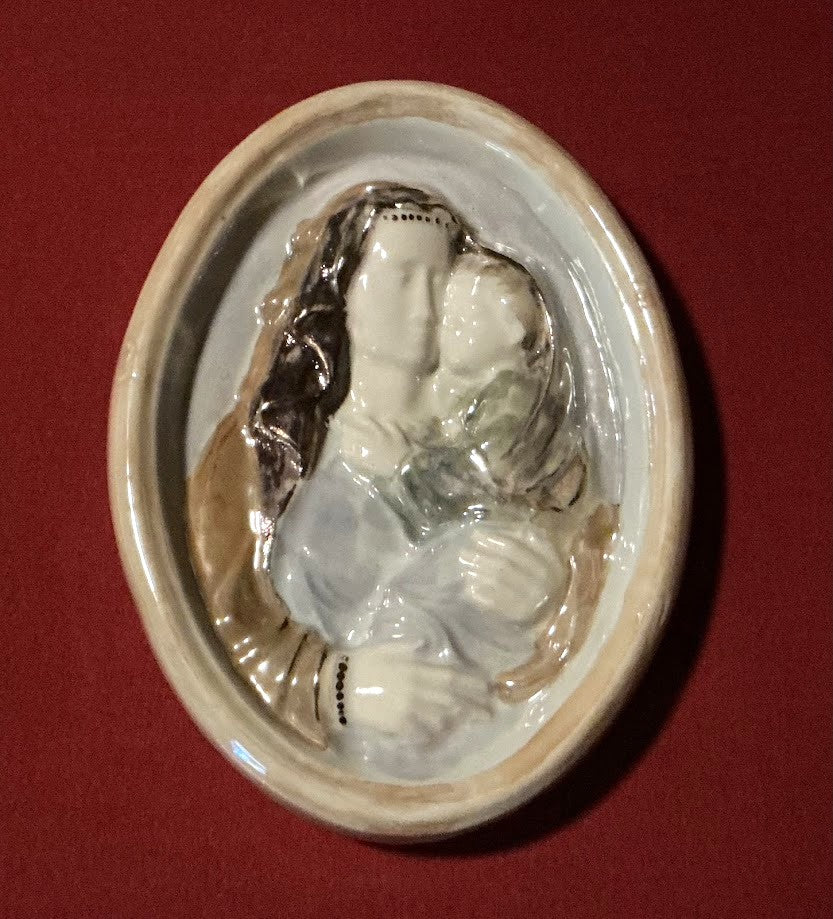
- The porcelain wall statue of Mary with Child measures 18 cm high by 13 cm wide.
- The wooden statue of Saint Anthony Abbot is 24 cm high.
- Prices in our collection start at €11.50 for porcelain and €145 for wood.
- Bisque porcelain is unglazed and brings out fine details better than glazed porcelain.
Table of contents
- Wood or porcelain: the key considerations
- Wooden and porcelain statues of Mary side by side
- Antique wooden statue of Mary: character and carving
- Buying a porcelain statue of Mary: bisque, glaze, and detailing
- Identifying an antique statue of Mary: age, origin, and authenticity
- Cleaning and caring for a statue of Mary by material
- What determines the price of a statue of Mary?
- Choosing a statue of Mary from the collection
- Frequently Asked Questions
Wood or porcelain: the key considerations
Choose a wooden or porcelain statue of Mary based on one simple question: will it go in a sheltered spot in the home or somewhere visible where it needs to withstand a knock? Buyers often find this a difficult choice.
A statue of Mary is a religious statue of Mary, often with the baby Jesus, intended as an object of devotion or a decorative heirloom.
Wooden and porcelain statues of Mary side by side
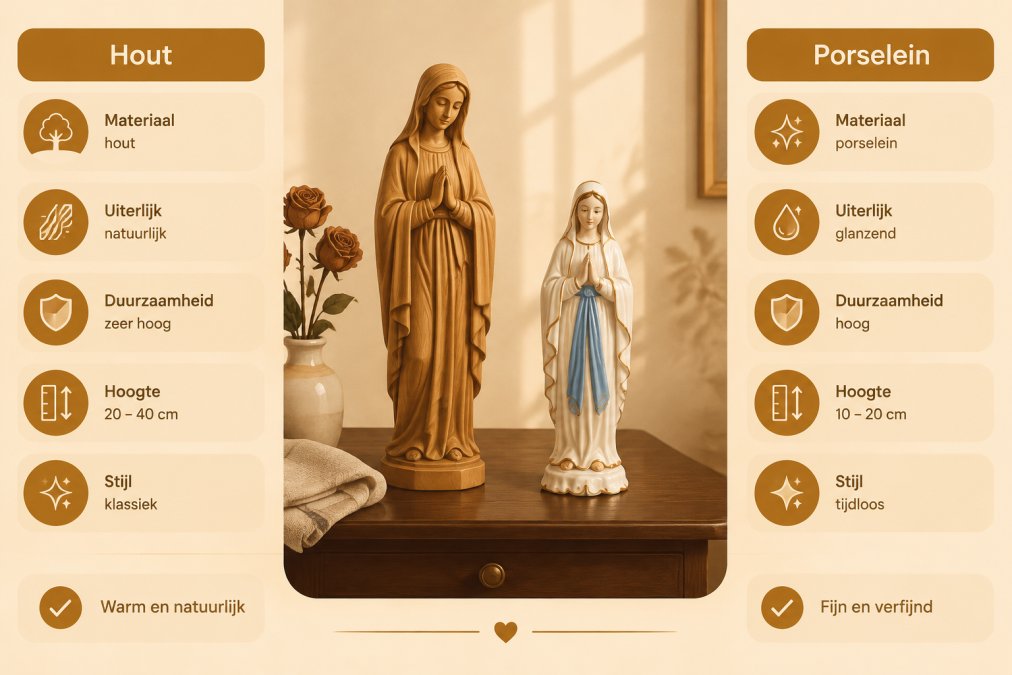
Wood wins for durability, porcelain wins for detail. That's the shortest summary we can give. A wooden statue of Mary is generally sturdier than a porcelain statue; a porcelain statue stands out for its fine details.
Appearance, weight, and size
Wood feels warm and alive: the grain, the color, the weight in your hand. A carved statue made of limewood or oak is usually substantial and needs a sturdy base. Porcelain is compact and lightweight, making it easy to place on a shelf, in a niche, or on the wall. Our porcelain wall statue of Mary with Child measures 18 cm high by 13 cm wide. The wooden statue of Saint Anthony Abbot is 24 cm high.
Fragility and safety in the home
Porcelain is fragile if dropped, so it's best not to place a porcelain statue of Mary somewhere it could easily get knocked.
| Feature | Wooden statue of Mary | Porcelain statue of Mary |
|---|---|---|
| Appearance | Warm, handcrafted, rustic | Delicate, glossy or matte bisque |
| Weight | Heavy, sturdy base | Light, compact |
| Fragility | Prone to scratches and impacts | Fragile if dropped |
| Care | Dust, keep dry | Lukewarm water, no harsh cleaner |
| Price range | From €145 in our collection | From €11.50 in our collection |
| Best place | Console table, cabinet, high shelf | Wall, niche, protected shelf |
Antique wooden statue of Mary: character and carving
You can identify an antique wooden statue of Mary by its carving: the folds of the cloak, the hands, and the grain running through the statue. Hand-carved work has small irregularities that machine-made work never achieves.
With wood, look for cracks along the grain, woodworm holes, loose parts, and whether the base is still sturdy. A small scratch comes with age. A deep crack right through the middle of the face is another matter.
Buying a porcelain statue of Mary: bisque, glaze, and detailing
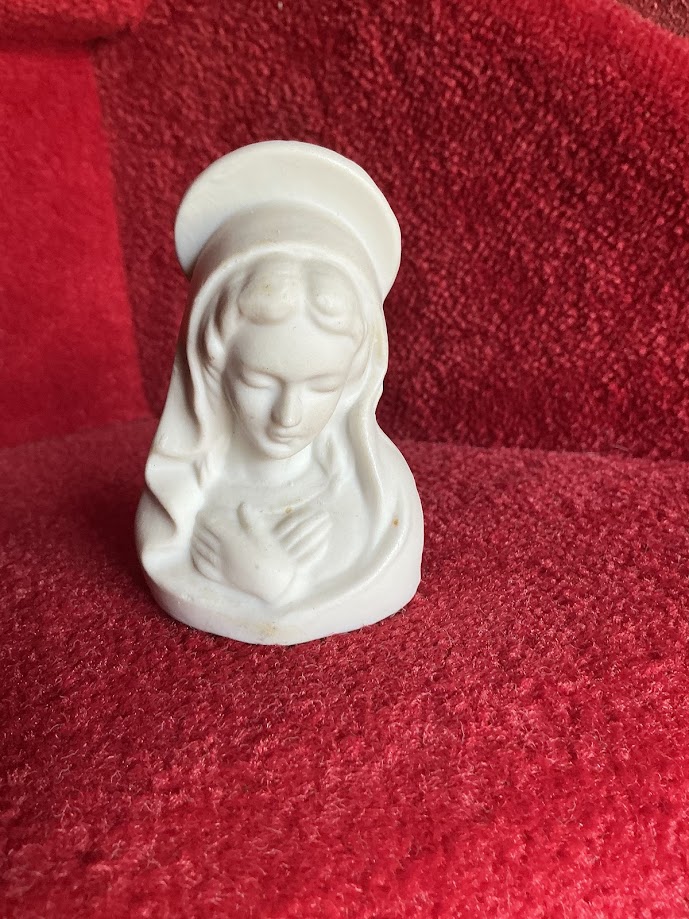
When buying a porcelain statue of Mary, the finish is everything. Bisque porcelain is unglazed and has a soft, matte appearance; glazed porcelain is smooth and shiny.
Our little bisque porcelain bust of Mary from the 1950s is compact and 8 cm tall. If you’d like to see the features discussed in person, there’s the sweet little bisque porcelain bust of Mary.
With porcelain, look for hairline cracks, broken fingers or flowers, and whether the glaze is even. Our Our Lady of Miracles from the 1950s is in perfect condition and undamaged.
Identifying an antique statue of Mary: age, origin, and authenticity
Identifying an antique statue of Mary starts at the base. Markings, engraved numbers, the type of base, and wear where the statue was handled tell you the most. Porcelain statues often have a factory mark on the underside of the base; on wooden ones, tool marks and carving style point to a period. But to be truly certain, you need to look beyond a single feature. Here’s a practical approach we use with every statue.
Step 1: Examine the material and finish
With wood, look at the direction of the grain and how the statue was carved. Hand-carved work has small irregularities: one fold is slightly deeper than another, one hand is a little different in shape from the other. Machine-made work is suspiciously uniform. Also look for tool marks in hollows that are normally out of sight, such as under the cloak or behind the head.
Step 2: Read the wear as a story
Wear is not damage but a clue. A statue that stood in a prayer corner for decades shows wear where it was handled: the waist, forearms, and edge of the base. If that wear is missing on a statue that otherwise looks old, it was probably made or restored later. On polychrome painted wooden statues, the paint on raised areas (nose, fingers, folds) is often the first to wear away. This pattern is difficult to replicate.
Step 3: check marks and numbers
Under the base of porcelain pieces, you may find a factory stamp, an engraved number, or a painted mark. These signs don’t tell you everything, but they can help with dating. A stamped mark that looks too sharp for an old statue may indicate a later example. Engraved initials or numbers are found on wooden pieces, often those of the carver or a religious institution. Always note what you see and compare it with the period given by the seller.
Step 4: assess the condition and any restorations
An antique statue may have scratches and minor damage; that comes with age. But watch out for uneven restorations: a brighter patch of paint on an otherwise weathered statue, a finger that’s just a slightly different color, or a base that doesn’t match the statue. Such alterations often reveal that a statue has been refurbished for sale. Always ask about its provenance and any restoration work.
Step 5: consider the provenance
A well-known factory, a documented antiques-market purchase, or a family history can make a statue more interesting, but rarely provide hard proof. If you want to dig deeper, we have two articles to help: religious statues from the 19th century: how to identify their features and 5 best ways to date saint statues.
Please note: a statue that looks too new for its age, or shows wear that doesn’t make sense for the period claimed, deserves extra scrutiny. Ask for photos of the base and any restorations before you buy.
Cleaning and caring for a statue of Mary by material
Cleaning and caring for a statue of Mary varies greatly by material.
What determines the price of a statue of Mary?
The price of a statue of Mary depends on its material, age, condition, and provenance. A small porcelain bust from the 1950s costs €11.50 from us; the wooden statue of Saint Anthony from the 1930s/50s costs €155. There’s a wide range between these two extremes, and the difference is easy to explain. Below are the factors we consider, along with the reasons behind them.
Material and technique
Hand-carved wood costs more than molded porcelain. A woodcarver spends hours or even days on a single figure; a porcelain figure is made from a mold, then fired and glazed. Still, porcelain isn't automatically cheap: bisque porcelain with fine details and an intact glaze can be worth more than a simple wooden figure. So it’s not just about the material, but the combination of technique and finish.
Age and period
A dated 19th-century piece carries more weight than a 1960s statue. That’s because older statues are rarer and more likely to have traceable provenance. But age alone is no guarantee: a damaged 19th-century statue may be worth less than an undamaged 1950s example.
Condition and restorations
An undamaged piece is worth more than a restored one. A small scratch is part of its age and does little to diminish its value; a deep crack running through the middle of the face or a broken finger does. Also look out for hidden restorations: a finger that’s just slightly different in color, or a base that doesn’t match the statue. Such interventions reduce the value, even if the statue looks good at first glance.
Provenance and documentation
A well-known factory or documented antique market makes a difference. A porcelain statue with a recognizable factory stamp is often worth more than an anonymous one. The same applies to wood: a statue by a known carver or from a church setting is more interesting than one without a story. Documentation doesn’t have to be extensive; a photo of the base or an old receipt can already help.
Size and detail
Fine wood carving and large statues require more work. A 24 cm statue with detailed folds and hands costs more than a simple 8 cm statue. With porcelain, fine details such as fingers and flowers reveal the quality of the mold. A larger statue isn’t automatically more expensive, but the detail and technique matter more than size alone.
What this means for your choice
So a wooden or porcelain statue of Mary is never simply expensive or cheap; the price reflects features you can check for yourself. When comparing statues, it’s best to consider the material, period, condition, and provenance rather than looking only at the asking price.
Choosing a statue of Mary from the collection
Choosing a statue of Mary from the collection comes down to three questions: what material, what size, and where it will go. A porcelain wall statue is the natural choice for a wall or niche; wood is better suited to a console or prayer corner. If you’re unsure about the material for a statue that will be placed outdoors, first read which material is best for an outdoor statue of Mary.
Our collection ranges from a compact bisque bust to a large wooden statue of a saint. And for anyone who wants to see a specific porcelain statue of Mary, the porcelain wall plaque of Mary with child is available in the collection.
The hardest choice is often not between wood and porcelain, but where to put the statue. We pack fragile statues using reused packaging materials. Browse our religious statues and devotional items, or get in touch if you're looking for a specific piece.
Frequently Asked Questions
What is the difference between a wooden and a porcelain statue of Mary?
A wooden statue of Mary is carved from wood, often linden, and has a warm, matte appearance with visible grain and woodcarving. A porcelain statue of Mary is molded and fired, with fine details and sometimes a glazed or bisque finish. Wood is generally heavier and less likely to break when knocked, while porcelain is more refined but more fragile. Both materials are found in antique and vintage versions, from the 19th century through the 1960s and 70s.
Which material is best for a statue of Mary in the home?
That depends on where the statue will be placed and how you plan to use it. Porcelain works well in a sheltered indoor spot, such as on a console or wall shelf, because it is fragile. Wood can withstand more and is suitable for a prayer corner or home altar where people pass by. If you have children or pets, a sturdy wooden statue is more practical. If you prefer fine details and a light appearance, porcelain is the better choice.
How can you recognize an antique statue of Mary?
Look for wear patterns, discoloration, and the finish on the base. On wood, you can often see gilding or polychrome paint worn away at the corners, and the grain reveals the handwork. On porcelain, uneven glaze, small firing flaws, and a mark or number on the underside can indicate age. Provenance and period help, but the only way to be sure is to examine the statue up close and check its condition for cracks, restoration, and missing parts.
How do you clean a wooden or porcelain statue of Mary?
Dust a wooden statue with a soft, dry cloth, and don't use damp products on untreated wood. For gilding or polychrome work, use a dry brush carefully. Wash porcelain with lukewarm water and a soft cloth, without harsh cleaning products. Never leave a porcelain statue standing in water, and dry it immediately. Move a statue as little as possible, and hold it by the base, not by any protruding parts.
Is a wooden or porcelain statue of Mary more fragile?
Porcelain is generally more fragile: it can break or crack if knocked or dropped, and damage is difficult to repair. Wood is tougher and can withstand more, although it may crack when dry or expand when damp. For both materials, the most important thing is to choose a safe spot: not on an edge where something could knock into it, and not in direct sunlight or near a heat source.
