

What is the best material for an outdoor statue of the Virgin Mary?
Last updated: November 12, 2026
Quick summary
Concrete and cast stone are the best choice for an outdoor statue of Mary in most gardens: they are dense, heavy, and frost-resistant, and cost a fraction of a bronze statue. Natural stone wins on character and bronze on longevity, but both require more of your budget and maintenance.
- Plastic and resin are usually unsuitable for outdoors: they are lightweight, discolor faster, and can blow over in a storm.
- Solid concrete provides the best protection outdoors against water seeping into the statue and expanding when it freezes.
- Granite has a water absorption rate below 0.5 percent, making it virtually unaffected by frost.
- Limestone is soft and porous, so outdoors it needs a sheltered spot and an annual check for hairline cracks.
- Never cover a statue with plastic: condensation gets trapped underneath and can still freeze.
Table of contents
- What is the best material for an outdoor statue of the Virgin Mary?
- Concrete statue of Mary for outdoors: heavy, dense, and frost-resistant
- Natural stone statue of Mary: granite, limestone, and sandstone compared
- Frost-resistant statue of the Virgin Mary: how it survives winter
- Maintaining a stone garden statue: what each material needs
- Weight, height, and placement: stability of an outdoor statue
- Choosing a material to suit the location, climate, and budget
- Giving your statue of the Virgin Mary a second life: how to choose the right one
- Frequently Asked Questions
What is the best material for an outdoor statue of the Virgin Mary?
An outdoor statue of Mary needs a material that can withstand rain, frost, and sun. A heavy stone or concrete statue stands more securely than a lightweight plastic one.
The short version: concrete and cast stone are the best choice for most gardens. They are dense, heavy, and frost-resistant, and cost a fraction of a bronze statue. Natural stone wins on character, bronze on longevity, but both require more of your budget and maintenance.
The four materials that are truly suitable
For a lasting outdoor statue, the options come down to four families:
- Concrete and cast stone - solid, heavy, and highly frost-resistant
- Natural stone - granite, limestone, and sandstone, each with its own characteristics
- Bronze and copper-look - elegant and durable, but expensive
- Cast iron - strong and detailed, but prone to rust on bare patches
Plastic and resin are usually unsuitable for outdoors. They are lightweight, discolor faster, and can blow over in a strong storm. They may work under a sheltered patio, but are best avoided in an open garden.
Concrete statue of Mary for outdoors: heavy, dense, and frost-resistant
Concrete is the safest choice for an outdoor statue of Mary. It has a dense structure, absorbs little water, and therefore withstands frost.
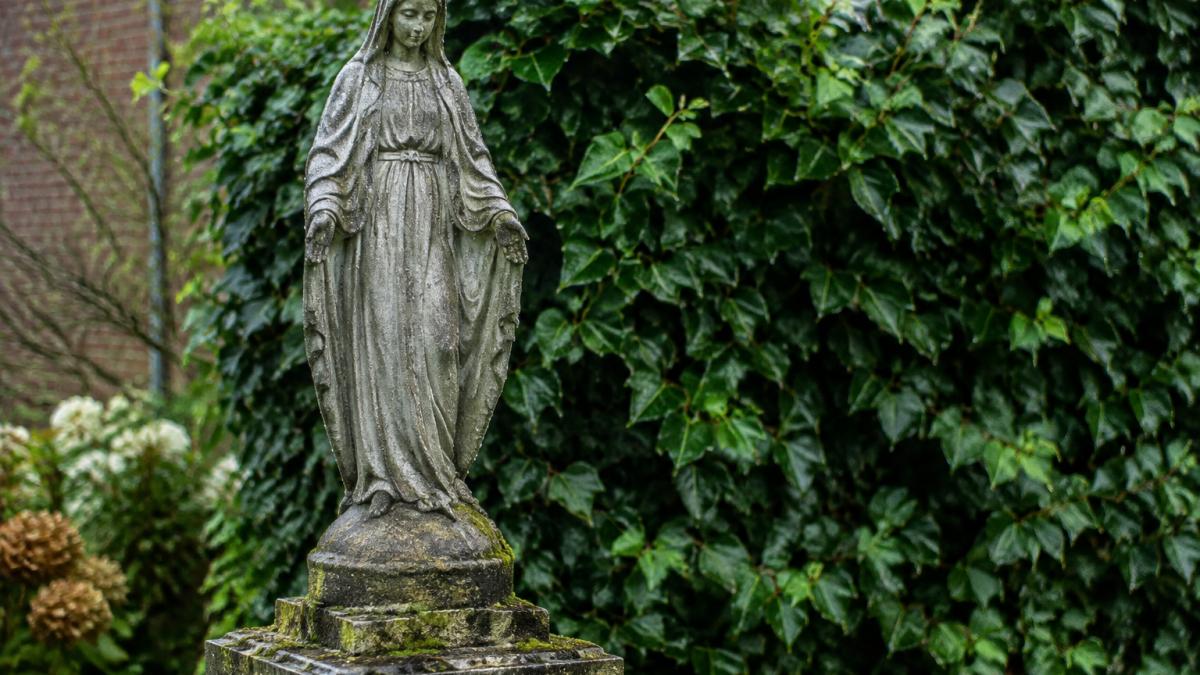
Choose a statue with a wide base and a sealed surface if possible. A heavy stone statue of a saint for indoors and outdoors shows what such a solid piece looks like.
Cast stone and solid concrete: what's the difference?
Cast stone is a mixture poured into a mold and then allowed to harden. Solid concrete is poured as a single piece and has no hollow space inside. You can tell the difference by the weight and the sound: a tap on solid concrete sounds dull, while a hollow cast piece sounds higher-pitched.
For outdoor use, solid concrete offers the best protection against water seeping into the statue and expanding in freezing weather. Cast stone is fine for a sheltered spot, but always check whether the manufacturer explicitly recommends it for outdoor use.
Natural stone statue of Mary: granite, limestone, and sandstone compared
Natural stone gives an outdoor statue of Mary an appearance that no cast material can match, but the three common types behave very differently in the elements. The choice depends mainly on how porous the stone is: the more water the stone absorbs, the more vulnerable the statue is to frost.
Granite: hard, dense, and almost maintenance-free
Granite is an igneous rock formed under high pressure. As a result, it is very dense: in practice, water absorption is often below 0.5 percent, making it virtually impervious to frost damage. A granite statue of Mary is heavy; even a half-meter-tall statue can easily weigh 40 to 60 kilos, which helps it stand firmly in the wind. Granite is generally considered weather-resistant.
Limestone: beautiful detail, but sensitive to moisture
Limestone, including marble and alabaster, is soft and porous. Water absorption can reach several percent, and that is exactly where problems arise in freezing weather: water in the pores expands and breaks off pieces of stone. Limestone is beautifully easy to sculpt, as seen in the fine facial features of a Pietà, but a statue in an open garden needs extra protection. Limestone is also sensitive to acid rain and moss in damp corners. If you want limestone outdoors, choose a sheltered spot and check for hairline cracks every fall.
Sandstone: colorful, but prone to wear
Sandstone falls between granite and limestone in terms of porosity. It is fairly dense but not waterproof, and its surface slowly wears away during prolonged rain. Sandstone is loved for its warm color and because it is easy to work with, but it needs a protective coating, such as a breathable stone sealer, to prevent stains and lichen. Without this coating, a sandstone statue becomes dull and rough over the years.
What to consider when buying
For natural stone, always ask about the type and origin, and check whether the statue is solid or made of several pieces. A statue made of several pieces has joints where water can seep in. Here you will find a Marble and alabaster Pietà of the Virgin Mary as an example of how limestone behaves in a statue: beautiful indoors or in a sheltered spot, but not the first choice for an exposed garden.
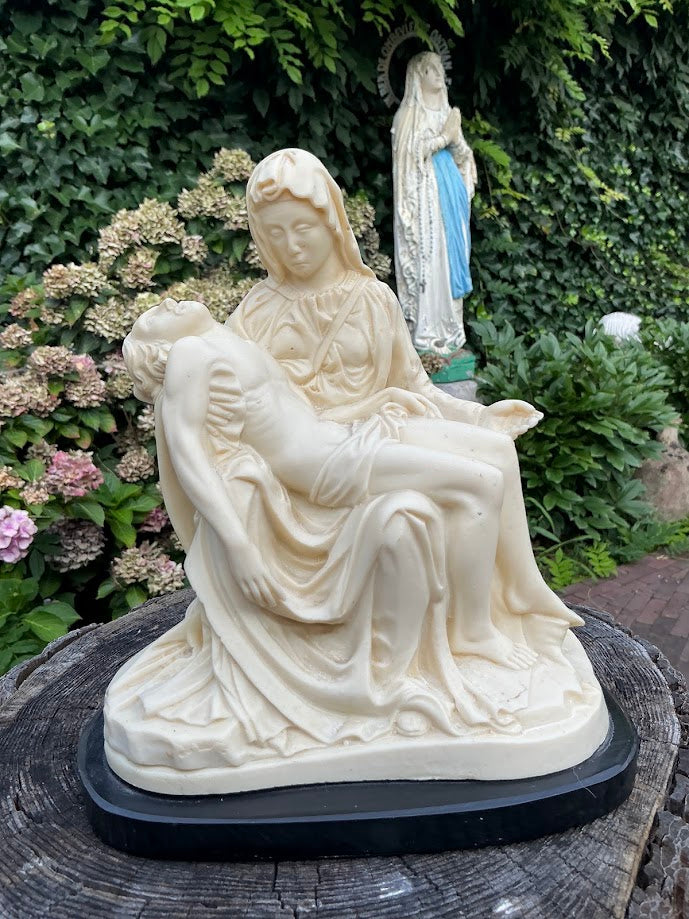
Note: Do not seal limestone and sandstone with a non-breathable product. Moisture will remain trapped underneath the coating, causing peeling and frost cracks instead.
Frost-resistant statue of the Virgin Mary: how it survives winter
Frost is the greatest enemy of any outdoor statue. Water that seeps into pores or cracks expands at temperatures below zero and pushes the material apart. The more porous the material, the greater the risk. A frost-resistant statue of the Virgin Mary therefore has a sealed surface and is preferably placed on a plinth that drains water. But the right approach varies by material: what is enough for granite is not enough for limestone.
How frost damage works in stone
Stone is never completely impermeable. Rain, splashing water and condensation penetrate pores and hairline cracks. At temperatures below zero, that water expands by about nine percent in volume. This expansion puts pressure on the pore walls, and repeated freeze-thaw cycles cause cracks that get progressively deeper. A statue that makes it through one winter undamaged may suddenly start crumbling after three harsh winters. The extent of this depends on how much water the material absorbs: solid concrete and granite absorb little, while limestone and sandstone absorb more.
Winter protection by material
- Solid concrete and cast stone: An annual cleaning with a soft brush and lukewarm water is usually enough. Check that the finish is still intact; a damaged top layer lets water through. Place the statue on a raised plinth so water can drain from underneath.
- Granite: Hardly affected by frost. A visual check for hairline cracks in autumn is sufficient. Do not cover granite: it withstands moisture, and a cover traps condensation instead.
- Limestone and sandstone: These need proper protection. Let the statue dry completely in autumn, then cover it with a breathable cloth or a wooden box that is open at the bottom so moisture can escape. Never use plastic that traps moisture. Consider applying a breathable stone sealer at the start of the wet season.
- Bronze and cast iron: Frost is not a problem, but moisture in hollow areas or on bare spots causes corrosion. Check for pitting and touch up bare spots with a suitable product.
Practical winter protection, step by step
- In autumn, clean the statue with a soft brush and lukewarm water, not a pressure washer, which forces water into the pores.
- Let the statue dry completely before covering it.
- Place the statue on a raised plinth so water can drain away instead of pooling beneath the base.
- Cover vulnerable parts with breathable material, never with plastic that traps moisture.
- After winter, check for hairline cracks and repair them immediately with a suitable filler for the material.
Note: covering a statue with a tight plastic cover is counterproductive. Condensation gets trapped underneath and can still freeze; with porous stone, this is the quickest way to cause frost cracks.
Maintaining a stone garden statue: what each material needs
The maintenance required for a stone garden statue varies greatly by material. Concrete and granite need just an annual cleaning. Limestone and sandstone require more attention because they absorb water and develop deposits more quickly.
A stone plaque or relief often requires less maintenance than a freestanding statue, because there is less surface area for water to collect on. If you’d like to consider a low-maintenance alternative, we offer a stone plaque with a relief of St. Thérèse.
Weight, height, and placement: stability of an outdoor statue
Stability starts with weight and height. A tall, narrow statue catches a lot of wind and needs to be securely anchored. A low, wide statue is stable on its own.
- Always place a freestanding statue on a flat, solid surface.
- Choose a plinth wider than the base of the statue.
- For a tall statue, anchor it with a ground spike or a heavy slab.
- Consider where the sun falls and how rainwater runs off.
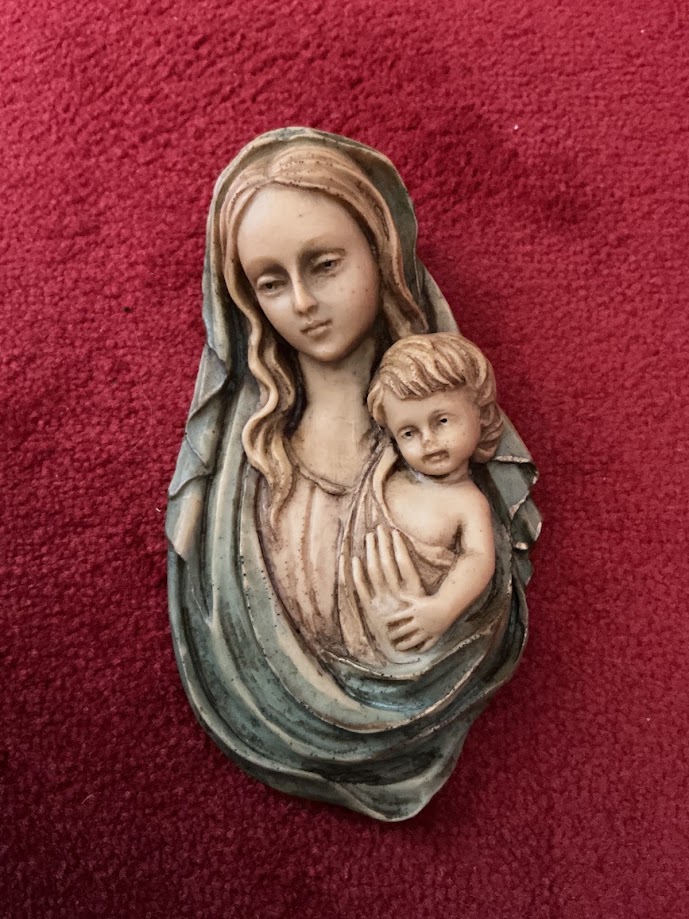
A wall statue is a practical solution for a narrow flower bed or a façade. For example, take a look at our wall statue of Mary with Child for indoors and outdoors if you have limited space.
Choosing a material to suit the location, climate, and budget
The best choice depends on where the statue will stand and how much you want to spend. The table below summarizes the trade-offs.
| Material | Frost-resistant | Maintenance | Weight | Price estimate |
|---|---|---|---|---|
| Solid concrete | Very good | Low | Heavy | Affordable |
| Cast stone | Good | Low | Medium | Affordable |
| Granite | Very good | Very low | Very heavy | High |
| Limestone | Fair | High | Heavy | Medium to high |
| Bronze | Very good | Low | Heavy | Very high |
| Cast iron | Good | Medium | Heavy | High |
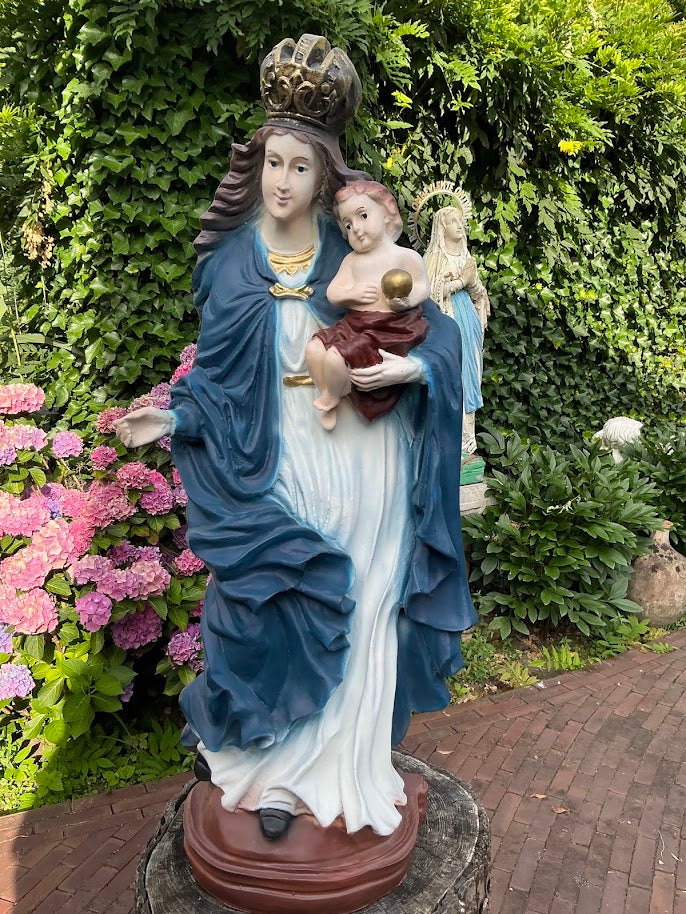
If the statue is exposed to strong wind and rain, concrete or granite is the best choice. If it is sheltered under a roof, limestone or cast stone works well. Our stone statues of Mary for indoors and outdoors show what’s available in practice.
Giving your statue of the Virgin Mary a second life: how to choose the right one
Older statues are sometimes made from solid materials and have already weathered the elements for years.
What to look for when buying:
- Check for hairline cracks, especially around the base and neck
- Tap the statue gently: a dull sound means it is solid, while a hollow sound is suspicious
- Ask about its origin and year
- Check whether the finish is still intact
- Weigh the statue or ask for its weight
At Chez Monique's 2e Leven, we give religious statues a second life in your home. We reuse packaging materials as much as possible.
Finding a suitable outdoor statue of the Virgin Mary starts with choosing the right material, which for most gardens is concrete or cast stone. Looking for one that has stood outdoors for decades and is still intact? Browse our collection of religious statues and devotional items. We check every piece for cracks, pack it carefully in reused materials, and ship it safely to you.
Frequently Asked Questions
What is the best material for an outdoor statue of the Virgin Mary?
For permanent outdoor use, concrete, cast stone, and granite are the safest choices. They are dense, absorb little water, and withstand frost. Bronze and cast iron last for generations but cost more. Plastic and resin are lightweight and affordable, but fade faster and can become brittle. Choose concrete or cast stone for a heavy, stable statue on a base, and granite if you want low maintenance.
Is a concrete statue of the Virgin Mary frost-resistant?
Well-compacted concrete with low water absorption is frost-resistant. The problem is usually moisture getting into hairline cracks or the base and expanding when it freezes. Place the statue on a raised, permeable surface so rainwater can drain away, and cover it during prolonged frost. This will keep an outdoor concrete statue of the Virgin Mary intact for years.
How do you protect an outdoor statue of the Virgin Mary from rain and frost?
Do not place the statue in a damp corner or under a gutter. A raised base of gravel or tiles prevents water from pooling. Cover it with breathable fabric during severe frost, never with plastic that traps moisture. Check for small cracks in the fall and do not fill them with silicone; let them dry instead. This helps keep a statue of the Virgin Mary frost-resistant through the seasons.
How do you clean a stone or concrete statue of the Virgin Mary?
Use lukewarm water with a little mild dish soap and a soft brush. Then rinse thoroughly and let the statue air-dry. Avoid pressure washers, hydrochloric acid, and harsh descalers, as they damage the protective patina. A plastic scraper is enough to remove stubborn moss from a stone garden statue. This keeps its classic appearance intact without damaging the material.
