

Vintage religious statues for interiors
Table of contents
- Why religious statues are timeless interior pieces
- Materials and styles of antique religious statues
- Recognising signs of authenticity in vintage devotional objects
- Styling antique devotional objects in modern interiors
- Protecting religious statues from moisture and mold
- Restoring and maintaining statues of saints
- Where to find authentic vintage religious statues
- Conclusion
- Frequently Asked Questions
Last updated: September 21, 2026
Why religious statues are timeless interior pieces
Vintage religious statues for interiors bring more than just decoration into the home. They tell stories of bygone centuries and add characterful warmth to every room. Whether you are a believer who feels deeply connected to religious art or someone who appreciates authentic, historic objects with soul, these pieces capture the imagination.
A plaster statue of Mary from the 1920s brings warmth to any interior; it is about craftsmanship, history, and authentic beauty.

Authentic statues have natural patina, handmade details, and color variations that reproduction art cannot imitate.
Materials and styles of antique religious statues
The most common materials are plaster, wood, terracotta, and bronze, each with its own characteristics and maintenance requirements.
Plaster statues from the Baroque and Neo-Gothic periods
Plaster statues dominate the market for antique religious art from the 19th and early 20th centuries. Plaster was inexpensive but was finished by hand for fine details.
Authentic plaster has porosity and natural color variation from creamy white to light yellow-brown. It absorbs moisture, which can lead to discoloration or mold.
Baroque plaster statues (17th-18th century) have dramatic poses; Neo-Gothic pieces (19th century) are more slender with elegant proportions, such as our plaster statue of Mary from the 1920s-30s (55 centimeters).
Wooden sculptures and bronze religious statues
Wooden religious statues are rarer and more valuable than plaster ones. These pieces usually date from the Middle Ages to the 18th century and are made of oak, linden, or walnut.
Wood is more stable in fluctuating humidity than plaster, but watch out for woodworm.
Bronze saint statues are the most durable. Bronze oxidises into a green or brown patina that protects the material. Our antique bronze statuette of Saint Anthony from the 1920s to 1930s can last for centuries; respect the patina and do not sand it.

Recognising signs of authenticity in vintage devotional objects
Many reproduction-religious statues are made to look old. Knowing how to spot the difference saves regret.
Genuine antique devotional objects show random, asymmetrical wear on the hands, face and feet. Artificial wear looks uniform.
Check the back and underside; counterfeiters pay less attention to these areas.
Styling antique devotional objects in modern interiors
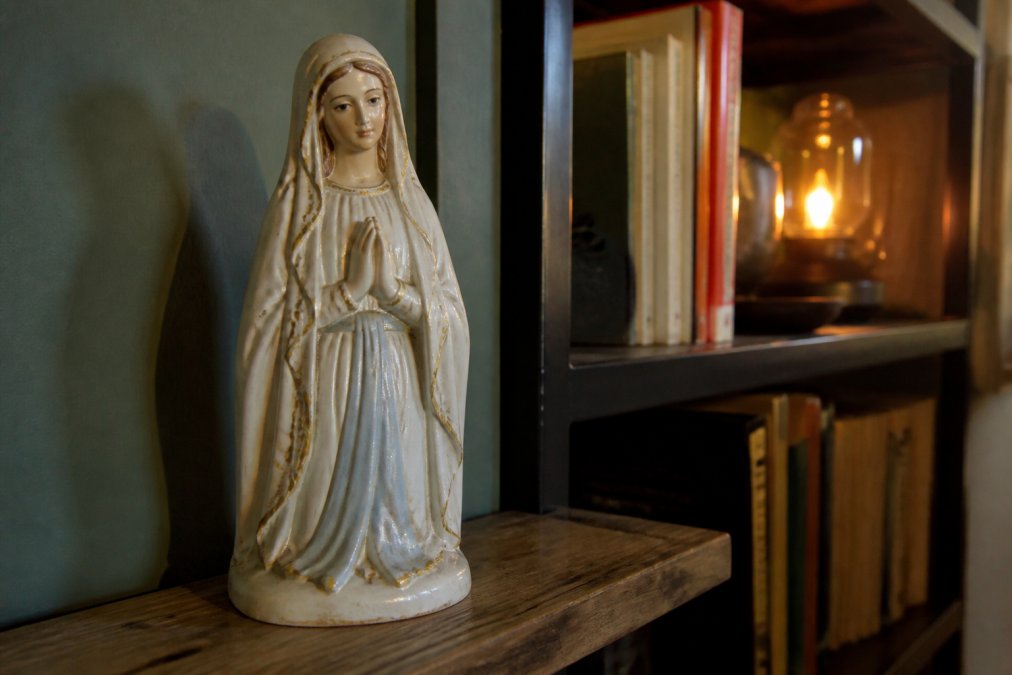
Industrial interior: raw textures and warmth
Industrial interiors need soft, organic elements. A plaster saint statue works through contrast: soft, handmade forms against hard, modern materials.
Scandinavian minimalism: simplicity and light
Scandinavian interiors are clean and light. Religious statues work subtly here: one statue, plenty of empty space.
Classic-romantic: grouping and context
In classic, warmer interiors, religious statues work well in small groups at different levels.
Colour as an anchor: what works and what doesn't
The background colour determines whether a statue 'sings' or disappears. Here are some practical guidelines:
- Off-white and cream plaster statues: work against almost anything, but best against grey (50-70% grey tone), beige, warm white and soft blue (not bright blue).
- Light yellow-brown plaster (natural patina): calls for warmer backgrounds, cream, soft gold, warm grey, terracotta.
- Dark bronze: works against light backgrounds (white, light grey, cream) and dark green or dark blue, but not bright red or bright orange.
Size and space: the rule of proportion
A large plaster statue (55 centimetres) needs a large, open space. In a small bedroom, it feels overwhelming.
Grouping: less is more
One good statue is stronger than three. Place multiple pieces at different heights with space between them for visual dynamism.
Antique statue of the Virgin Mary with the infant Jesus →
Protecting religious statues from moisture and mold
Many collectors place antique statues in bathrooms or basements where they become moldy. Protection requires active maintenance.
Why plaster is so sensitive to moisture
Plaster is hygroscopic and attracts moisture. In a humid climate, this can lead to mold without proper ventilation.
Prevention: proper placement and climate control
The first line of defense is placement. Never place your statue in:
- Bathrooms: even with ventilation, humidity remains high here.
- Basements or underground spaces: these have structurally high humidity.
- Windows where rainwater can splash: direct exposure to moisture quickly damages plaster.
- Corners without air circulation: this is where moisture accumulates.
- Open windows: natural ventilation is the cheapest option. Open windows on opposite sides of the room to create a draft.
- Electric dehumidifier: for permanently damp rooms. A small dehumidifier (300-500 watts) is sufficient for a bedroom or study. This costs €30-80 and uses little electricity.
- Silica gel or lime bags: place these near your statues. They passively absorb moisture. Replace them monthly or when they become saturated.
Detection: how to spot mold early
Mold on plaster starts subtly. Know what to look for:
- Fine white or gray haze: this is the first sign. It looks like powder on the surface.
- Dark spots: these indicate more advanced mold. This is worse.
- Musty smell: if your statue smells musty, mold is already present, even if you cannot see it.
- Soft spots in the plaster: this indicates structural damage caused by moisture and mold.
Check your statues monthly, especially during humid seasons (autumn and winter).
Cleaning: safely removing mold
If you see mold, act quickly but carefully. This is not something to postpone.
For dark or deep mold:
Drying after exposure to moisture
It happens sometimes: your statue has gotten wet (leak, transport in the rain, accident). Here is how to dry it safely:
- Remove surface water: gently dab with a clean, soft cloth. Do not wring it out.
- Place in a warm, dry room: ideally 20-25°C and below 50% humidity. A living room with heating is better than a basement.
- Ensure air circulation: place a fan nearby (not aimed directly at the statue, but into the room).
- Wait at least 48-72 hours: plaster dries slowly from the inside out. Do not rush.
- Check for mold: after drying, check daily for the first signs of mold. If you see any, follow the cleaning steps above.
Long-term conservation: annual check
Set a reminder in your calendar: once a year (for example, in September, before the damp season), check every statue:
- Visual inspection: look for mold, cracks, and discoloration.
- Smell test: smell the statue. A musty smell is a warning.
- Moisture measurement: measure the humidity in the room.
- Placement check: is the statue still in a safe, well-ventilated place?
This simple routine prevents 90% of moisture-related damage.
Wooden and bronze statues: different risks
Wooden statues of saints have different moisture problems. Wood shrinks and expands with humidity, which can lead to cracks and deformation. Make sure wooden statues are kept in the same dry environment as plaster ones, but pay extra attention to:
- Woodworm and wood rot: small holes in the wood are a sign. This requires professional treatment.
- Surface changes: if the wood starts to 'work' (warping, cracking), the humidity is too high.
Restoring and maintaining statues of saints
Carefully dust statues with a soft brush; do not use water or chemicals. Small cracks are authentic; large cracks require professional restoration. For wooden statues: check annually for woodworm. For bronze statues: respect the patina.
Where to find authentic vintage religious statues
At Chez Monique's 2nd Life, we select each statue based on its genuine age and authenticity. Our collection includes plaster statues of Mary from the 1920s to 1930s, French devotional items, and bronze statues of saints. Also visit local antique markets and brocante fairs.

Conclusion
Vintage religious statues for interiors are more than decoration: they are connections to the past and pieces of craftsmanship that add depth to your home. Authentic pieces make all the difference.
Frequently Asked Questions
How do you combine religious statues in a modern interior?
Religious statues work best as statement pieces in a modern interior. Place them on open shelves, cabinets, or as wall decor where they can catch the light. Combine plaster statues of saints with neutral colors and natural materials for a balanced effect. An antique statue of Mary or a wooden sculpture can serve as a focal point without making the interior feel religious. Make sure the statue has space around it and is not crowded with other objects.
What should you look for when buying vintage religious statues?
Always check the condition of the statue: look for original patina, signs of authenticity, and the absence of recent repairs. Pay attention to details such as craftsmanship, signatures, and material. Plaster statues from the 1920s-1930s are often signed on the back. Ask about the origin and provenance. At Chez Monique's 2e Leven, all objects are carefully selected for authenticity. Avoid statues with large cracks or moisture damage unless you want to restore them.
How do you clean antique religious statues without damaging them?
Use only soft materials: a dry, soft brush or microfiber cloth for dust. For plaster statues, use a slightly damp cloth carefully, but never get them wet. Avoid abrasive products, strong chemicals, or water. For heavy dirt, you can carefully use lukewarm water with a drop of mild soap powder, but test this on an inconspicuous spot first. Then let the statue dry thoroughly. For wooden or bronze statues, it is best to consult a restorer.
How do you protect religious statues from moisture and mold?
Place statues in dry locations, away from bathrooms, kitchens, and outdoor areas. Ensure good ventilation and keep humidity below 60%. Do not use plastic covers, as they trap moisture. Regularly check for mold, especially on plaster statues. In damp spaces, you can place a small silica gel sachet nearby. Avoid direct sunlight, which can cause fading. At Chez Monique's 2e Leven, statues are carefully packaged with reused materials that provide protection without creating moisture problems.