

7 Secondhand Hummel Figurines: Where to Buy, Value, and Identification
Last updated: November 6, 2026
Quick Summary
The safest way to buy secondhand Hummel figurines is from a specialist online shop that clearly displays product photos and descriptions, such as Chez Monique's 2e Leven. Always check the mark and model number on the base, and compare the price with completed sales rather than asking prices.
- For auctions and private listings, ask for extra photos of the base and the number.
- An original figurine has a sharp, even mark and a model number that matches the subject.
- Gather at least five completed sales of the same model before determining a realistic value.
- Cosmetic damage has a limited impact, but a hairline crack or a glued-on horn significantly reduces the value.
- An auction is worthwhile mainly for rare pieces; for common figurines, buying directly is often more affordable.
Table of contents
- Where can you buy secondhand Hummel figurines?
- Identifying original Hummel figurines by their mark and number
- How to value Hummel figurines: from asking price to actual sale price
- Assessing condition and recognizing damage
- Hummel Figurines at Auction: When Is It Worthwhile?
- Selling Hummel Figurines: Channels and Realistic Expectations
- Choosing a Hummel figurine for your own collection
- Frequently Asked Questions
Where can you buy secondhand Hummel figurines?
Secondhand Hummel figurines are available in various places, each with its own advantages and disadvantages. At Chez Monique's 2e Leven, you'll find a carefully curated collection of antique and vintage objects, with a special focus on religious statues and devotional items. Below, we explain what to look out for and how to recognize a good purchase.
We strive to carefully select the items we offer. A figurine such as the product: Hummel Goebel angel with horn and lantern - flawless porcelain figurine is an example of a flawless, numbered piece.

Auction sites and large secondhand platforms offer a huge selection, but quality varies widely. Many sellers provide only a brief description of their figurines, and photos often conceal scratches or hairline cracks. So always read the description carefully and, if necessary, ask for extra photos of the base.
Buying from a specialist online shop lets you view the product images and description before making your choice.
Identifying original Hummel figurines by their mark and number
You can usually identify an original Hummel or Goebel figurine by the mark and a number on the base. The mark varies by period, so always compare it with reliable references before buying.
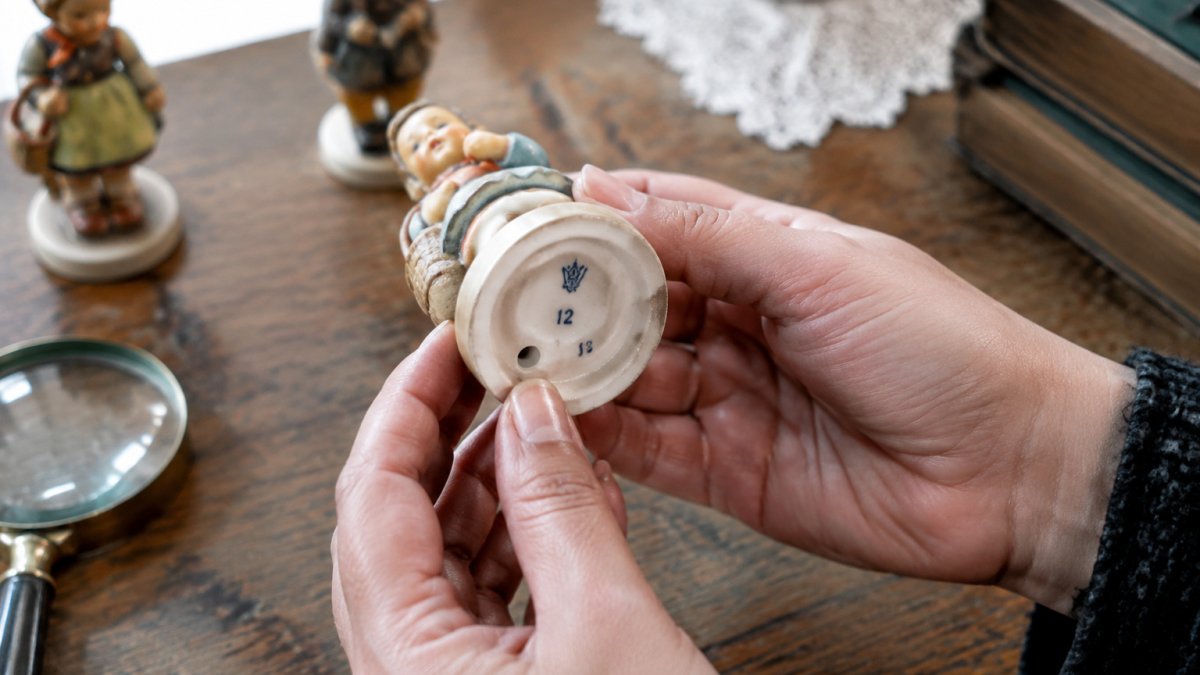
Pay attention to the following points when checking:
- The mark is sharply and evenly impressed or stamped
- The model number is present and matches the subject
- The painting is fine and symmetrical, with no bleeding colors
- The porcelain feels smooth and heavy for its size
A figurine such as the product: GOEBEL Christmas 1952 Mary with Child HX237/A is numbered and marked, making it easier to trace its origin.
If the mark is missing or unclear, be cautious. Ask the seller for additional photos of the underside and the number.
How to value Hummel figurines: from asking price to actual sale price
The asking price in a listing says little about what a figurine actually sells for. Asking prices are often higher than the amount ultimately paid. If you want to buy or sell a figurine, it is best not to look at just one listing, but at a range of completed sales for the same model in similar condition.
How to determine a realistic value in four steps
- Note the model number and date of the mark. The number is on the underside, often alongside a year or maker's mark. An early mark from the 1950s or 1960s carries different weight from a late reissue from the 1990s.
- Find at least five comparable sales. Look at completed listings and auction results for the same version, not items that are still for sale. A figurine that has been listed for months is no proof of its value.
- Adjust for condition and completeness. A pristine example with its original box or label generally fetches more than the same model with a chip or restoration.
- Factor in rarity and theme. Religious scenes, Christmas scenes, and early models often attract more bidders than everyday child figures. A theme alone does not automatically make a figurine expensive; the combination of rarity, condition, and demand determines the outcome.
A concrete example: the product: GOEBEL cheerful beer stein Monk T.74/1 is listed for €75,00 in pristine condition with a clearly visible mark. That is the asking price in the listing. Compare it with completed sales of the same model before drawing a conclusion.

Telling asking price, estimated value, and final price apart
- Asking price: what the seller hopes to get. Often set too high, especially by private sellers.
- Estimated value: the average amount buyers are willing to pay, based on multiple completed sales.
- Final price: what was actually paid, including any auction and shipping costs.
Note: Don't confuse a high asking price with high market value. Looking only at asking prices can quickly lead you to pay too much or ask too little.
Rare and unusual models
Some models are rarer than others, and that is reflected in their price and demand. Pay particular attention to unusual subjects, early models, and pieces with a clear historical background.
The product: Beautiful GOEBEL Christmas wall plate by Janet Robson combines a Christmas image with Janet Robson's design. Here too, compare it with completed sales of similar wall plates, not with the highest asking price you come across.
The table below summarizes what to do at each step of the valuation and what to look for.
Hummel Goebel angel with horn and lantern – pristine porcelain figurine →
| Item | What to do | What to look for |
|---|---|---|
| Model number | Note the model number and marking period | An early mark carries a different weight than a later reissue |
| Comparable sales | Compare at least five completed sales | Pieces that have been for sale for months tell you little |
| Condition and completeness | Adjust for condition and missing parts | An undamaged piece with its box fetches more |
| Rarity and subject | Take the subject and series into account | The subject alone doesn't automatically make a figurine expensive |
| Asking price | See it as what the seller hopes to get | Often set too high |
| Final price | Including auction and shipping costs | That's the amount that actually matters |
Assessing condition and recognizing damage
A figurine's condition determines a large part of its value, but not all damage carries the same weight. A small chip on the underside is different from a broken horn that has been glued back on. Anyone buying or selling a figurine should check its condition systematically rather than relying on the description “in good condition.”
Condition assessment checklist
Check the following points, preferably with the figurine in your hand or with sharp photos taken from all sides:
- Surface and glaze: Look for scratches, stains, dull patches, and crazing. Crazing can be harmless, but may also indicate moisture damage or an old restoration.
- Delicate parts: Check the hands, fingers, wings, horns, hats, and flowers. These are the areas where hairline cracks and breaks are most likely to appear.
- Hairline cracks: Hold the figurine up to the light and look for fine lines.
- Restorations: Look for color differences, a different sheen, or a visible transition where a part has been glued or touched up. Ask the seller explicitly whether any restoration work has been done.
- Paintwork: Check that the colors have been applied evenly and that there is no running or worn paint, especially on faces and hands.
- Base: Check the maker’s mark, model number, and edge for cracks or wear. A worn edge may indicate frequent use.
- Completeness: Check that all parts are present, such as a loose accessory, umbrella, or flower. Missing parts significantly reduce the value.
Cosmetic Damage vs. Damage That Affects Value
Not all damage is the same. Distinguish between:
- Cosmetic damage: light scratches on the base, a dull spot in an inconspicuous place, or a small chip on an edge that isn’t visible. This damage has a limited effect on the price, often just a few euros to around ten euros.
- Damage that affects value: a hairline crack through a visible area, a broken-off and glued horn, restoration, or missing parts. This can reduce the price by roughly half compared with an intact example, and the value of rare pieces may fall even further.
A figurine in pristine condition is rare and valued more highly. Minor damage isn’t always a deal-breaker, but factor it into the price and, if in doubt, always ask for extra photos of the base and delicate parts.
Note: A figurine that looks “intact” in a photo may have a hairline crack or restoration that isn’t visible. Always ask for a photo in daylight against a plain background, and have the seller confirm that there are no breaks or restorations.
Hummel Figurines at Auction: When Is It Worthwhile?
An auction can be worthwhile if you’re looking for a specific model and have patience.
An auction is mainly worthwhile for rarer pieces that are in high demand. For common figurines, buying directly is often more affordable and reliable. Check the shipping and return policies for every auction, and read the seller’s description carefully.
A listing for a Goebel porcelain St. Joseph figurine, Joseph with the baby Jesus, with clear measurements and a maker’s mark is easier to assess than a brief auction listing without photos.
Selling Hummel Figurines: Channels and Realistic Expectations
If you want to sell figurines yourself, choose a channel that suits the type of piece. An ordinary figurine is easy to sell online, while a rare piece is better suited to a specialist channel or an appraisal.
Be honest in your description. State the condition and model number, mention any damage, and include clear photos of the front, side, and underside. Don’t expect a high price for damaged pieces, and be prepared to negotiate on common models.
Choosing a Hummel figurine for your own collection
When choosing a figurine for your collection, consider its subject, condition, and provenance. Start with a theme that appeals to you, such as Christmas, religious heritage, or a particular maker, and gradually build on it.
Choose pieces in flawless condition with a clear maker’s mark and number whenever possible. This makes later resale or appraisal easier and helps keep your collection valuable. Browse our selection at Chez Monique's 2e Leven and give a unique piece a second life in your own home.
Frequently Asked Questions
Where can I buy secondhand Hummel figurines?
You can find secondhand Hummel figurines at antique shops, brocante and flea markets, in private listings on online marketplaces, and at auctions. Specialty shops and online stores specializing in vintage porcelain often offer more reliable provenance, although you will usually pay a little more. Before buying, always compare the asking price with what similar pieces have actually sold for.
How can you identify an authentic Hummel figurine?
An authentic Hummel figurine generally has a maker’s mark and model number on the underside. Also check the quality of the porcelain, the fineness of the painting, and the finish on the edges. Unusual stamps, unclear numbers, or rough finishing are signs to look more closely. If in doubt, an independent appraisal is the safest option.
How much are secondhand Hummel figurines worth?
The value of a secondhand Hummel figurine depends on the model, age, condition, and demand among collectors. Prices vary widely depending on the model and condition. Look at completed sale prices rather than just asking prices, as they provide a more realistic picture.
Are Hummel figurines cheaper at auctions than at specialty shops?
At auctions, you can sometimes get a bargain, especially on less sought-after models or figurines with minor flaws. At the same time, competition for popular pieces can drive the price up considerably, on top of storage fees and the buyer’s premium. Specialty shops are generally more expensive but often offer greater certainty about authenticity and condition.
