

Building a rosary collection in 2026: practical guide
Table of contents
- Why build a rosary collection in 2026?
- Recognizing an antique rosary: materials and features
- Buying a vintage rosary: what should you look for?
- Determining the value of an antique rosary: factors and budget
- Storing and caring for an antique rosary
- From individual finds to a cohesive rosary collection
- Conclusion: start small and collect thoughtfully
- Frequently Asked Questions
Last updated: October 15, 2026
Why build a rosary collection in 2026?
Building a rosary collection means deliberately bringing together devotional items around a single theme, period, or material, rather than buying individual pieces at random. More and more people are combining devotion with heritage: you can pray with them or preserve them as historic objects with character. At Chez Monique's 2e Leven, we focus on a carefully curated collection of antique and vintage objects, with a special focus on religious statues, devotional items, and unique collectibles.
The motivation differs from collector to collector. One person is looking for a 1930s prayer cord with a story. Another wants a display case with five generations of craftsmanship. Both need the same foundation: knowing what you’re buying.
This guide shows you how to identify, buy, assess, and preserve one. We’ll start at the beginning: what exactly you’re holding.
Recognizing an antique rosary: materials and features
Recognizing an antique rosary starts with three things: the material of the beads, wear on the cord, and the finish on the crucifix. Genuine age is rarely visible in just one detail; it shows in the combination.

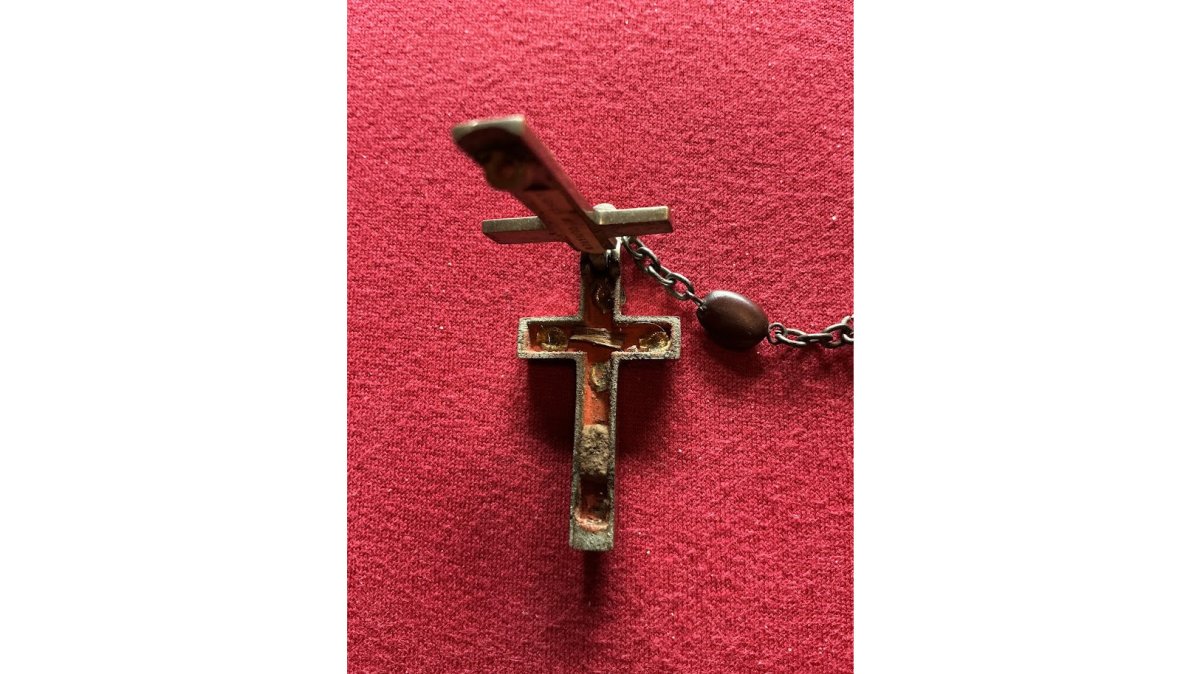
Look for these signs:
- Differences in color between individual beads from years of use
- Even patina on the metal, not blotchy
- Hand-turned beads, often not quite perfectly round
- A centerpiece that fits logically with the rest
What most guides miss: a rosary that looks too perfect is usually recent. Nothing stays shiny forever.
Commonly used materials through the decades
Wood and glass are the most common materials, followed by Bakelite and metal. Each era had its own preferences. 1920s and 1930s: ebony and Bakelite. 1950s: lighter woods and plastic. Later: metal and glass.
Bakelite feels warm and sounds dull. Glass is cool and clear. Wood smells old and dry. These are the signs to look for.
Buying a vintage rosary: what should you look for?
Buying a vintage rosary is about verification, not luck. Always ask about its provenance, detailed photos, and the condition of the cord. A nice photo of the front tells you little about the back.
In practice, you can buy through four channels, each with its own risks:
- Marktplaats and Catawiki: a wide selection, but private sellers rarely offer a warranty. Always ask for a photo of the entire piece next to a ruler so you can check its length.
- Antique shops and thrift stores: you can see the piece in person, but prices are often 30-50% higher than online. Bring a magnifying glass to inspect the beads and fastenings.
- Auction houses: the best place for rare pieces, but expect a 20-25% buyer's premium on top of the hammer price, plus shipping costs.
- Specialist online stores: usually the safest option, with clear photos, a return policy, and a stated condition.
Safe payment and shipping
Where possible, pay using a payment method with buyer protection, such as iDEAL through a platform with a dispute resolution process, or by credit card. When buying from a private seller on Marktplaats, never pay in advance by bank transfer without seeing the piece, unless you can verify the seller through previous reviews.

Check these points when shipping:
- Ask for tracked and insured shipping; an antique rosary is often fragile.
- Ask for the piece to be packed in an acid-free box with soft padding, not an envelope.
- As soon as it arrives, check that the cord hasn't stretched and that all the beads are there.
- Keep the packaging until you're sure you want to keep the piece; you'll need it if you return it.
Questions for the seller
Ask these questions before you pay:
- Where does the piece come from?
- Have there been any repairs or replaced parts?
- What is the exact length, measured twice?
- Can you photograph the crucifix and inscriptions?
- How will it be packaged for shipping?
- Is there proof of purchase or documentation for the piece?
A seller who dodges these questions tells you enough. A seller who answers them thoroughly gives you a solid foundation.
Red flags
- A price far below market value for a rare piece.
- Photos that look like they're from a catalog or another website.
- No answer when you ask about provenance or documentation.
- Only an overview photo, no close-ups.
- Pressure to decide quickly ("there's already another buyer").
Recognizing these signs helps you avoid the most common disappointments when building a collection.
Determining the value of an antique rosary: factors and budget
The value of an antique rosary depends on rarity, condition, provenance, and documentation. A rare 18th-century rosary with a Lourdes crucifix and an image of Bernadette carries more weight than a common model from the same period.
| Factor | Why it determines the price | What to look for |
|---|---|---|
| Rarity | Fewer examples, greater demand | Edition and model |
| Condition | Original parts remain rare | Cord, beads, crucifix |
| Provenance | Documentation builds trust | Inscriptions, labels |
| Documentation | Proof of authenticity | Photos, proof of purchase |
| Material | Precious metal or rare wood increases the price | Silver, ebony, bakelite |
What pieces fetch in practice
Prices for antique rosaries vary widely, depending on rarity, condition, and provenance. As a guide:
- Entry-level (€15-€40): simple wooden or plastic rosaries from the '50s-'70s, often without documentation. Suitable for beginners.
- Mid-range (€40-€120): well-preserved examples from the '20s-'40s, made of bakelite, glass, or ebony, with a copper or silver crucifix.
- Upper (€120-€400): rare models with precious metal, a reliquary holder, or clear provenance, often sold through auction houses.
- Top (€400+): 18th- or 19th-century pieces with documentation, museum quality, or a special devotional context.
These ranges are indicative; a piece with unique provenance may exceed the range, while a common model will fall below it.
Antique rosary with reliquary holder →
A realistic budget plan
A realistic budget plan helps you build a collection. If you’re serious about collecting, set aside a fixed amount each year instead of buying impulsively.
A practical plan for 2026:
- Quarter 1: €30-€50 for one well-preserved entry-level piece to train your eye.
- Quarter 2: €40-€60 for a mid-range piece with clear provenance.
- Quarter 3: €0-€30 for care supplies (acid-free box, soft cloth, magnifying glass).
- Quarter 4: €50-€100 for one outstanding piece that gives your collection direction.
Value versus price
What a piece is worth isn’t the same as what you pay for it. A seller may set a high asking price based on emotion or lack of knowledge. Always compare with recent sales of similar pieces, and be prepared to wait. Patience is the cheapest tool in your collection.
Also keep track of what you pay: a simple record of the purchase price, date, and condition will give you an idea after a few years of what your collection has really come to be worth.
Storing and caring for an antique rosary
Storing and caring for an antique rosary requires little effort, but it does require regularity. Store the piece in a dark, dry place, lying flat. Avoid direct sunlight, as it discolors wood and glass.
Practical approach:
- Store in a display case or an acid-free box
- Store flat, never hanging by the cord
- Touch metal with bare hands as little as possible
- Dust with a soft, dry cloth
- Leave repairs to a professional
From individual finds to a cohesive rosary collection
A rosary collection only becomes a collection when it has a unifying theme. Choose a theme before buying more: a period, a country, a material, or a devotional motif.
These categories work well:
- Period, for example the 18th century or the 1930s
- Material, for example ebony or Bakelite
- Origin, for example French devotional items
- Motif, for example Lourdes or Trappist
Keep a simple record: photo, purchase date, price, provenance, and condition. Over time, this will show you what your collection is missing.
At Chez Monique's 2nd Life, we select pieces along exactly those lines. Our antique rosary with relic holder from the 1930s to the 1950s, with wooden beads and a cross-shaped relic holder, belongs in a collection of devotional items with historical depth. If you’re looking for an affordable start, our antique French rosary with wooden beads and a copper cross from the 1930s offers a concrete starting point.
Collection categories and selection criteria only work if you write them down. Without a plan, a collection becomes a pile.
Conclusion: start small and collect thoughtfully
The biggest challenge when building a rosary collection isn’t money, but patience. Buy too quickly, and you’ll end up with ten pieces that don’t go together.
At Chez Monique's 2e Leven, you’ll find carefully selected antique and vintage devotional items, with a focus on religious objects and unique collectibles. We reuse packaging materials whenever possible and check every package to ensure safe transport, so fragile pieces arrive intact. Browse our latest arrivals and give a special object a second life in your collection.
Frequently Asked Questions
How do you start collecting rosaries?
Start with a clear theme, such as rosaries from a particular period or made from a specific material. Read up on common characteristics, set a budget, and buy your first piece from a reliable seller. Then record the provenance and price of each purchase to keep your rosary collection organized as it grows.
How can you recognize an antique rosary?
Look at the material, wear, and construction. Old rosaries often have wooden, glass, or Bakelite beads and a crucifix with a patina. Irregularities, handcrafted connections, and a yellowed color indicate age. New pieces are usually finished more evenly. If in doubt, ask an experienced collector or a specialist seller for a second opinion.
What should you look for when buying a vintage rosary?
Check that all the beads are present, the crucifix is firmly attached, and there are no cracks in the material. Ask about its provenance and whether any documentation is available. Compare prices of similar pieces before buying. A seller who provides clear photos and background information offers more peace of mind than an anonymous listing with no details.
How do you store and care for an old rosary?
Store an antique rosary in a dry place, away from direct sunlight and moisture. Use a soft box or fabric pouch to prevent scratches. Clean only with a soft, dry cloth. Avoid water, soap, and harsh products, as these can damage wood, Bakelite, or metal. This will keep your rosary collection in good condition.
A collection grows most beautifully when every piece has a reason to be there. That takes a keen eye and a little patience. At Chez Monique's 2e Leven, we’re here to help: our collection of antique and vintage devotional items is carefully curated, we pack fragile objects using reused materials, and we check every shipment to ensure safe transport. Start with one piece that truly speaks to you and build from there.