

Best online shops for unique devotional items in 2026
Table of contents
- What unique devotional objects are exactly
- Comparison table: devotional objects by category
- Buying religious statues: what to look for
- Buying a rosary with a silver cross: what to look for
- Collecting antique devotional objects: from folk devotion to a private collection
- Maintenance and restoration of sacred objects
- Sustainability and styling advice for religious articles
- Conclusion: Finding Your Next Unique Devotional Item
- Frequently Asked Questions
Last updated: September 16, 2026
What unique devotional objects are exactly
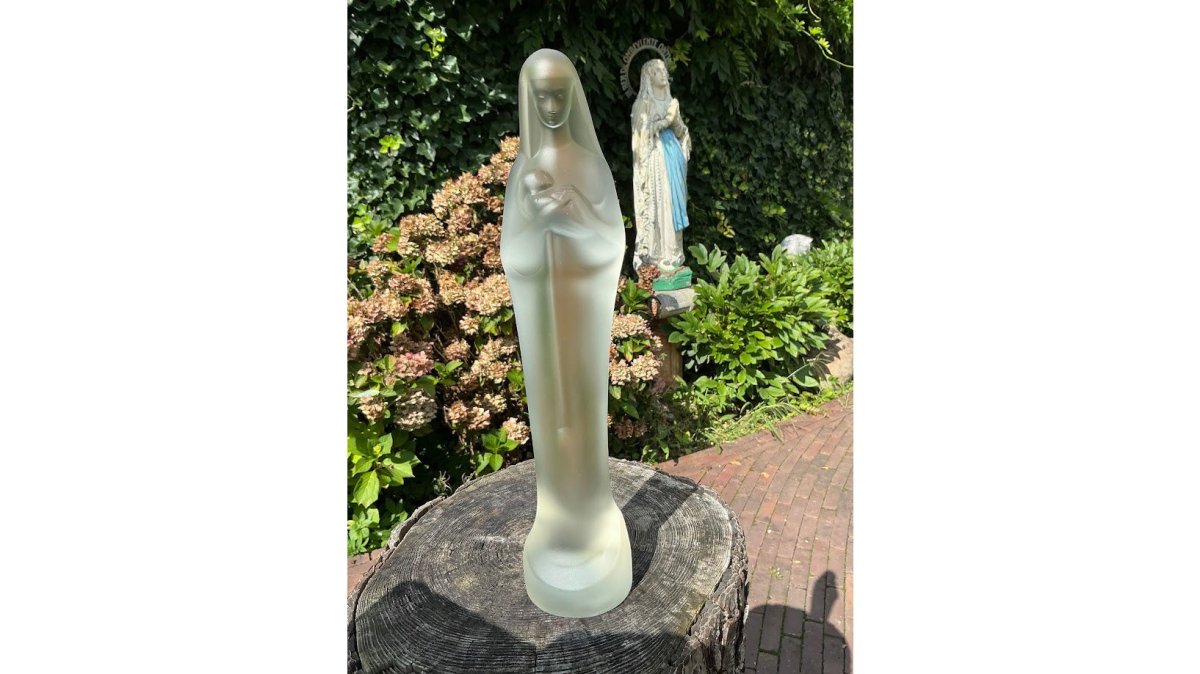
Unique devotional objects are religious items you do not come across in every shop: a Madonna made of Leerdam glass from 1929, a hand-carved Clare of Assisi, a Lourdes bottle with decades of devotion in the glass. They are devotional objects with a history of their own, made in small editions or preserved by families. At Chez Monique's 2e Leven, our entire collection revolves around precisely that distinction: not standard items, but sacred objects with a story.

That distinction is the core of this guide. The market for religious articles is large, but the supply of truly unique devotional objects is fragmented. You can find them at specialized dealers, flea markets and thrift stores, but rarely in one place with clear information about provenance, material and period. Below you will read what to look for in each category.
Comparison table: devotional objects by category
This table summarizes what characterizes each category, which materials you may encounter and what to look for when buying.
| Category | Typical materials | Period | What to look for |
|---|---|---|---|
| Statues of the Virgin Mary | Plaster, glass, wood | 1920s-1980s | Maker's mark, patina, glass eyes |
| Statues of saints | Wood, copper, bronze | 1920s-1980s | Hand-painted detail, pedestal |
| Crucifixes | Tin, copper, wood | Approx. 1900-1950 | Corpus, weight, ornamentation |
| Rosaries | Wood, copper | 1950s-1960s | Beads, cross, provenance |
| Holy water bottles | Glass, plastic | 1950s-1980s | Relief, size, completeness |
In practice, these categories overlap. A statue of the Virgin Mary can be both a devotional object and an interior piece, and that is precisely why unique devotional objects appeal to such a broad audience.

Buying religious statues: what to look for
When buying religious statues, pay attention to three things: provenance, material and condition. A statue without provenance may be beautiful, but lacks the historical value a collector is looking for. Damage to a face or hands affects the value more than a crack in a pedestal.
A common mistake is to look only at the photo. Ask about the back, the underside and any maker's marks. That is precisely where you find the information that confirms authenticity. A French statue of the Virgin Mary with the maker's mark on the underside tells you more than any description could.
Statues of saints and icons
You can recognize statues of saints by their attributes: Clare of Assisi carries a monstrance, while Anthony carries the Christ Child. These symbols determine not only the value, but also whom the piece was intended for. A hand-painted wooden statue from the 1980s is often in better condition than a plaster example from the 1920s, simply because it is younger.

Crucifixes and rosaries
Crucifixes and rosaries form the backbone of any devotional-object collection. With crucifixes, examine the corpus: was it made and attached separately, or cast as a single piece? With rosaries, the completeness of the beads and the cross is especially important.
Buying a rosary with a silver cross: what to look for
If you want to buy a rosary with a silver cross, pay attention to three points: the silver content, the cross's fastening, and the condition of the beads.
The fastening reveals a great deal about the quality. A cross hanging from the chain by a simple ring was often replaced later. Original connections are sturdily made and fit the period of the beads. Also check that the beads are evenly matched and that none are missing; a rosary with gaps is difficult to restore without losing its character.
Collecting antique devotional objects: from folk devotion to a private collection
Collecting antique devotional objects starts with a theme. Do you collect statues of the Virgin Mary, crucifixes, or holy water bottles? A clear theme makes searching more focused and gives your collection greater coherence. Collectors who buy everything indiscriminately often end up with individual pieces without a story.
Folk devotional objects are a rewarding collecting area because they remain affordable. Objects that once stood in living rooms and home altars are now sought after for their craftsmanship and historical value. Their value rarely lies in the material; it almost always lies in the combination of age, condition, and provenance.
Recognizing signs of authenticity: a checklist
You can recognize authenticity by four signs: marks, materials, patina, and construction. A mark on the underside is the strongest evidence. If it is absent, examine the material and how the piece was constructed.
1. Marks and stamps. You may sometimes find a mark on the underside of statues, on the back of crucifixes, or on the cross of a rosary. Dutch and Belgian pieces from the 1920s-60s often bear a factory stamp, an initials mark, or a religious monogram. A mark that looks like a later addition, with sharp edges on an otherwise worn surface, is suspicious. Also pay attention to the mark's material: a stamp in soft tin should have the same patina as the rest of the object.
2. Materials and weight. Antique devotional objects are often heavier than modern reproductions. A plaster statue from the 1920s generally weighs more than a modern cast version because the plaster mass is denser and there are fewer hollow spaces. For copper and bronze objects, look at the thickness of the metal. Reproductions are often thinner and feel light.
Large rare Madonna with Child Steph →
3. Patina. Patina is difficult to fake. Natural patina on copper and bronze is uneven and follows the shape of the object: in places that are frequently touched, the patina is thinner or gone, while in sheltered places it is thicker. An artificially aged piece often has an even, dull layer that is uninterrupted everywhere. With plaster statues, look at the paint: original decoration develops craquelure in a way that is difficult to imitate. Artificial craquelure with a fine, regular pattern is a warning sign.
4. Construction. Look at how the object is put together. Were the parts made and attached separately, or was it cast in one piece? A crucifix with a corpus attached separately often points to an older production method. With rosaries: is the cross attached to the chain with a solid ring, or with a simple connection that was replaced later? Original connections are consistent with the period of the beads and are solidly made.
From checklist to collection
Use the checklist as an initial filter, not as a definitive judgment. An object that meets three of the four criteria deserves further investigation. When in doubt, always ask about the back, underside, and any markings: that is precisely where you find the information that confirms authenticity. A French statue of Mary with the maker's mark on the underside tells you more than any description could.
At Chez Monique's 2e Leven, we assess every object on these four points before it enters the collection. That way, you know that what you buy is authentic.
Maintenance and restoration of sacred objects
Maintaining sacred objects requires restraint. Every intervention leaves traces, and with religious objects, historical value outweighs a perfect finish. Nevertheless, there are clear differences in the approach for each type of material that make the difference between preservation and damage.
Plaster and gypsum are porous and absorb moisture.
At Chez Monique's 2e Leven, we check every object for stability before it enters the collection. We wrap fragile pieces in reused, shock-absorbing material so they arrive without damage.
Sustainability and styling advice for religious articles
Sustainability and styling go hand in hand with religious objects. Giving a religious object a second life is by definition more sustainable than buying a new one, and it gives your interior a piece of history that no new product can match.
Conclusion: Finding Your Next Unique Devotional Item
The biggest challenge when searching for unique devotional items is not the selection, but the lack of reliable information for each piece. You want to know what you are buying: which period, what material, and what provenance. Without that information, it remains a guessing game.
Frequently Asked Questions
What exactly falls under the term devotional items?
Devotional items are objects used in religious devotion. These include statues of saints, crucifixes, rosaries, holy water bottles, candlesticks, and prints. Church objects such as altars and nativity scenes are also included. They are spiritual objects that often have artisanal and historical value. Collectors look for authentic pieces with a story, ranging from popular devotion to religious iconography.
What should you look for when buying antique religious statues?
First, check the material: plaster, wood, copper, or glass can reveal a lot about the origin and period. Look for patina and signs of use that are consistent with the age. Examine details such as hand-painting, glass eyes, or a maker's mark. Always ask about the condition and whether any restoration work has been carried out. A reliable online shop provides clear photos and honestly describes any defects.
How can you recognize the authenticity of vintage devotional items?
Authentic devotional items often have characteristics that are difficult to replicate, such as natural patina, handcrafted finishes, and period-specific details. Marks or stamps from well-known makers, such as a plaster statue with a manufacturer's mark, provide reassurance. Ask about provenance and documentation. If in doubt, consult an expert. A good online shop is transparent about an object's history.
How should antique religious objects be properly maintained?
Dusting with a soft, dry cloth is usually sufficient. Do not use harsh cleaning products, as they can damage the patina. Keep objects out of direct sunlight and away from damp areas to prevent damage. For copper or bronze, a dry cloth is enough; only in cases of severe tarnishing should you consult a specialist. This helps preserve the historical value.
Are there specialized online shops for religious art in the Netherlands?
Yes, there are online shops that specialize in antique and vintage devotional items. They offer a carefully selected range of statues of saints, crucifixes, rosaries, and church objects. Look for clear product photos, honest condition descriptions, and information about provenance. An online shop that values sustainability and authentic pieces often offers a personal selection you won't find on large platforms.