

Is a Porcelain Holy Water Font a Good Religious Gift?
Last updated: November 16, 2026
Quick Summary
Yes, a porcelain holy water font is a good religious gift because the material is smooth, light, and timeless, and displays fine details beautifully. The motif determines the occasion: an image of the Madonna suits a wedding or baptism, while a cross is a good choice if you want to be sure of its religious character. Just keep in mind that it is fragile.
- Porcelain is valued because its smooth surface and fine details stand out clearly.
- A Madonna motif is a good fit for a wedding, baptism, or Mother’s Day gift.
- A cross is the most straightforward choice if you want to be sure of its religious character.
- Porcelain breaks if dropped, so do not place the piece on an unstable shelf.
- Clean with a soft, slightly damp cloth and do not use abrasive cleaners or bleach.
Table of Contents
- What is a holy water font and what is it used for?
- Why porcelain is a fitting material for a religious gift
- Symbols and images: which motif suits which occasion
- Vintage or new holy water font: what suits your choice and budget
- How to identify a holy water font: porcelain, ceramic and authenticity
- Cleaning, storing, and hanging a holy water font
- Your next step: choosing a holy water font for the recipient
- Frequently Asked Questions
What is a holy water font and what is it used for?
A porcelain holy water font is a small vessel, usually hung on a wall, that holds holy water. At the entrance to a home or church, the faithful touch their fingers to the holy water and make the sign of the cross. It is a simple daily gesture of faith and remembrance. For more on identifying and appreciating porcelain pieces, see the guide to porcelain holy water fonts.
Traditionally, holy water fonts were placed by the front door so residents and visitors could pause to reflect on their faith when coming and going. Today, they are also used as decorative devotional objects in living rooms, bedrooms, and on altars. This dual purpose is what makes them such a special gift.
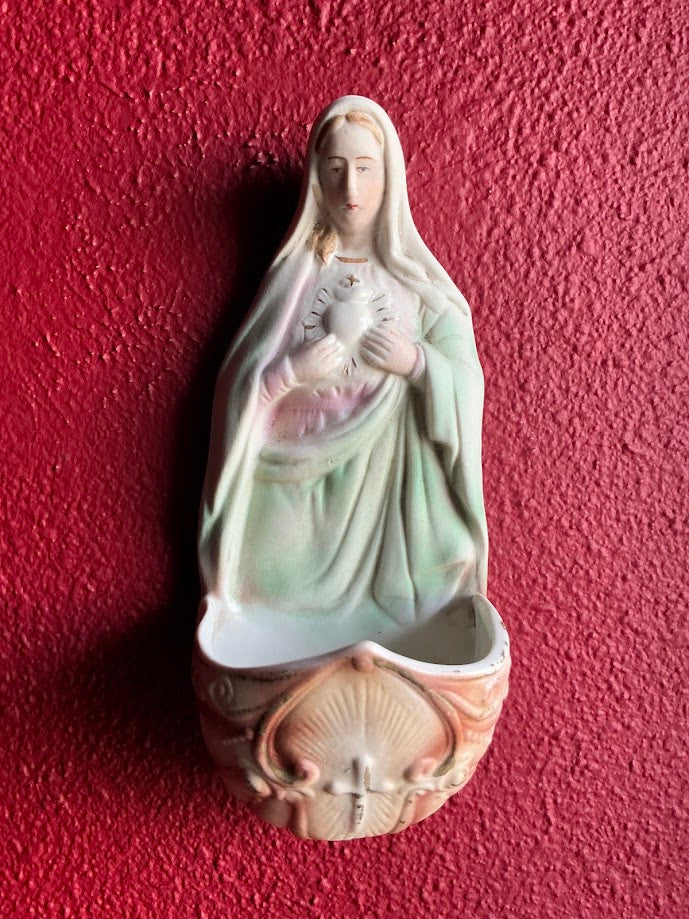
If you want to give a holy water font, it’s best to choose one that suits the recipient. A porcelain model with a clear religious motif, such as the Antique French Sacred Heart of Mary Holy Water Font (€65,00), has that recognizable, peaceful look.
Why porcelain is a fitting material for a religious gift
Porcelain has been a favorite material for devotional items for centuries. It is smooth, light in color, and shows fine details beautifully. A face, a folded hand, or a floral motif stands out clearly on porcelain.
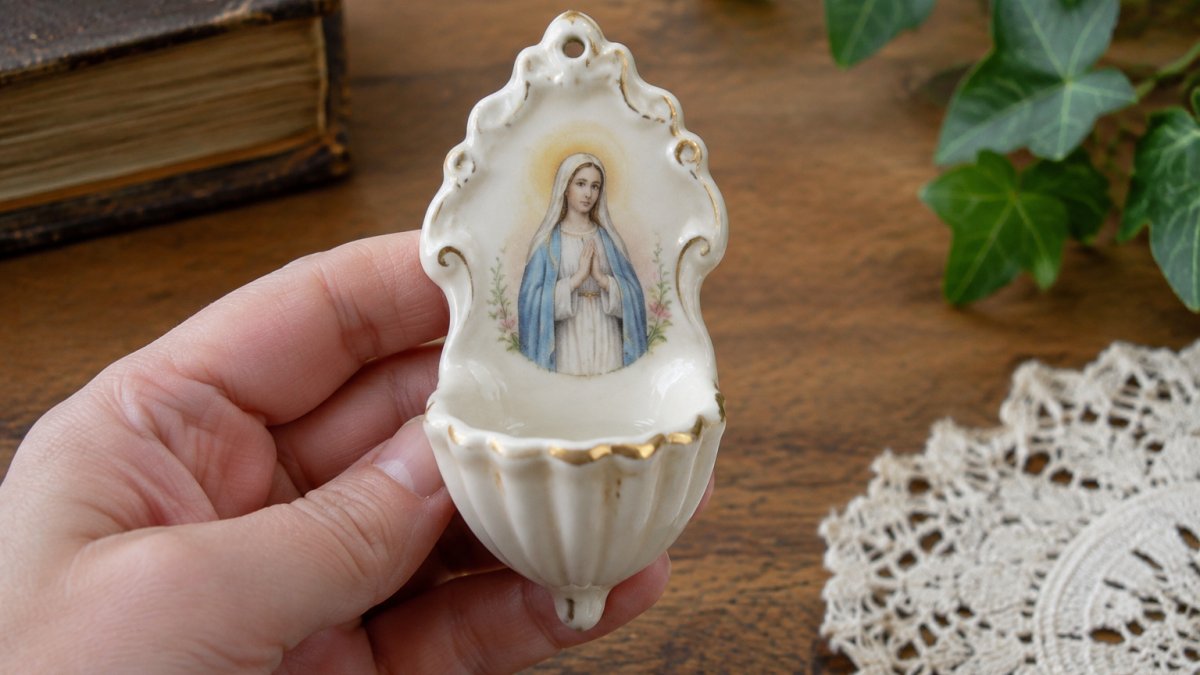
Porcelain is often appreciated for its timeless feel. An antique porcelain holy water font fits in a classic interior as well as a modern living room. It’s a piece people love to keep.
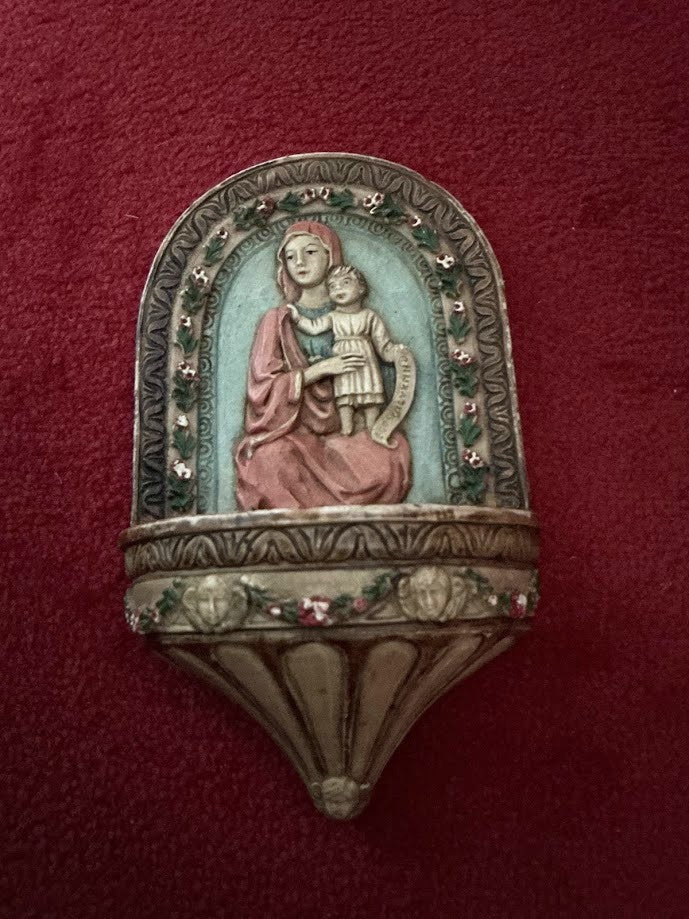
Bear in mind that it is fragile. A porcelain holy water font will break if dropped, so don't place it on an unstable shelf. An Old Italian holy water font O.L.V. Mary with the Infant Jesus (€60.00) is hand-painted ceramic and requires the same care.
Symbols and images: which motif suits which occasion
The motif on a holy water font says a lot about the occasion you're choosing it for. Images of Mary, such as a praying Mary or Mary with the infant Jesus, are well suited to a wedding, a baptism, or a Mother's Day gift. They express comfort, protection, and prayer.
Holy Family scenes are suitable for a wedding or a new home. Angels are often chosen as a sign of protection for a child or a loved one who has been ill. A dove represents the Holy Spirit, and a cross is the most direct choice for those who want to be sure of its religious character.
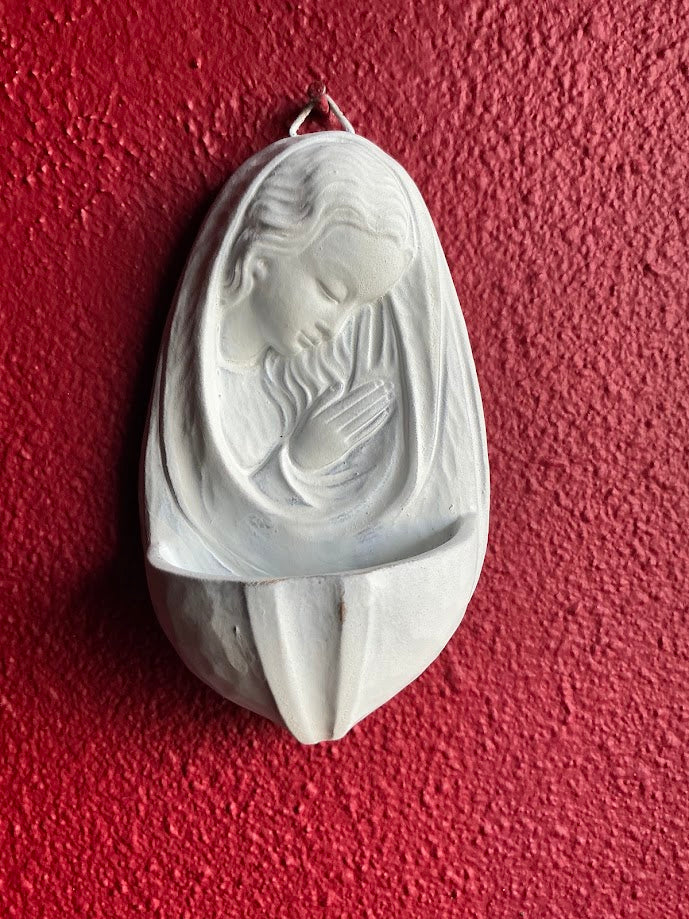
Also consider the piece's atmosphere. An Antique French holy water font with Praying Mary (€55.00) has a subdued look that suits a quiet, personal gift. If in doubt, choose a motif the recipient has previously associated with devotion.
Vintage or new holy water font: what suits your choice and budget
A vintage holy water font has character and a story. Many date from the 1930s to the 1950s and showcase the craftsmanship of their time. The downside is that condition and provenance vary, so always check the description and photos.
A new piece offers more certainty about its condition, but often lacks the patina that makes vintage pieces so valuable. A large copper holy water font with angels shows what a new religious object looks like as an alternative to porcelain. Choose vintage if you are looking for a unique object, and new if the recipient expects a sleek, undamaged gift.
A Our Lady of Perpetual Help (€40.00) in perfect condition is an affordable vintage choice for those who want to collect devotional items.
Below is an overview of the choices between a vintage and a new holy water font, listing the main differences.
| Option | Suitable for | Main difference |
|---|---|---|
| Vintage holy water font | For those looking for a unique object with a story | Character and patina, but condition and provenance vary |
| New holy water font | Those expecting an undamaged gift | Confidence in the condition, but less patina |
| Vintage from the 1930s to 1950s | Collectors of religious items | Showcases the craftsmanship of the era |
| Our Lady of the Miraculous Medal (€40,00) | Affordable vintage choice | Perfect condition according to the text |
Prices of the holy water fonts in the article
How to identify a holy water font: porcelain, ceramic and authenticity
Porcelain and ceramic are often used interchangeably, but they call for different choices and care. The difference lies in the clay, firing temperature and finish. Porcelain is fired at a high temperature (usually above 1200 °C), making the body dense and glass-like. As a result, porcelain is thin, lightweight and somewhat translucent at the edges. Ceramic, such as faience or stoneware, is fired at a lower temperature, is heavier and more porous, and often has a thicker glaze with a slightly more matte appearance.
In practice, you can tell the difference by looking for a few simple signs. Hold the piece up to the light: with porcelain, you can sometimes see the outline of your fingers through it, but not with ceramic. Tap it gently with a fingernail: porcelain makes a high, clear sound, while ceramic sounds duller and heavier. Look at the rim of the opening: porcelain is often very thin and smooth there, while ceramic is thicker and sometimes slightly uneven. Weigh the piece in your hand: a holy water font of similar size feels noticeably lighter in porcelain than in stoneware.
Also check the underside. Antique and vintage pieces often bear a stamp, an engraved number or a maker’s mark. An engraved number is a strong indication of documented production, but it does not always prove the provenance or age. Some marks are well documented by collectors; other stamps were added later or belong to reproductions. So always ask the seller about provenance, material and dimensions, and compare that information with the photos.
Note: an overly smooth, bright white and unusually inexpensive “antique” piece is often a recent cast ceramic reproduction; ask about the firing temperature, weight and provenance before buying.
For a religious gift, the material also affects the overall impression. Porcelain looks finer and more refined, and suits a classic interior or an altar. Ceramic feels warmer and sturdier, and is often suitable for a country-style or more informal setting. A hand-painted ceramic piece, such as an Old Italian holy water font with O.L.V. Mary and the Child Jesus, clearly shows the brushwork and glaze; porcelain details, by contrast, are sharper and more refined. Choose based on the recipient: someone who appreciates a delicate, lightweight piece may prefer porcelain, while someone looking for a sturdier, warmer object that can withstand a knock may prefer ceramic.
Cleaning, storing, and hanging a holy water font
A porcelain holy water font is fragile and has a glaze that is sensitive to harsh cleaners. Read here how to hang a porcelain holy water font safely. Clean it with a soft, slightly damp microfiber cloth and lukewarm water. Don’t use a scouring pad, abrasive cleaner, or strong cleaning agents such as chlorine or ammonia; these can damage the glaze and painted design. For stubborn deposits inside, soak the font for a few minutes in lukewarm water with a drop of mild dish soap, then rinse it with a soft cloth and let it dry thoroughly.
Replace the holy water regularly and don’t leave the font filled with standing water for days. After replacing the water, dry the font thoroughly with a soft cloth before filling it again.
When hanging it, use a sturdy, suitable screw and wall plug. Choose a plug that matches the wall material: a universal plug for drywall is not suitable for a heavy porcelain model. Don’t hang the font above a place where it could fall, such as a busy passageway, a radiator, or an area where children play. Check the mounting from time to time, especially with heavier porcelain models, and don’t pull on the font to test whether it is secure.
Note: On an old or antique piece, the hanging hook or eye on the back may have been weakened by corrosion or an earlier repair. Check it before hanging, and use a thin, sturdy wire or a new hook if necessary instead of the original, fragile eye.
To store an unused holy water font, wrap it in acid-free tissue paper or a soft cloth and lay it flat in a sturdy box. Don’t place heavy objects on top of it or store it in a damp place, such as a basement or shed, where the glaze may be damaged. This will keep a porcelain or ceramic holy water font in good condition for years, even if it is passed on or sold later.
Your next step: choosing a holy water font for the recipient
Think about the recipient first. If you would like to compare other ideas, you can find more inspiration in the guide to unique gifts for collectors of religious objects. Are they religious, do they collect devotional items, or are they mainly looking for a beautiful decorative piece? That will determine whether you choose a classic motif, a vintage piece, or a simple new model.
Then make a choice based on your budget and the occasion. At Chez Monique's 2nd Life, you will find a carefully selected range of antique and vintage religious objects, including porcelain and ceramic holy water fonts. Browse the selection and choose the piece that best suits your recipient.
Frequently Asked Questions
What is a holy water font and what is it used for?
A holy water font is a small devotional object that holds holy water, usually intended to hang by the entrance to a home or bedroom. Believers make the sign of the cross with the water as a reminder of their baptism and as a prayer for protection. The font is often blessed by a priest. At Chez Monique's 2nd Life, for example, you can find the Antique French Holy Water Font Sacred Heart of Mary for €65,00, a unique bisque porcelain piece from the 1940s and 1950s.
Is a porcelain holy water font a suitable religious gift?
Yes, a porcelain holy water font makes a fitting religious gift, especially for someone who loves antiques or has a collection of devotional items. Porcelain is delicate, light in color, and has a timeless look. Consider the occasion and the design: a Madonna motif suits many believers, while another image may be a better fit for the recipient. The Old Italian Holy Water Font O.L.V. Mary with Baby Jesus costs €60,00 and is hand-painted and richly decorated.
How can you recognize a vintage or antique holy water font?
Look at the finish, signs of age, and material. Vintage pieces often show slight signs of use, a soft glaze, and hand-applied details. Also check the measurements and any small chips in the paint, which are normal for older pieces. Always ask about the origin and condition. Ask about the condition and any damage to the piece, such as the Miraculous Madonna from the 1950s offered for €40,00.
How do you clean a porcelain holy water font?
Clean the small basin with a soft, dry cloth. Do not use abrasive cleaners, as they can damage the glaze and painted decoration. Only wash the basin with lukewarm water and mild soap if it is really dirty, and dry it immediately. Do not store antique porcelain in damp rooms or place it on the edge of a sink. This will keep the basin looking beautiful for a long time.
