

How to combine vintage wooden furniture with religious decor
Last updated: November 17, 2026
Quick Summary
Pair vintage wooden furniture with religious decor by first creating a calm foundation with neutral colors and limiting yourself to one vintage eye-catcher per room. Choose three to five devotional objects per arrangement, repeat wood tones, and stick to one type of metal. This keeps the overall look calm and respectful.
- Choose three to five objects per arrangement and leave space between them.
- Place larger objects at the back and smaller ones at the front to create depth.
- Use a warm 2700K bulb and avoid direct sunlight on painted wood.
- Hang a wall crucifix about five feet above the floor.
- Change the arrangement twice a year and store pieces in a dry, dark place.
Table of contents
- Pairing vintage wooden furniture with a modern interior
- Religious statues in interior design: from eye-catcher to focal point
- Decorating a vintage wooden cabinet with devotional objects
- Styling devotional objects: respectfully and with awareness of context
- Repeating colors and materials in furniture and accessories
- Lighting and placement of religious décor
- How to keep your interior from looking like a museum
- Giving a vintage find a second life in your home
- Frequently Asked Questions
Pairing vintage wooden furniture with a modern interior
Pairing a vintage wooden piece of furniture with religious decor works best when you first create a calm foundation. Many people reach straight for their favorite statue while the room isn’t ready yet. The result can feel cluttered.
That’s why we start with the basics. Below, we explain step by step how to pair a vintage wooden cabinet, sideboard, or coffee table with devotional objects.
A calm foundation with neutral colors
Choose calm shades for the walls and floor. Think off-white, sand, greige, or warm gray. This gives every wooden piece of furniture room to breathe.
A common mistake is putting a dark wall behind a dark oak sideboard. The wood then disappears into the background.
- Keep large surfaces neutral
- Repeat one accent color in your accessories
- Avoid bold prints next to elaborate wood carvings
Balancing old and new
Modern and antique pieces can work perfectly together if you maintain the right balance. A handy rule of thumb: one vintage eye-catcher per room, and keep the rest understated.
Place a modern sofa set next to an antique side table, and the whole room instantly feels timeless. Add three vintage cabinets, and it feels heavy.
- Combine one old statement piece with clean, modern lines
- Repeat wood tones in small accessories
- Leave empty space around a piece of furniture
Religious statues in interior design: from eye-catcher to focal point
Religious statues serve two roles in an interior: as a focal point or as a calming presence. A large crucifix draws attention, while a small wooden saint statue brings a sense of calm to a corner.
The location determines its role. On a sideboard, a statue stands out. In a bookcase among other objects, it becomes a quiet detail.
Our religious statues are hand-carved and hand-painted, giving each piece its own patina.
Decorating a vintage wooden cabinet with devotional objects
Decorating a vintage wooden cabinet with devotional objects calls for calm and repetition. Choose three to five objects, no more. Leave space between the pieces so each one can be seen.
A wooden saint statue, a small crucifix, and an antique Bible stand already make a complete arrangement. You often don’t need anything more.
A holy water font also works well here, such as our antique French holy water font made of wood, copper, and glass. It’s a typical devotional object that you can style in or on a vintage cabinet.
Scale, height, and composition
Scale and height determine whether an arrangement works. Large objects belong at the back, small ones at the front. This creates depth.
- Tallest piece slightly off-center
- Medium-sized objects beside them, arranged in a triangle
- Small pieces at the front as accents
- Leave at least a hand’s breadth between objects
An odd number almost always works better than an even number. Three objects look more balanced than four.
Styling devotional objects: respectfully and with awareness of context
Styling devotional objects means presenting them respectfully and with awareness of context. Don’t place a crucifix next to a fruit bowl or among kitchen items. Give it a quiet spot of its own.
- Avoid busy backgrounds behind a statue
- Don’t mix too many different religions
- Place a Bible or missal on its own stand
- Let a statue stand freely, with no other objects in front of it
Our freestanding wooden panel depicting Jesus carrying the cross is 19 cm high and 11 cm wide, and features detailed wood carving.
Repeating colors and materials in furniture and accessories
Repeating colors and materials creates cohesion in an interior, but religious decor on vintage wooden furniture adds another layer: material compatibility. Not every metal, wood, or ceramic piece works equally well with the others, and not every combination feels respectful.
Have an oak cabinet? Echo the wood in a statue, stand, or frame. But pay attention to the condition of the wood. A polished walnut sideboard calls for objects with a similar sheen, while an untreated oak cabinet pairs beautifully with matte wood carvings and rougher textures.
- Repeat the wood tone in two or three objects, but vary between matte and glossy
- Add one metal, such as copper or brass, and stick to one type of metal per arrangement
- Use glass or ceramic as a calming accent, especially beside intricate wood carvings
- Stick to a maximum of three main materials, or things will look cluttered
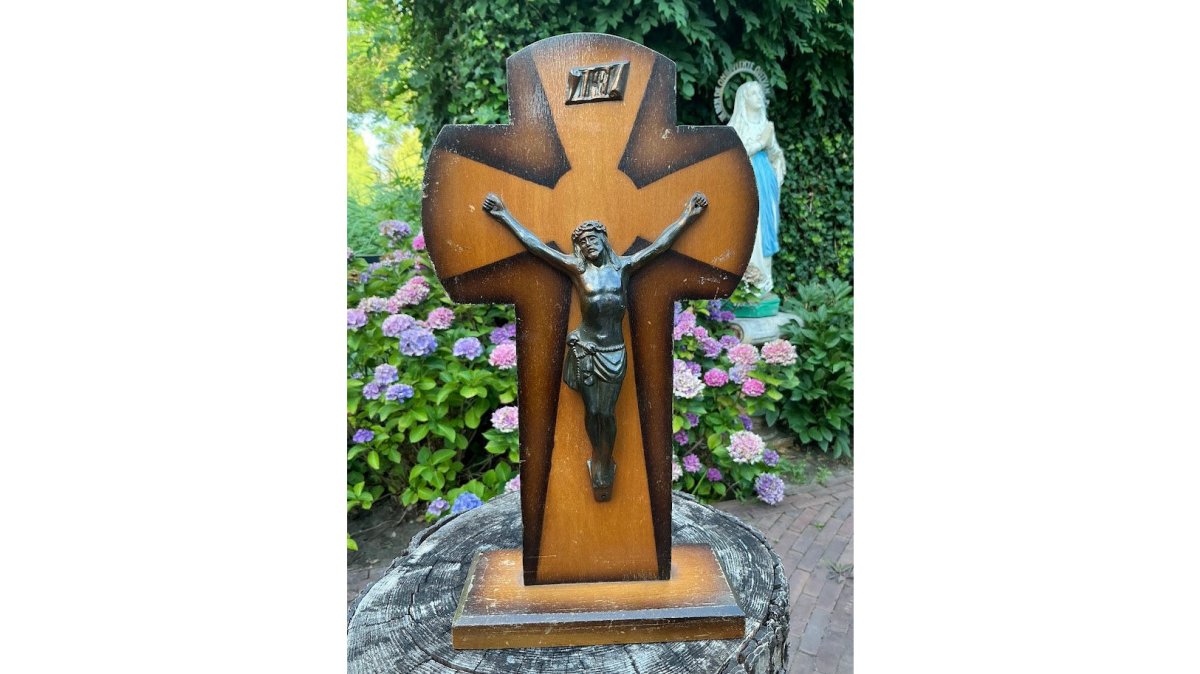
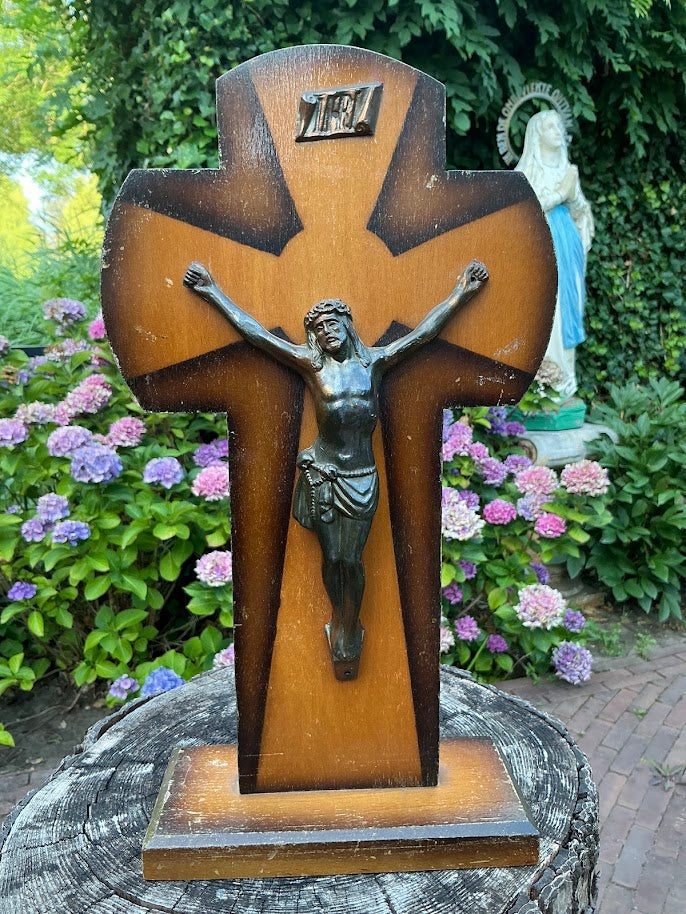
Our wooden crucifix from the 1930s has a bronze corpus. That copper tone looks lovely alongside a brass stand or a copper candlestick. But don’t place a bronze crucifix beside a silver holy water font: two types of metal next to each other in a small space compete for attention.
With devotional objects, the material also carries meaning. A wooden saint statue beside a ceramic figurine of another saint can work if the colors are repeated, but not if one is painted and the other is left natural. Choose one dominant finish per arrangement and let the rest complement it.
Note: Don’t combine polished wood with untreated wood on the same shelf without leaving space between them; the difference in sheen looks unbalanced and distracts from the object itself.
Here’s how to balance materials and finishes alongside your vintage wooden furniture.
| Guideline | Tip | Note |
|---|---|---|
| Oak cabinet | Repeat the wood tone in a stand or frame | Matte wood carvings and rougher textures work well |
| Polished walnut sideboard | Objects with a similar sheen | Don’t combine with untreated wood on the same shelf |
| Metal | One type of metal per arrangement | Don’t place a bronze crucifix beside a silver holy water font |
| Glass or ceramic | As a calming accent beside intricate wood carvings | Maximum of three main materials per arrangement |
| Wooden saint statue | One dominant finish per arrangement | Don’t mix painted and natural finishes |
Lighting and placement of religious décor
Lighting and placement determine how an object comes across. Soft, indirect light shows off wood carvings and patina to best effect. Harsh spotlights create overly sharp shadows.
Hang a wall crucifix at eye level, about five feet above the floor. That way, it hangs in a natural spot rather than too high.
A concrete example is our antique black wooden crucifix from the 1920s-30s. Its size makes it suitable for a quiet wall above a sideboard or side table.
- Use a warm 2700K bulb
- Angle the light down onto a statue
- Avoid direct sunlight on painted wood
- Leave a night-light on near a devotional corner
How to keep your interior from looking like a museum
An interior that looks like a museum comes from having too many objects and too little visual calm. Religious decor brings a second risk: a display can start to feel like an altar or showcase, which doesn’t suit a living room.
The solution is to use fewer pieces and rotate them, but with a system. This keeps the display fresh and gives each piece its moment.
- At most one devotional corner per room, and it doesn’t have to be large
- Change objects intentionally for Lent, Advent, or a patron saint’s feast day, so the change has meaning
- Remove anything that no longer fits, even if it’s beautiful
- Leave empty spaces intentionally, especially around a large crucifix or statue
A consistent routine helps. Many people change their display twice a year: one simple arrangement for ordinary times and a slightly fuller one around the holidays. Store pieces that aren’t on display in a dry, dark cupboard, not in the attic, where moisture and temperature changes can damage the wood.
Note: Don’t keep every religious object on permanent display in the living room just to complete a collection; an overcrowded arrangement looks like a store shelf, not a place of calm.
Would you like to better assess the value and identify smaller figurines before choosing? Read our guide to identifying and valuing Hummel figurines.
Giving a vintage find a second life in your home
Giving a vintage find a second life starts with proper care. First, check the condition of the wood. A soft cloth and a little mild soap are usually enough.
Do you need to restore a wooden piece of furniture first? Follow our step-by-step guide to restoring vintage wooden furniture before styling it.
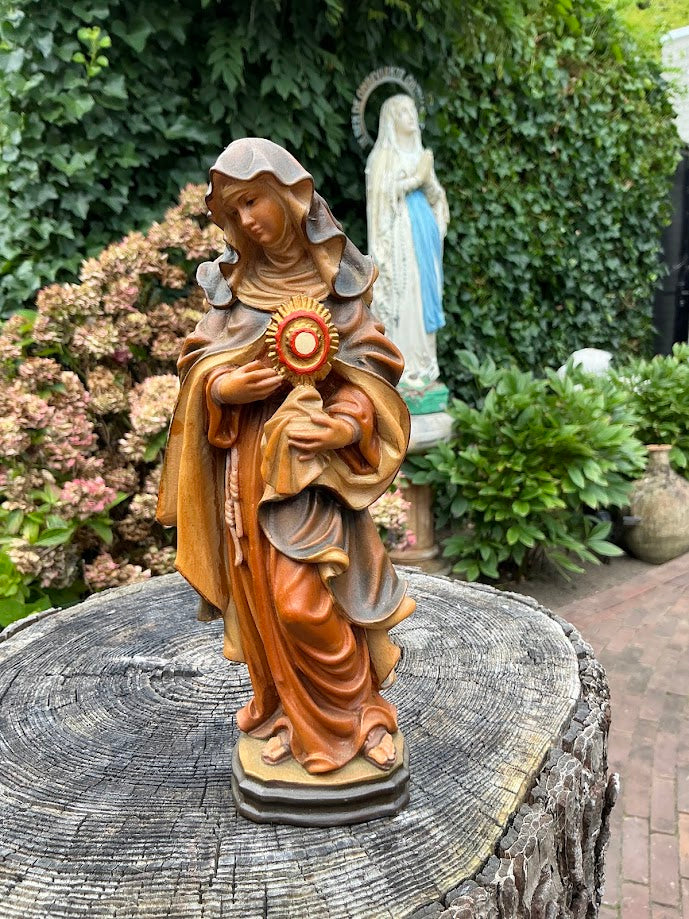
Our wooden statue of Saint Clare of Assisi with a monstrance is 20 cm tall and made from maple wood.
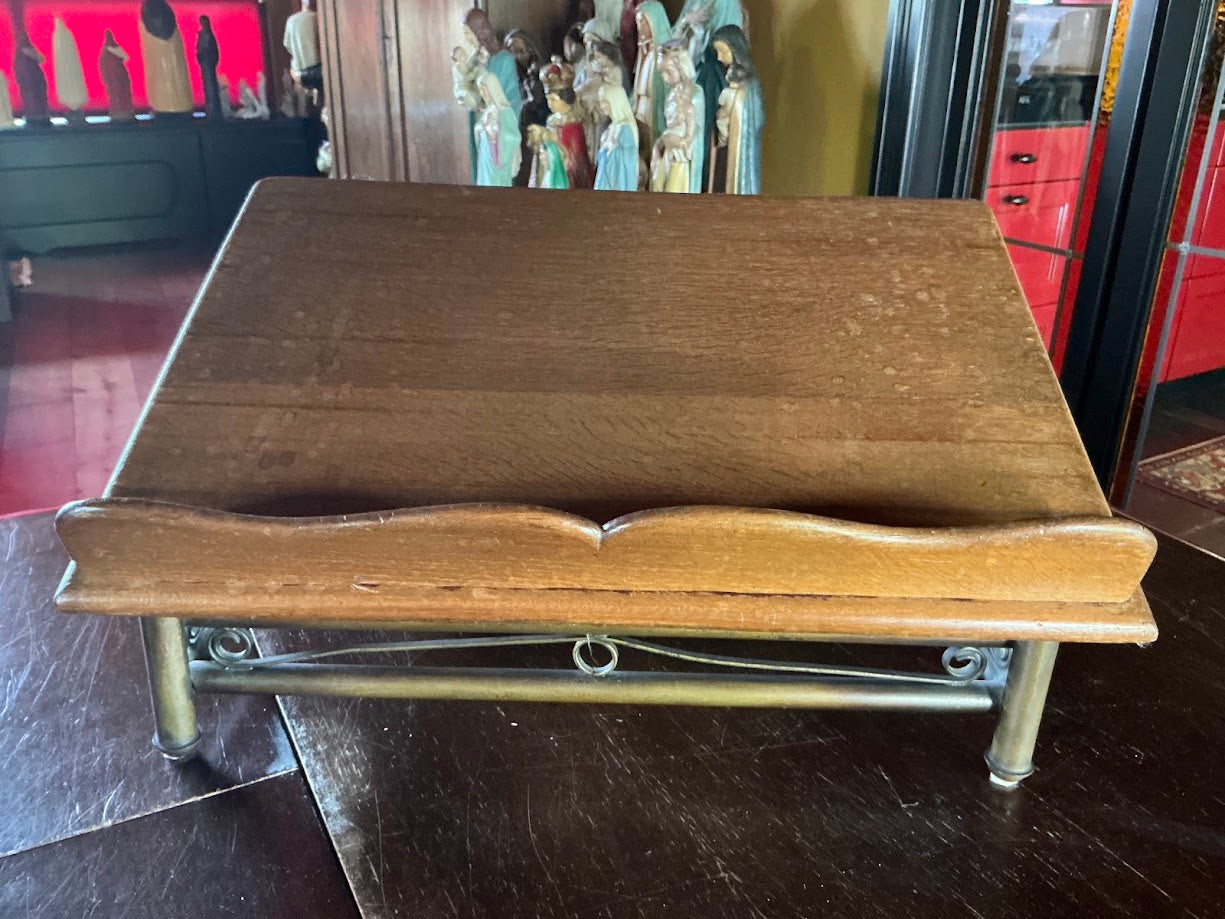
Another option is the antique wooden Bible stand from 1890, with a copper and brass base. The combination of wood and metal suits many interior styles.
We package objects using reused packaging materials so they arrive safely.
The hardest part isn't choosing a beautiful statue, but knowing how many to display. Too many objects, and the room feels cluttered. Too few, and its character disappears. At Chez Monique's 2e Leven, we're happy to help with our carefully selected antique and vintage religious objects, with a special focus on devotional items and unique collectibles. Every item is inspected and sustainably packaged using reused materials. Give a special object a second life in your home. Browse our collection and add your favorite to your cart.
Frequently Asked Questions
How do you combine vintage wooden furniture with religious decor without making the room feel cluttered?
Choose one vintage wooden piece of furniture as a base, such as a sideboard or side table, and limit yourself to two or three religious objects per surface. Keep the surrounding colors neutral and repeat wood tones in accessories. This lets the religious piece stand out without dominating. A 20 cm-tall wooden statue, such as a Saint Clare of Assisi, works well on a side table or low cabinet.
Which colors go with a vintage wooden cabinet and devotional objects?
Neutral colors such as cream, sand, gray-green, and warm brown create a calm backdrop. Repeat one color from the religious object, such as the bronze of a crucifix, in an accent piece like a candle or vase. Avoid bright colors right next to the wood, as they draw attention away from the furniture's patina and craftsmanship.
How do you style a religious statue on a wooden cabinet?
Place the statue slightly off-center, at about two-thirds of the height of the cabinet. Put a shorter object next to it, such as a small ceramic bowl or a stack of old books, to create a triangular arrangement. Leave at least 10 cm of space around the statue and use a soft light source from the side rather than direct overhead lighting.
How do you protect a vintage wooden piece of furniture from scratches and stains when styling it?
Use felt pads under each religious object and avoid placing damp flowers or candles directly on the wood. For an antique Bible stand or a heavy crucifix, a thin felt mat under the base is enough. Keep the wood out of direct sunlight to prevent discoloration, and wipe it with a dry, soft cloth instead of using liquid cleaners.
