

Buy religious statues from the 1950s
Table of contents
- Religious statues from the 1950s: why they are popular in interiors now
- Statues of the Virgin Mary and saints: recognizing and selecting them
- Determining the value of antique religious statues: what makes a piece valuable
- Lourdes Souvenirs and Devotional Objects: French Heritage in Your Home
- Care of plaster statues and porcelain devotional objects
- Historical collectibles: rosaries and reliquaries
- Religious statues from the 1950s in your interior: styling tips and placement
- Frequently Asked Questions
Last updated: September 19, 2026
Religious statues from the 1950s: why they are popular in interiors now
Buying religious statues from the 1950s is becoming increasingly popular, as these vintage devotional items are making a remarkable comeback in contemporary interiors. These vintage devotional items appeal to a broad audience: collectors appreciate their historical value, while interior designers make use of their authentic character and warm nostalgia as statement pieces. At Chez Monique's 2e Leven, we are seeing increasing demand for these special pieces, not only from believers but also from people who want them purely for their aesthetic value.
The 1950s were a golden period for religious art production. Factories mass-produced statues of the Virgin Mary, saints, and devotional items in plaster, porcelain, and plastic. These objects were intended for home altars and personal devotion, but today they are recognized as design items with real value.
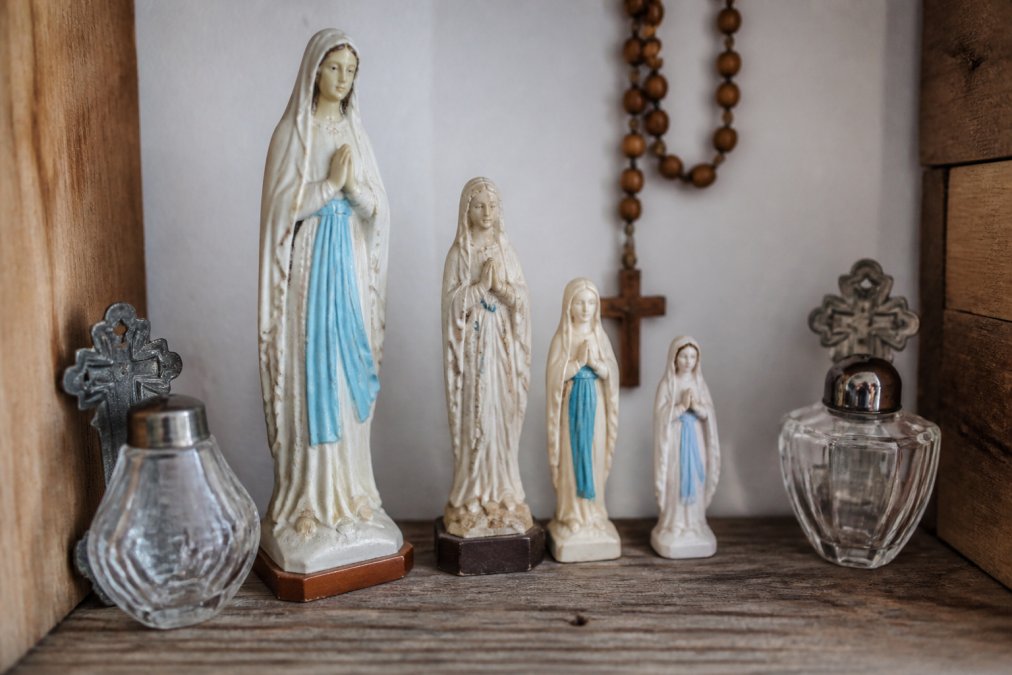
What makes religious statues from the 1950s so appealing? First, their authenticity. These pieces tell stories from a bygone era. These pieces tell stories from a bygone era. Second, their durability: by buying them and bringing them into your home, you give these objects a second life instead of throwing them away. This aligns with growing interest in sustainable living.
Third is the nostalgia factor. Many people grow up with religious statues in their family home. Seeing similar pieces again evokes warm memories. For others, it is purely an aesthetic choice: the soft colors, refined details, and patina of age appeal to the eye.
| Reason for popularity | What it means | Who it appeals to |
|---|---|---|
| Authenticity | Handcrafted items and small series from the 1950s | Collectors and design enthusiasts |
| Sustainability | Giving vintage objects a second life | Environmentally conscious consumers |
| Nostalgia | Memories of childhood and family | People with a religious background |
| Design value | Unique interior elements with character | Interior designers and stylists |
Statues of the Virgin Mary and saints: recognizing and selecting them
Statues of the Virgin Mary and saints are at the heart of religious devotional items from the 1950s. Recognizing authentic pieces and selecting quality requires some understanding of materials, styles, and provenance.
The most common Marian statues from this period were made of plaster, porcelain, or bisque. Plaster statues are lighter; porcelain and bisque examples show finer details and a softer sheen. Our Lady of the Miraculous Medal is a classic from this period, recognizable by her graceful posture and the medal on her chest. A beautiful example can be found in the Our Lady of the Miraculous Medal from Chez Monique's 2e Leven, made of fine porcelain, 16 cm tall, and in perfect condition.

Saint statues vary enormously: Saint Francis, Saint Joseph, Saint Anthony, and countless others. What should you look for? Pay attention to the craftsmanship: are the facial features well rendered, is the polychromy (the paintwork) still intact, or does it show characterful wear? A little patina adds value; serious damage does not.
Provenance plays a role. French statues, especially those from Lourdes, often have a higher value because they come directly from a famous pilgrimage site. Check the bottom or back of the statue: you may find a maker's mark or handwriting there.
Determining the value of antique religious statues: what makes a piece valuable
The value of antique religious statues depends on various factors. Understanding what makes a piece valuable helps you buy more wisely.
Material and craftsmanship are paramount. Porcelain and bisque statues are generally worth more than plaster examples because the material is more durable and allows for finer detailing. Hand-painted polychromy (colorful paintwork) adds value; mass-produced unpainted pieces are less sought-after.
Provenance and history matter greatly. A statue that comes directly from Lourdes, or whose origin can be demonstrated through documentation or a maker's mark, is valuable to collectors. The same reason makes French devotional items sought-after. A statue with clear provenance (ownership history) is worth more than an anonymous piece.
Condition and patina play a role. Perfect condition is not always better. A statue with characterful wear, slight discoloration, and soft patina may be worth more than a clean, 'refreshed' example. Restorations can reduce value if they have been carried out unprofessionally.
Size and rarity matter. Large statues of Mary (30+ cm) are rarer than small ones. Specific saints that occur less often, such as Saint Bernadette, are more sought-after than common depictions.
Age and period also determine value. Statues from the early 1950s are generally older and therefore more sought-after than those from the 1960s.
A valuable piece combines several factors: French porcelain, from Lourdes, from the 1940s-50s, in good condition with characterful patina. A less expensive piece may be made of plaster, from the 1960s, with some damage.
Lourdes Souvenirs and Devotional Objects: French Heritage in Your Home
Lourdes souvenirs hold a special place among religious devotional objects. These objects are not only religious in nature, but also cultural heritage from the famous French pilgrimage site.
Old French Lourdes Music Box with →
Typical Lourdes souvenirs include Mary-shaped holy water bottles, glass domes depicting Bernadette in the grotto, music boxes, and small reliquaries. These pieces were produced in large quantities between the 1940s and 1970s.
A classic example is the Old French Lourdes Music Box with Bell, a decorative piece from the 1950s/60s made of bronze, copper, and metal. It depicts Bernadette kneeling during the Apparition of Mary. Although the mechanism currently does not work, it is a valuable collectible because of its craftsmanship and provenance.

Holy water bottles add a religious character without taking up much space. The Lot (6) Lourdes Mary Holy Water Bottles offers a unique collection with variety in materials (antique plaster, plastic, and glass) and periods (from the 1950s to the 1980s), making it appealing to collectors who enjoy seeing the evolution of design.

Glass domes are special. These items with dried flowers inside are difficult to find in good condition. The Rare French souvenir glass dome of Mary Bernadette Lourdes from the 1940s/50s is an example of these valuable pieces, standing 15 cm tall and featuring a copper rim and hanging ring.
Care of plaster statues and porcelain devotional objects
Religious statues from the 1950s are fragile. Plaster and porcelain require careful maintenance to preserve their value and beauty.
Plaster statues are the most fragile. Plaster is porous and absorbs moisture, which can lead to mold growth and discoloration. Therefore, do not place plaster statues in damp rooms such as bathrooms. Keep them in a dry place, away from direct sunlight that can cause fading. Dust them with a soft, dry cloth; never use wet cloths.
Porcelain and bisque are stronger but still fragile. Make sure they are placed securely on a level surface. Avoid sudden temperature changes, which can lead to cracks (pubmed.ncbi.nlm.nih.gov). When cleaning, use only lukewarm water and a very soft cloth. Chemicals and abrasive cleaners are strictly out of the question.
Polychromy (paintwork) can fade. If the paintwork starts to come loose or flake, caution is advised.
Historical collectibles: rosaries and reliquaries
What should you look for when buying? Check the condition of the beads: are they still firmly attached to the string, or are they loose? Is the cross intact? Are there inscriptions or markings that reveal their origin? A rosary with provenance documentation, such as a card indicating which church or family it came from, is considerably more valuable.
Religious statues from the 1950s in your interior: styling tips and placement
Religious statues from the 1950s can fit beautifully into a modern interior when placed and styled correctly.
Frequently Asked Questions
How do you determine the value of religious statues from the 1950s?
Value depends on origin, material, and condition. French Lourdes souvenirs and handmade porcelain statues are generally more valuable than mass-produced items. Look at the craftsmanship, whether it is originally painted (polychrome), and whether all parts are intact. Antique rosaries with reliquaries or statues by well-known artists command higher prices. Also check whether the patina is authentic; it tells the story of decades of use.
What should you look for when buying second-hand saint statues?
Look out for damage to the face, hands, and feet, as these are expensive to repair. Check that plaster statues are not becoming dirty or sagging due to moisture problems. Ask about the origin: authentic Lourdes items have more character than anonymous mass-produced pieces. For porcelain: check for hairline cracks and missing glaze. Make sure you know whether the piece was originally painted or modified later. Properly packaged shipping is essential; ask how it will be protected.
What is the difference between plaster and wooden religious statues?
Plaster statues are lighter and more fragile, but have fine details and can be beautifully painted. They require careful maintenance and can be damaged if dropped. Wooden statues are stronger, warmer in color, and can last for centuries with proper maintenance. Plaster is typical of mass production, while wood was more often used for high-quality craftsmanship. For interior decoration: plaster creates a delicate, nostalgic effect; wood feels warmer and more robust.
How do you maintain antique religious statues?
Plaster statues: dust them with a soft, dry cloth. Do not use water, as plaster absorbs moisture and can deteriorate. For porcelain: use mild soapy water and a soft brush for hard-to-reach areas. Avoid strong cleaning products. Wooden statues: dust them and occasionally rub them with raw wood oil to prevent dryness. Keep all statues out of direct sunlight to prevent discoloration. Store them in stable, dry places where they cannot fall. Rosaries with wooden beads: regularly maintain the cross and prevent exposure to damp environments.
Are religious statues from the 1950s a good investment?
Yes, if you choose carefully. Authentic French Lourdes souvenirs and handmade porcelain statues gradually increase in value. Collectors pay premiums for rare pieces in good condition. However, this is not a quick investment; value grows over the years. Above all, buy pieces that you also enjoy looking at. Proper maintenance is essential: damaged statues lose much of their value. Diversify your collection: a mix of statues, holy water bottles, and rosaries provides stability.