

Buy religious statues for a collection: 7 antique finds
Table of contents
- How to assemble a religious collection
- Antique statues of the Virgin Mary: the heart of every collection
- Statues of Saint Anthony: plaster versus woodcarving
- Crosses and crucifixes as eye-catchers
- Buying a rosary with a silver crucifix: what to look out for
- Determining the value of antique statues of saints
- Maintaining Antique Plaster Sculptures
- Which religious statue suits your collection?
- Frequently Asked Questions
Last updated: September 8, 2026
Those who begin buying religious statues for their collection quickly discover that religious statues are about more than shopping: it is a search for history, craftsmanship, and devotion. Demand for authentic devotional objects is growing. In this guide, we will help you get started with seven categories of antique finds, from statues of the Virgin Mary to rosaries, and share practical knowledge about materials, provenance, and care.
How to assemble a religious collection
Every strong collection begins with a clear objective. Ask yourself whether you want to focus on one saint, a specific period such as the 1920s or 1930s, or a particular material such as plaster or woodcarving. A thematic approach not only makes your collection more organized but also deepens your knowledge of the iconography behind each statue.
Most collectors start with one or two recognizable pieces, such as a statue of the Virgin Mary or a crucifix, and build their collection around them. Look for statues with a clear signature or stamp, as these reinforce their authenticity and value retention. Consider the space available in your home and the condition of the object, as pristine examples from the beginning of the previous century are becoming increasingly rare.
Antique statues of the Virgin Mary: the heart of every collection
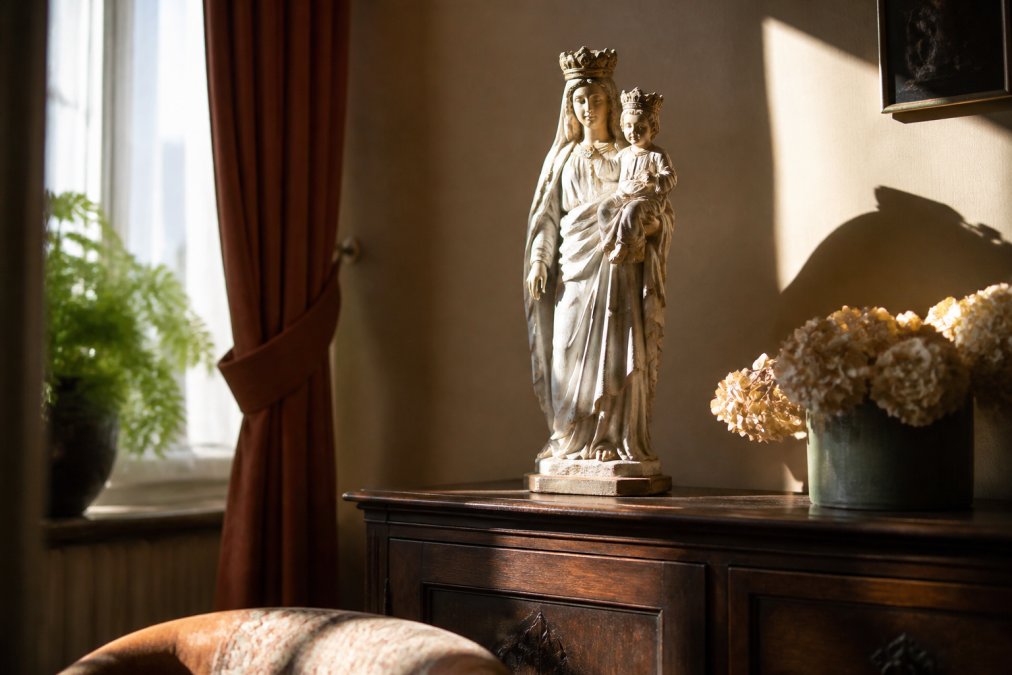
No religious collection is complete without a statue of the Virgin Mary. Mary with the infant Jesus is the most common and beloved depiction in the Catholic tradition. A special example is the antique statue of the Virgin Mary with the infant Jesus from the 1920s/1930s, a large 55 cm-tall plaster statue priced at €185.00, with a serene appearance and a signature that confirms its age.

Those looking for a rarer piece may consider the Belgian statue of the Virgin Mary from around 1900, priced at €255.00. This statue depicts Mary seated with the infant Jesus and a sheep, an unusual composition full of symbolism. The “Depose 12” signature and the round stamp underscore its authenticity.

For a devotional piece with a special story, there is the antique statue of Our Lady of Fatima from Portugal for €200.00. This hand-painted plaster statue from the 1950s has glass eyes and an elegant little crown, and is in pristine condition. Its Portuguese origin makes it a sought-after collector's item.

Statues of Saint Anthony: plaster versus woodcarving
The choice between plaster and woodcarving is a fundamental decision. Plaster statues are more affordable and were mass-produced for home devotion during the 19th and 20th centuries, while wooden statues are often older and more artisanal. A fine example is the vintage statue of Saint Anthony the Abbot with a pig from the 1960s for €75.00, a compact statue 18 cm tall and in pristine condition.
The antique wooden statue of Saint Anthony the Abbot for €155.00 offers a completely different character. This hand-carved statue from the 1930s–1950s features detailed woodcarving and a warm wood grain. The pig at his feet is the traditional symbol of Saint Anthony.
Crosses and crucifixes as eye-catchers
A cross or crucifix often forms the centerpiece of a religious collection. The difference lies in the corpus: a crucifix depicts Christ's body, while an empty cross does not. The freestanding pewter crucifix with corpus from the 1920s for €39.50 is an accessible starting point, with signs of use that emphasize its authentic character.
Anyone looking for a statement piece will find it in the antique French copper crucifix from around 1900 priced at €135.00. This richly decorated crucifix weighs 620 grams and has a distinctive patina. The decorative ornaments and detailed corpus make it a beautiful wall decoration for both classic and modern interiors.
Buying a rosary with a silver crucifix: what to look out for
When buying a rosary with a silver crucifix, several factors make the difference between a valuable heirloom and a modern reproduction. Pay attention to the material of the beads: richly carved wooden beads indicate an older origin, while plastic or uniform beads point to more recent production. Check whether the crucifix is genuinely silver, which can be identified by a hallmark or the metal's natural tarnishing.
The old wooden French rosary from Lourdes priced at €80.00 is a wonderful example of an authentic prayer chain. This XXL rosary from the 1950s/1960s has richly carved wooden beads, a copper corpus, and is exceptionally long at 125 cm. Its origin in Lourdes, one of the most important pilgrimage sites, adds an extra layer of meaning and history.
Determining the value of antique statues of saints
Estimating the value of an antique statue of a saint is a major challenge for many collectors. This guide provides a step-by-step plan that you will also encounter at an appraiser or auction house.
Step 1: Assessing the condition objectively
An objective condition report is the basis of every appraisal. Distinguish between signs of use and damage. Craquelure or a light patina are normal and rarely reduce the value. Serious problems include hairline cracks through the structure, paint flaking down to the plaster or wood, and previous restorations. A restored statue is not worthless, but its value generally falls by 30% to 50%. Also look out for overpainting: a statue that was once painted white loses a large part of its original value.
Step 2: Research provenance and documentation
A statue with documented provenance is considerably more valuable than an anonymous piece. Learn to recognize the most common workshops, such as the Van Ackeren brothers in Antwerp or the Guild of Saint Luke. A stamp reading "Depose" or a workshop mark can increase the value, but only if you can interpret its provenance. A search of auction catalogues can provide useful insight.
Step 3: Analyze comparable sales
The most reliable way to determine market value is to compare the item with recent sale prices for similar objects. Look for the same subject, material, period, and size. Pay attention to the distinction between asking prices and actual sale prices; auction houses publish final prices including the buyer’s premium, which is more realistic. Also consider the sales context: an antique shop is more expensive than a flea market, but often offers guarantees of authenticity.
Step 4: Consult an appraiser
For objects of considerable value, a professional appraisal is worthwhile. You can consult certified appraisers or specialized auction houses. An appraiser examines the object and market conditions and can provide a written report that is also suitable for insurance purposes. Consider this especially for pieces with a potential value above €500.
By following these steps, you will develop a better eye for quality and build a collection that retains both emotional and financial value. The antique statue of the Christ Child on a globe from the 1920s, priced at €75.00, is an example whose pristine condition and provenance from a Dutch private collection support its value.
Maintaining Antique Plaster Sculptures
Antique plaster sculptures are fragile witnesses to a craft tradition. They require careful maintenance and knowledge of what you can do yourself and when to call in a professional. This guide covers both preventive care and responsible restoration.
Preventive Care: The Foundation for a Long Life
The three greatest enemies of plaster are moisture, light, and temperature fluctuations. Plaster is hygroscopic and absorbs moisture; above 60% humidity, it can expand and crack. Therefore, do not place sculptures in a bathroom, kitchen, or against an exterior wall. A constant temperature between 15 and 20 degrees is ideal (canada.ca). Direct sunlight fades the paint layer and causes hairline cracks. Dust with a soft, dry brush or a microfiber cloth without pressing down; never rub before loosening the dust.
Restoring It Yourself: What You Can and Cannot Do
You can address small, non-structural problems yourself, but only with the right materials. A loose fragment can be secured with fish glue or acid-free restoration wood glue. Never use superglue or ordinary wood glue; these cause irreversible damage (getty.edu). Apply the glue to both broken surfaces with a toothpick and gently press the fragment into place. Allow it to dry for at least 24 hours. For small holes or hairline cracks, use restoration plaster, applied with a spatula; let it harden and sand smooth with 400-grit paper or finer.
When to Call in a Professional Restorer
There are situations in which you must call in a professional. Structural damage, such as a sculpture broken in two or a crack running through the core, requires experience with internal supports. Professional treatment is also necessary in cases of active mold or woodworm infestation; a restorer can treat the sculpture in an oxygen-free chamber, something you can never do safely at home (si.edu). Repainting a sculpture is also a task for a specialist, because poor repainting can reduce its value by more than half.
Restoration as a factor determining value
Every restoration, no matter how carefully carried out, affects the value of an antique statue. Professional restoration that respects the original appearance can keep the value stable or increase it; amateur restoration can irreparably damage a statue. Always ask about the restoration history when making a purchase. At Chez Monique's 2e Leven, we state this transparently in the product descriptions.
Which religious statue suits your collection?
Choosing a specific religious statue depends on your taste, budget, and available space. If you are a beginner collector, smaller devotional objects such as the tin crucifix or the plaster statue of Saint Anthony are excellent starting points: affordable, easy to place, and useful for learning to recognize quality.
For more advanced collectors, the larger statues of Mary make an impressive addition. The antique statue of Mary with the infant Jesus from the 1920s/1930s, standing 55 cm tall, is a real eye-catcher. Collectors of rare pieces particularly appreciate unique depictions, such as the Belgian statue of Mary with a sheep or the hand-painted statue of Our Lady of Fátima with glass eyes.
At Chez Monique's 2e Leven, we carefully select each object for its authenticity, condition, and character. Our sustainable shipping method, which reuses packaging materials without compromising safety, ensures that your fragile purchase arrives safely. Every statue in our collection has a story that deserves to be told.
Building a religious collection is a journey through the history of devotion and craftsmanship, with each statue telling its own story. Whether you choose a statue of Mary, a statue of Saint Anthony, or a rosary, the key lies in recognizing quality and cherishing authenticity. Discover the carefully selected objects at Chez Monique's 2e Leven and give these pieces a second life in your interior. Add to cart and start expanding your collection today.
Frequently Asked Questions
How do I determine the value of an antique religious statue?
The value of an antique statue of a saint depends on its age, material, condition, and rarity. Signatures such as "Depose 12" or a stamp increase its value. Plaster statues from the 1920s–1930s with their original paintwork are sought after. Compare prices at specialist dealers and antique markets. A 55 cm-high statue from the 1920s can easily cost around €185. If in doubt, have it examined by an appraiser, especially in the case of wooden examples or unusual depictions.
What should I look for when buying a rosary with a silver cross?
First check whether the small cross is solid silver or silver-plated. A silver hallmark or stamp provides clarity. Also examine the beads: wooden beads with intricate workmanship indicate quality. An antique rosary from Lourdes or made by French nuns often has a copper or silver corpus. Pay attention to wear on the cord or chain. Prices range from €65 for a nun's rosary to €80 for an XXL example. Always ask about the provenance.
Are religious statues a good investment for collectors?
Religious statues can increase in value, especially rare pieces with clear provenance and a signature. Antique statues of the Virgin Mary from the period 1900–1930 and hand-carved wooden statues of saints are popular with collectors. However, the market is niche: selling can take time. Buy primarily out of a passion for religious art and devotional objects. A carefully curated collection of authentic pieces generally retains its value better than individual, common statues.
How do I maintain antique plaster statues without damaging them?
Plaster is porous and fragile. It is best to remove dust with a soft, dry brush or a fine cloth. Never use water or cleaning products: they can damage the original paintwork. Protect the statue from direct sunlight and fluctuating humidity, as these can cause cracks. Handle the statue carefully when moving it, preferably by the base or pedestal. Leave larger damage or loose paint to a conservator.
What is the difference between devotional objects and religious art?
Devotional objects are items used for personal devotion or domestic prayer practices: rosaries, prayer cards, crucifixes, and small statues of saints for a prayer corner. Religious art encompasses all artistic expressions with a religious theme more broadly, from altarpieces to wood carvings. Many collectibles lie at the intersection: an antique statue of the Virgin Mary can be both. For collectors, this distinction mainly matters for the context and value of a piece.