

Is antique furniture in a modern home a good investment? Here’s how it works
Table of contents
- Why antiques retain their value in a modern interior
- Valuing antiques: how to determine the objective value
- The value of religious statues: devotion, craftsmanship, and collectors' value
- Maintaining and restoring antiques without losing value
- Creating contrast: antiques as eye-catchers in a modern interior style
- Insurance and value retention: practical protection for your antiques
- Conclusion
- Frequently Asked Questions
Last updated: September 30, 2026
Why antiques retain their value in a modern interior
Antiques often retain their value in a modern home, and can sometimes retain their value better than new design, because the supply of authentic pieces is shrinking while demand for character and sustainability is growing. At Chez Monique's 2e Leven, we see that buyers choose not only for atmosphere, but also for an object that retains its value. That makes antiques a different kind of purchase from a trend piece that goes out of fashion after two seasons.
Valuing antiques: how to determine the objective value
Valuing antiques means determining their market value based on condition, provenance, rarity, and current demand, not on what a piece once cost. An objective appraisal is the first step if you want to know whether an antique in a modern home retains its value for your specific piece. What most pages leave out is how to do this yourself. Below is a method you can work through in an afternoon.

Step 1: determine the type of market value
There are three different amounts that are often confused, and that explains most disappointments when selling:
- Replacement value. What it costs to buy a comparable piece again. This is generally the amount your insurer wants to see.
- Private sale value. What an enthusiast pays on a platform such as Marktplaats or Catawiki, without an intermediary.
- Auction proceeds. The amount left after the buyer's premium and costs. The buyer's premium at Dutch auction houses is often around 20 to 30 percent on top of the hammer price, and that is deducted from your proceeds.
Step 2: collect the five value signals
- Condition and signs of use. Original patina often increases value, while extensive restoration can reduce it. Note: craquelure in a glaze is normal in old pottery and is not damage; a missing piece of a handle is.
- Origin and maker's mark. A maker's mark, factory stamp, or address on the underside provides clarity about origin and period. Always photograph the mark sharply; it is the first thing an appraiser or buyer will ask about.
- Materials used. Solid wood, bronze, or cut glass carries more weight than veneered or cast alternatives. With ceramics, the shard reveals a lot: thin and even indicates craftsmanship, while thick and regular indicates industrial production.
- Rarity. A limited edition or rare variant increases collectors' value. Pay attention to color variants and factory marks that were in production only briefly.
- Current demand. Comparable sold pieces say more than asking prices. Search for sold or closed listings, not what is still available for sale.
Step 3: compare with actual transactions
In a platform's search bar, search for the material plus the era plus the maker's mark, for example 'Leerdam glass 1929' or 'plaster statue of Mary maker's mark'. Filter by completed sales. Note the lowest, highest, and most common price from the past twelve months. The median of that series is a useful initial indication, not the highest amount you come across.
Step 4: have it professionally appraised when it really matters
For insurance, a sale, or an inheritance, a self-made estimate is not enough. A sworn appraiser works according to a fixed methodology and provides a report accepted by insurers and notaries. Expect an hourly rate or a fixed amount per object; for a single piece, this is often in the range of a few dozen to a few hundred euros, depending on the complexity.
Why this addresses the core question
Value retention is not a characteristic of 'antiques' in general, but of a specific piece within a specific market. Only when you keep the three concepts of value separate and systematically go through the five signals can you assess whether your piece will retain its value in a modern interior or not. Without that foundation, 'antiques retain their value' remains a feeling rather than a substantiated claim.
The value of religious statues: devotion, craftsmanship, and collectors' value
The value of religious statues is determined by craftsmanship, rarity, and the specific collectors' market surrounding devotional objects. A statue of Mary or a crucifix can have both devotional and decorative significance, and that dual appeal keeps demand steady.
| Object type | Value-determining factor | Target collector group |
|---|---|---|
| Plaster Madonna statue | Origin and maker's mark | Enthusiasts of French devotional art |
| Leerdam glass art | Maker and year of production | Collectors of Dutch glass art |
| Crucifix with shells | Rarity and condition | Folk art enthusiasts |
Maintaining and restoring antiques without losing value
Maintaining and restoring antiques requires restraint: the less you intervene, the better the value is generally preserved. The biggest mistake we see is cleaning too aggressively, causing the patina and original finish to disappear.
A few practical rules:
- Dust with a soft, dry cloth instead of wet cloths or abrasives.
- Nourish wood with a minimal amount of suitable wax, not with oil that penetrates the wood.
- Leave loose parts in place and have them professionally assessed before gluing them yourself.
- Avoid direct sunlight and moisture, as they damage the material and surface.
- Store small devotional items in a display case or in a dry place.
Creating contrast: antiques as eye-catchers in a modern interior style
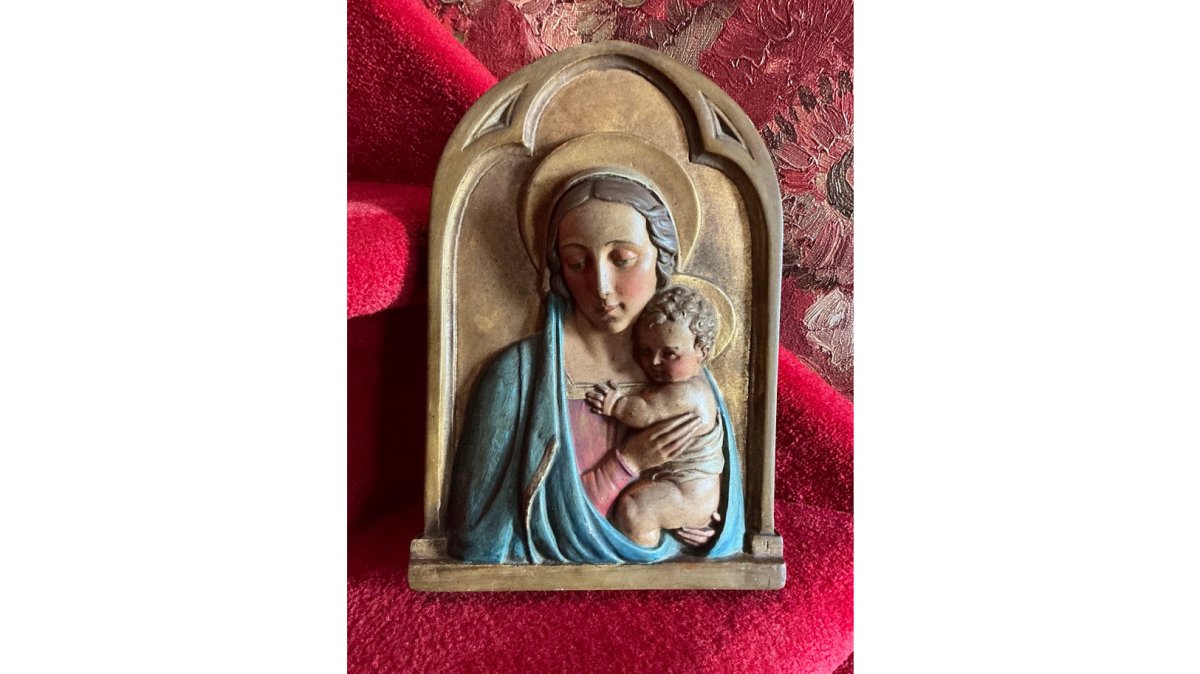
An antique piece only becomes an eye-catcher when you deliberately use it in contrast within a sleek interior style. In a minimalist interior with neutral tones, a Madonna statue on a bare wooden console immediately stands out without feeling dated. But which period suits which modern style? That is the question most pages skip, even though the answer determines whether a piece works as an eye-catcher or as a cluttered detail.
Large rare Madonna and Child Steph →

Style guide: which antique period suits which modern style
The rule of thumb is that contrast in form and texture works, but contrast in color and visual busyness usually does not. Therefore, choose an antique piece whose dominant characteristic is the opposite of that of your interior.
| Modern style | Room characteristic | Best-matching antique period | Why it works |
|---|---|---|---|
| Scandinavian | Light wood, white, plenty of air, little decoration | Biedermeier (approx. 1815-1848) | Calm, clean lines and light wood complement the simplicity, while its age adds warmth |
| Industrial | Concrete, steel, dark tones, rough finish | Art Deco (approx. 1920-1939) | Geometric shapes and glossy materials contrast with the roughness while sharing the professional look |
| Minimalist | Few objects, neutral tones, plenty of empty space | Religious devotional objects (nineteenth to early twentieth century) | A single sculptural object with a clear silhouette works as a focal point without disrupting the calm |
| Japandi | Natural materials, earthy palette, artisanal feel | Folk art and handmade pottery | Signs of craftsmanship and imperfections align with the appreciation of the imperfect |
| Eclectic | Mixed colors, patterns, collected feel | Eighteenth- and nineteenth-century furniture | The interior can carry more visual weight, so larger and busier pieces work well here |
Three placement rules that make the difference
- One strong object per room. A collection works in an eclectic interior, but in a streamlined space everything competes for attention. Choose the piece with the clearest shape or texture and give it the space it deserves.
- Place it in the open, not in a corner. An antique piece against a wall disappears; on a console, a pedestal, or an empty floor with space around it, it becomes an eye-catcher. Leave at least a hand's breadth of space around it.
- Use light as an enhancer. A focused light source from above or the side brings out the texture and patina. Avoid direct sunlight on wood, textiles, and painted surfaces, as it damages the material and surface.
Why this supports value
An antique piece that fits well in a modern interior is used more often and better maintained, which translates into better condition and therefore a stronger position when sold. Moreover, the more specifically a piece fits the space, the smaller the group of buyers who will want to take it over later. A versatile piece generally retains its value better than one that works only in one specific setting.
Vintage versus antiques: what is the difference?
Vintage refers to objects that are at least several decades old, while antiques are generally considered to be pieces that are one hundred years old or more. This age difference partly determines rarity and, consequently, stability of value. A vintage piece can increase in value, but antiques more often have an established collectors' market. For a modern interior, the difference mainly affects how unique a piece feels and how well it retains its value.
Insurance and value retention: practical protection for your antiques
Insurance and value retention depend on documentation: without proof of value and provenance, it is difficult to obtain adequate coverage. Keep purchase receipts, photos, and appraisal reports in one place.
Practical steps to protect your antiques:
- Have valuable pieces appraised periodically and update the insured amount when market conditions change.
- Photograph each object from multiple angles, including its mark and any signs of use.
- Report valuable pieces to your insurer and ask about separate coverage for valuables.
- Store objects in a place with stable temperature and humidity.
- Pack fragile devotional objects carefully when moving or shipping them.
Conclusion
Whether an antique retains its value in a modern home depends on the piece itself: scarcity, craftsmanship, condition, and provenance determine whether it holds its value. With an objective appraisal, careful maintenance, and good insurance, you can protect that value in the long term.
Frequently Asked Questions
Is antique still worth money in today's interior design market?
Yes, but not every piece increases in value. Antiques that retain their value usually combine several factors: rarity, quality, craftsmanship, and lasting demand. Design classics and well-preserved religious statues with clear provenance retain their market value better than mass-produced items. Have your object appraised to determine its current value.
How do I know what my antique is worth?
Start with an objective valuation: look at markings, age, condition, and provenance. An appraiser can determine the market value based on auction results and collector demand. Pay attention to factors such as restoration, signs of use, and whether the piece is complete. For religious statues, the devotional context also plays a role.
How do you combine antique religious statues with a modern interior?
Place an antique religious statue as a focal point against a calm, modern background. A sleek console or open shelving in neutral tones will highlight the piece's craftsmanship and patina. Create contrast by mixing it with design classics or minimalist home accessories. This makes it a timeless element in your interior style.
How old does something have to be to be considered antique?
The general rule is that an object must be at least 100 years old to be considered antique. Pieces between 20 and 100 years old are called vintage. For religious statues from the 1920s-1940s, such as plaster devotional objects, the term antique therefore often applies. However, age alone does not determine value; quality and demand carry equal weight.