

5 best places for antique devotional objects in your home
Table of contents
- 1. The mantel or sideboard: devotional items as a quiet focal point
- 2. A devotional corner in the living room
- 3. Display cabinet for antique statues: protected yet visible
- 4. Protecting religious statues from moisture and mold
- 5. Cleaning religious statues: how to keep them in top condition
- 6. Recognizing provenance, age, and meaning
- Conclusion: give antique devotional objects a second life
- Frequently Asked Questions
Last updated: October 8, 2026
1. The mantel or sideboard: devotional items as a quiet focal point
Antique devotional items are religious objects with a history, such as crucifixes, statues of the Virgin Mary, holy water fonts, and pilgrimage objects. Giving them a place on the mantel or sideboard transforms an ordinary living room into a space with character and a story.

At Chez Monique's 2e Leven, we increasingly see that buyers are not religious but are nevertheless drawn to the appearance of an old statue of the Virgin Mary or a weathered crucifix. That is precisely the strength of devotional items: they work as both decor and silent witnesses to devotion.
A mantel or sideboard is well suited to a calm, vertical arrangement. Place one large piece in the center, such as a statue of the Virgin Mary and Child, and add smaller objects around it. Leave space between the pieces so each object can breathe.
2. A devotional corner in the living room
A devotional corner is a small, defined space where religious objects come together: a figurine, a print, a rosary, or a holy water font. Such a corner does not have to be a separate room; a corner of a bookcase or a side table is sufficient.
The power lies in the combination. A framed religious print behind a small saint statue adds depth. A rosary draped over a figurine adds texture. Limit the number of objects to three or four; otherwise it becomes cluttered rather than devotional.
Choose a spot with indirect light. Direct sunlight will eventually fade silk, paper, and plaster. A corner next to a window, but out of the direct rays of the sun, works best.
3. Display cabinet for antique statues: protected yet visible
A display cabinet for antique statues offers the best combination of protection and visibility. Dust, touching, and temperature fluctuations are kept at bay, while you can still view the collection.
This is especially advisable for delicate materials. Plaster, silk, and old wood react to moisture and temperature. A closed cabinet keeps the environment more stable than an open shelf.
Place the cabinet away from heating and direct sunlight. Put heavier pieces at the bottom and lighter ones at the top so the arrangement remains balanced. A glass cabinet with a wooden frame suits both classic and more understated, modern interiors.
4. Protecting religious statues from moisture and mold
Protecting religious statues from moisture and mold starts with choosing the right location. Moisture is the greatest threat to plaster, wood, and textiles, and mold damages both the material and the patina.
Keep the humidity in your home stable and avoid places such as the bathroom, a damp basement, or a wall that feels cold. Such walls attract condensation, and condensation is where mold begins.
- Never place statues directly against an exterior wall
- Leave a few centimeters of space between the object and the wall
- Ventilate the room regularly, even in winter
- Check wooden and plaster pieces for white deposits a few times a year
If you see a white haze or notice a musty smell, remove the object from the room and let it dry slowly. Do not force the process with heat; this can cause the material to crack.
5. Cleaning religious statues: how to keep them in top condition
Cleaning religious statues requires patience, not force. Most damage to antique devotional objects is caused by overly aggressive cleaning, not by age.
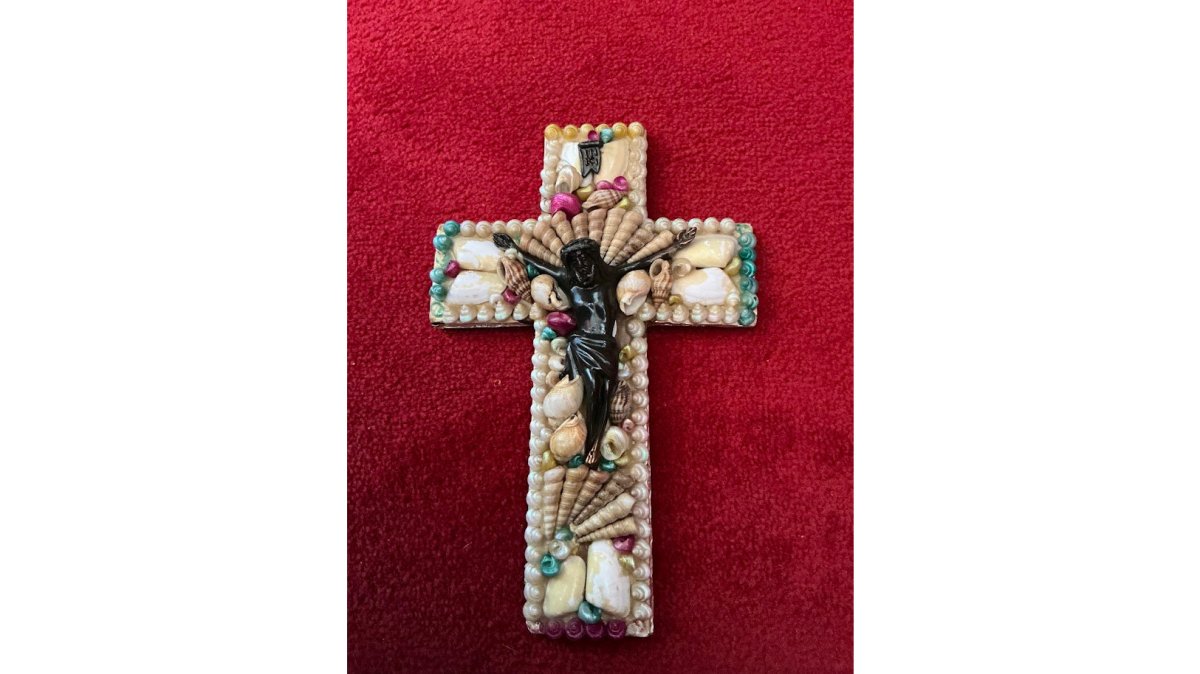
Antique crucifix with shells, mother-of-pearl, and copper corpus →
Remove dust with a soft brush or a dry microfiber cloth. Work from top to bottom and never use water on plaster, paper, or silk. You can carefully polish copper and bronze, but leave the dark patina as intact as possible; it tells the story of the piece.
- Do not use all-purpose cleaner or alcohol on old surfaces
- Avoid submerging anything, including metal
- Always test a new product first on an inconspicuous spot
- Leave a framed print behind glass undisturbed
If you are unsure about a material, less is often more. A dry, soft cloth removes most dust without risk.
6. Recognizing provenance, age, and meaning
Recognizing provenance and age is partly about observation and partly about comparison. Marks, choice of materials, and stylistic features often tell you more than a label.
On the underside of a statue, you may sometimes find a maker's mark or address. Such details help with dating. The finish also reveals a great deal: hand-painted details and natural patina point to an older piece, while a perfectly even finish more likely indicates mass production.
Meaning is just as important. A Lourdes statue or pilgrimage medal refers to a pilgrimage site and a personal journey. A Madonna and Child statue represents protection and motherhood. Understanding its background helps you present the object with greater respect.

Conclusion: give antique devotional objects a second life
The most difficult choice is not which statue you like, but how to give it a place that does justice to its age. Moisture, sunlight, and excessive cleaning products cause more damage than a few decades in the attic.
At Chez Monique's 2e Leven, we carefully select every object and ship it using reused packaging materials that we first inspect for safety. This gives an antique Madonna statue, holy water font, or crucifix a second life without it being damaged in transit. Add your favorite piece to your cart and give it the place it deserves.
Frequently Asked Questions
Where is the best place to put an antique religious statue?
The best location depends on the object and the room. A mantelpiece or sideboard works well for larger statues such as a Madonna and Child (31 cm tall), as they stand securely there and remain clearly visible. A devotional corner in the living room or bedroom provides a quieter setting. Avoid direct sunlight and do not place statues next to heat sources, as this can damage the material.
How do you protect religious statues from moisture and mold?
Keep the humidity in your home between 40% and 60%. Do not place plaster or wooden statues in the bathroom or kitchen, where moisture and steam are released. A display cabinet for antique statues protects against dust and moisture. Check regularly for white residue or a musty smell. If in doubt, you can place a moisture-absorbing sachet nearby, but never let the object itself come into direct contact with moisture.
Can you put an antique religious statue in the bathroom?
That is not recommended. Bathrooms have high humidity, which damages plaster, wood, and metal. A plaster Madonna statue or wooden crucifix may swell, crack, or develop mold. It is better to choose a dry room such as the living room or bedroom, or a covered display cabinet. If you still want to place something in the bathroom, choose a well-sealed glass display case with moisture-absorbing granules.
How do you style devotional objects in a modern interior?
Combine an antique Madonna statue or religious print with calm, neutral tones and natural materials such as wood, linen, or stone. Use one or two pieces as focal points instead of grouping an entire collection together. For example, an antique rosary with a reliquary can be displayed under a glass cloche or on a tray with other vintage objects. This keeps the object treated respectfully while still fitting into a modern interior.
Is a display cabinet suitable for storing antique religious statues?
Yes, a display cabinet for antique statues is an excellent choice. It protects them from dust, touching, and exposure to light, while still allowing you to see the objects. Choose a cabinet with adjustable shelves and enough space so that a 31 cm-tall Madonna and Child statue is not cramped. Place the cabinet out of direct sunlight and, if desired, add a moisture-absorbing sachet for extra protection against damp and mold.