

Vintage home accessories: 5 standout pieces for your home
Table of contents
- What makes vintage home accessories timeless?
- Styling a vintage interior: how to combine old with modern
- 1. Antique Perpetual Desk Calendar (€49.00): copper with character
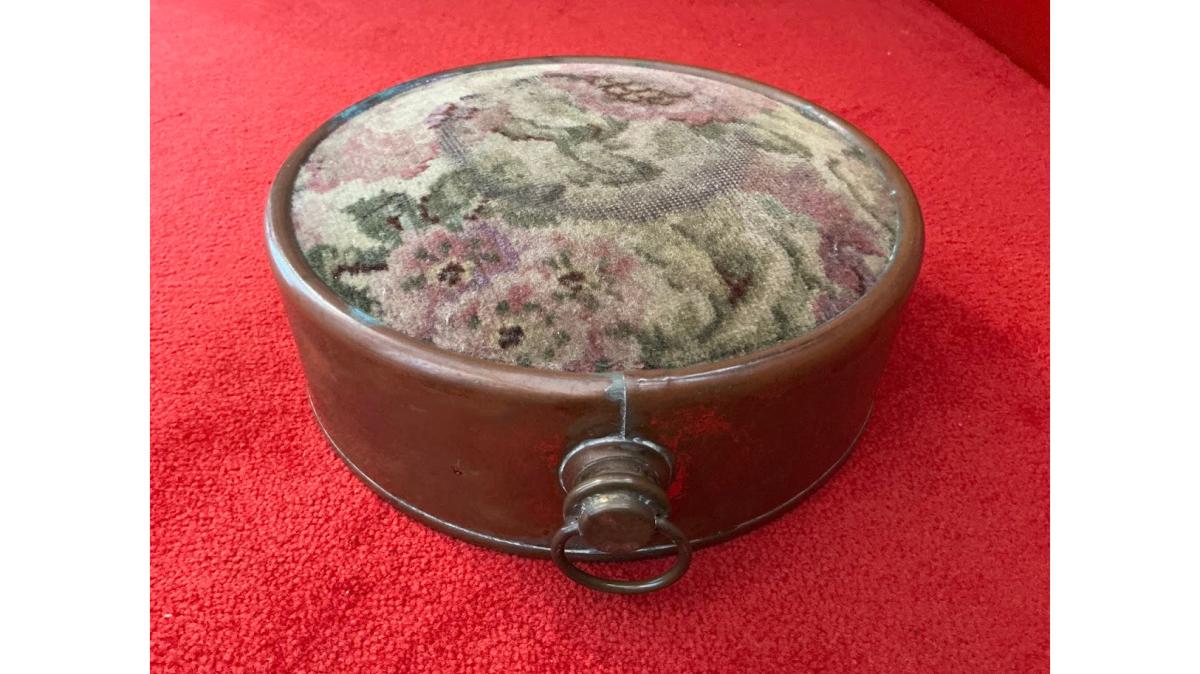
- 2. French antique foot warmer (€72.50): warmth and nostalgia
- 3. Antique Persian saddlebag (€275.00): textile art as wall decoration
- 4. Jager Eisenberg dinnerware (€87.50): Blau Saks porcelain from the GDR
- 5. Antique Indian copper/silver box (€68.00): Djokja craftsmanship
- Antique devotional objects in the home: from collectible to focal point
- Frequently Asked Questions
Last updated: September 17, 2026
What makes vintage home accessories timeless?
Vintage home accessories are timeless because they combine craftsmanship, materials and history in a way mass production can never match. A copper calendar from 1941 or a hand-knotted Persian rug remains beautiful for decades, while trendy items are forgotten after two seasons. Buyers are increasingly choosing pieces with a story instead of disposable items.

That choice is not only aesthetic. It is also a statement about sustainable living. Every secondhand object given a new life means one fewer new product that needs to be manufactured and shipped.
Recognizing styles: from Art Deco to the 1970s
The art of styling a vintage interior begins with recognizing styles. You can recognize Art Deco from the 1920s and 1930s by its geometric patterns, brass details and symmetrical shapes. The 1950s and 1960s brought clean lines and warm wood types. The 1970s are known for earthy tones, copper and distinctive textures.
Once you learn to see these differences, you browse thrift stores and antique markets with completely different eyes. You recognize a period by a detail, making the search for unique finds much more focused.
Styling a vintage interior: how to combine old with modern
The best vintage interiors do not feel like a museum, but like a home inhabited by someone with taste. The rule is simple: mix one or two vintage eye-catchers with calm, modern foundational pieces. This gives each object room to breathe.
An antique copper candlestick next to a sleek coffee table works better than a room full of antiques. The same applies to wall decor: one Persian rug on the wall draws all the attention, while five small rugs compete with one another.

The 70/20/10 ratio as a guideline
A pattern many interior stylists follow is the 70/20/10 division: about 70% of the room is a calm, modern foundation (sofa, floor, walls), 20% consists of vintage furniture or large textile pieces, and 10% is the real eye-catcher, a Persian saddlebag, a copper foot warmer or a striking lamp. Letting go of that ratio quickly results in a room that feels cluttered rather than curated.
In practical terms, that means choosing no more than two vintage objects per room that are larger than a shoebox. Smaller pieces, such as a copper calendar, a small box, or a vase, can be more numerous, as long as they remain within the same material family (for example, copper + brass + dark wood).
Color palette and texture in the living room
Choose a base palette of two or three shades and keep your vintage pieces within it. Copper, brass, and dark wood combine effortlessly with off-white, gray-green, or terracotta.
Texture does the rest. A timeworn wooden box beside a smooth ceramic vase adds depth. Velour fabric against a cool wall adds warmth. This creates a personal interior that doesn’t feel like a showroom, but like home.
Why this works (and when it doesn’t)
The 70/20/10 rule works because the eye seeks calm through repetition and contrast. Too much vintage in one room creates visual noise; too little makes the room feel sterile. The exception is a consciously 'maximalist' interior, where the collection itself is the statement. In that case, the rule is: keep all vintage pieces from the same period (for example, everything from the 1930s-50s) so the whole reads as one collection rather than an accidental pile-up.
1. Antique Perpetual Desk Calendar (€49.00): copper with character
A perpetual calendar made of copper, produced between 1941 and 1962, is exactly the kind of object that combines functionality and decoration. The rotating day and month discs continue to work year after year, so you’re not buying a disposable item but a piece that will last.
2. French antique foot warmer (€72.50): warmth and nostalgia
This French copper foot warmer from the 1930s is one of those pieces that immediately evokes a story. In the past, people filled the vessel with warm water to warm their feet; now it adorns many a living room with its velour floral fabric.
3. Antique Persian saddlebag (€275.00): textile art as wall decoration
Handmade Persian saddlebags from the 1920-1940 period are rare, and the price reflects that. This piece measures 147 cm by 55 cm, making it an impressive wall decoration that gives a bare wall character in one stroke.

4. Jager Eisenberg dinnerware (€87.50): Blau Saks porcelain from the GDR
This 14-piece dinnerware set by Jager Eisenberg in the classic Blau Saks pattern dates directly from the 1930s and 1940s in the GDR. Four coffee cups with saucers, three tea and coffee cups, and a cinnamon jar with a lid: every piece is in immaculate condition.
5. Antique Indian copper/silver box (€68.00): Djokja craftsmanship
This handmade box from the early 20th century comes from the Djokja tradition, where craftspeople combined silver with copper for extra strength. Measuring 8 by 8 by 3.5 cm and weighing 220 grams, it is small but substantial.
Antique devotional objects in the home: from collectible to focal point
Antique devotional objects in the home are more than collectibles. An old box with a mercury mirror, a perfume set with crystal bottles, or a religious figurine gives a room a quiet, nostalgic layer that new items lack.
How can you recognize genuine vintage devotional objects?
This is the part most blogs skip, and precisely where things go wrong. 'Retro-look' reproductions have increased sharply in recent years, especially among copper and silver-colored objects. Five concrete checks you can carry out on the spot:
- Weight and balance. Genuine copper and brass feel heavy for their size. A reproduction of the same size often weighs 30-50% less and feels hollow.
- Wear in the right places. On a genuinely used object, oxidation appears in corners, around hinges, and on areas that have been touched frequently. An artificially aged piece often has an even, 'sprayed-on' dark layer across the entire surface.
- Soldered and cast seams. Handmade 19th-century and early 20th-century pieces often have visible, slightly irregular soldered seams. Industrial reproductions have neat, machine-made seams or no seams at all.
- Marks and stamps. If they are missing, that alone is not proof of authenticity; in Djokja work and many religious objects, marks were often omitted or placed very small on the edge. Use a magnifying glass to inspect the edge and underneath the base.
- Smell and patina in the wood. Truly old wood smells of wax, linseed oil, or old paper. A newly steamed piece smells of glue or paint.
Maintenance without losing value
The biggest mistake with devotional items is polishing too aggressively. Copper and brass develop a patina over the decades that collectors value; polishing them until they are completely shiny can reduce their value. A soft, dry cloth and occasionally a minimal amount of copper cleaner applied with a cotton swab is usually enough.
What is a fair price?
Price indications vary greatly by category at antique markets and from specialized sellers. If you pay considerably more, ask about the origin and previous restorations. If you pay considerably less from a non-specialized seller, the likelihood of a reproduction is greater.
Sustainability as an additional argument
Every devotional item that gets a second life prevents the production and transportation of a new decorative piece. For small objects, the absolute environmental benefit is limited, but the pattern matters: those who consistently buy second-hand decorations build an interior that requires no new raw materials. That is one of the reasons vintage devotional items are also popular with younger buyers.
information about safely handling historical mercury mirrors
Frequently Asked Questions
How can I recognize authentic vintage home accessories?
Pay attention to details such as oxidation, patina, and craftsmanship. With copper, you often see a dark layer that has formed over the years. Ceramic and porcelain sometimes have small imperfections or a maker's mark. Ask about the origin and period. When in doubt, a reliable seller will provide honest information about the age and condition. This helps you avoid disappointment and ensures that you are bringing a unique piece into your home.
How do I combine vintage home accessories with a modern interior?
Choose a few statement pieces and keep the rest understated. An antique Persian saddlebag on the wall immediately adds character, while a sleek sofa and minimalist lighting keep the space modern. Work with a limited color palette: earth tones, copper, and black. By styling a vintage interior with restraint, you create a timeless mix. Let the pieces breathe and do not overcrowd them with other items.
How do I protect religious statues from moisture and mold?
Do not place religious statues in damp spaces such as bathrooms or against a cold exterior wall. Ensure good ventilation and a stable humidity level between 40% and 60%. Clean carefully with a dry, soft cloth. For wooden statues, you can apply a thin layer of wax, but avoid wet cloths. Check regularly for mold, especially after a damp period. This will keep your antique devotional objects beautiful in your home and preserve their value.
What is the sustainability impact of second-hand home accessories?
By buying vintage home accessories, you give objects a second life and prevent them from being thrown away. This saves the raw materials and energy needed to produce new items. Every reused piece contributes to sustainable living. Whether you choose antique tableware or a vintage lamp, you reduce waste and support the circular economy. It is a small step with a lasting effect.
What should I look for when buying antique devotional objects?
Check the condition of the object: are there cracks, missing parts, or signs of woodworm? Ask about its origin and whether any restoration work has been carried out. With religious statues, it is important that they stand firmly and are not fragile. Also look at the finish and materials used, such as wood, plaster, or metal. A good seller provides clear photos and information. This way, you can be sure you are bringing a quality piece into your home.
Creating a vintage interior takes patience and a good eye, and that is exactly where the challenge lies: finding the right pieces that combine quality, character, and history. At Chez Monique's 2e Leven, we carefully select antique and vintage objects, from copper calendars to Persian textiles, and ship them using reused packaging materials so that each object arrives safely and sustainably. Discover the collection and give a special piece a second life in your home.