

Buying a Rosary with a Silver Cross: What to Look For
Table of Contents
- What to look for when buying a rosary with a silver crucifix
- 925 sterling silver rosary: checking hallmarks and authenticity
- Assessing rosary bead count and construction
- Recognizing an antique rosary: origin, age, and condition
- Crucifix quality, connections, and repair options
- Caring for and storing a rosary: preserve its shine and limit wear
- Practical shopping checklist and safe online shopping
- Frequently Asked Questions
Last updated: October 18, 2026
What to look for when buying a rosary with a silver crucifix
When buying a rosary with a silver crucifix, what should you look for? Three things to check before you buy: the silver content and hallmark, the construction of the beads and connections, and the condition of the crucifix itself. Checking these three points helps you avoid the most common disappointments.
At Chez Monique’s Second Life, we get that question often. People see a beautiful piece online, wonder about its authenticity or price, and above all don’t want to get cheated. Understandably. A rosary is a devotional object and often a family heirloom, so you’re not just buying a piece of jewelry.
Below, you’ll find exactly what to look for. From silver marks to bead count, from identifying antiques to buying safely online.

925 sterling silver rosary: checking hallmarks and authenticity
You can identify a 925 sterling silver rosary by its hallmark: a stamp reading "925", sometimes accompanied by the maker’s silver mark. That number means the metal is 92.5 percent pure silver. Without such a stamp, there is no guarantee of its silver content, no matter how shiny the crucifix looks.
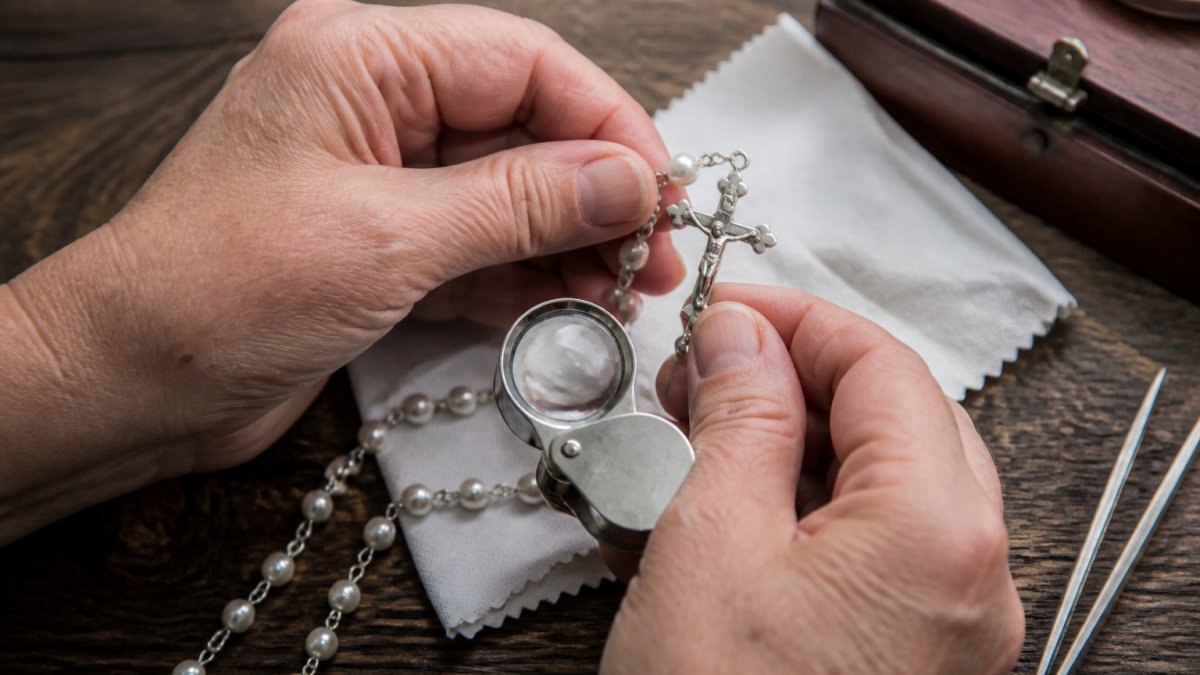
Where exactly should you look? On the back of the crucifix, on the links by the medal, or on a small plate at the end. Use a jeweler’s loupe or magnifying glass, because these hallmarks are often just a few millimeters across. If there are no markings, ask the seller for a clear close-up photo of the metal.
A magnet test is a useful tool when in doubt. Silver is not magnetic. If a magnet sticks, it contains iron or another metal. This is not conclusive proof, but it’s a quick first check.
Solid silver, silver-plated, or silver-colored metal
This distinction is where many buyers go wrong. Three terms that seem alike but mean very different things:
- Solid silver (925 sterling): the entire crucifix is made of silver. Holds its value and can be repaired.
- Silver-plated: a layer of silver over another metal, usually copper or brass. It wears over time and can peel.
- Silver-colored metal: not silver, just silver-colored. Often inexpensive, but not durable.
Is the seller asking a high price for silver-plated metal? Then you’re paying for the look, not the material. You can expect more from a solid silver crucifix, and you can ask the seller to reflect that in the description.
Assessing rosary bead count and construction
A traditional rosary has 59 beads: 53 small Hail Mary beads and 6 larger Our Father beads. The number tells you whether you’re looking at a standard piece or an unusual or incomplete one. Always count them yourself when buying, even from a photo.
Construction is just as important. Check the connections between the beads. Are they strung on a sturdy cord or chain, or attached with loose rings? Loose rings can bend open with daily use. A continuous chain structure is usually stronger.
Feel the beads themselves, too. Wooden beads, like those on many antique French rosaries, should be smooth and intact. Bakelite, used in the 1920s and 1930s, feels harder and heavier. Look for cracks or worn spots, as these indicate heavy use.

Bead size affects comfort when holding it. Small beads feel refined but are harder to hold while praying. Larger beads fit more comfortably in your hand. Think beforehand about how you’ll use the rosary: for devotion, decoration, or collecting.
Recognizing an antique rosary: origin, age, and condition
Recognizing an antique rosary takes more than a sense that it looks “old.” Look at the materials, construction techniques, wear patterns, and details that modern manufacturing cannot replicate. Below are the specific features collectors and appraisers look for, so you can make an informed assessment yourself.
Materials as the first clue
The materials used often reveal the period. For example, wooden beads have been common in Dutch and Belgian rosaries since the nineteenth century, especially ebony, palmwood, and later, cheaper types of wood.
Construction and connections
Antique examples are often hand-strung or knotted together, with visible, slightly irregular knots. Modern rosaries usually use a continuous, machine-attached chain or a taut cord.

Wear as a sign of authenticity
Genuine wear is unevenly distributed. Beads that are repeatedly held between the fingers during prayer have smoother spots. The crucifix wears at the bottom and on the arms where it knocks against clothing or table edges. Look for small dents, scratches, and a natural patina on silver: these are signs of age, not defects.
Provenance and supporting evidence
Many antique rosaries sold in the Netherlands come from France, where they were used in monasteries and households. A seller who makes a definite claim about provenance should support it with photos showing details, wear, and construction. Ask for photos of the back of the crucifix, the connections between the beads, and any hallmarks.
Assessing condition: what exactly to look for
When buying an antique rosary, always check for:
- Missing or replaced beads (look for differences in color and size)
- Breaks in the crucifix or medal
- Rust or corrosion on copper or iron parts
- Loose or stretched connections
- Dried-out or cracked wood
Light wear on an old piece is normal and often a sign of authenticity. Heavy damage, on the other hand, reduces its value and enjoyment. So consider whether you want a piece to wear and use, or mainly as a collector's item.
Crucifix quality, connections, and repair options
The crucifix is the part that takes the most wear. It hangs at the bottom, knocks against tables, and is held during prayer. So check whether it is firmly attached to the rosary and whether the arms are bent or cracked.
Antique French Rosary Wooden Beads & Copper Crucifix →
Small breaks or deformations in solid silver can often be repaired by a goldsmith. This is more difficult with silver-plated metal: the silver layer is damaged by heat and is difficult to restore. This is a practical reason to choose solid silver if you plan to wear the piece for a long time.
Also check the eyelet that connects the crucifix to the chain. If it is thin or worn, it could break. A sturdy, soldered eyelet is more secure. If in doubt, ask whether the eyelet has been recently replaced.
Caring for and storing a rosary: preserve its shine and limit wear
Silver parts become dull from exposure to air, moisture, and skin contact. This is normal and not a sign of poor quality. With proper care, you can keep the shine intact for years and prevent damage to wooden or Bakelite beads. Below are specific products, frequencies, and pitfalls.
Storage: less exposure, less tarnish
Store your rosary in an airtight box or a soft handkerchief, in a dark place. This helps limit damage from sulfur in the air. You can also add a small bag of silver wool or an anti-tarnish strip; these absorb sulfur particles.
Cleaning: what works and what doesn’t
A soft, dry cloth is enough for light tarnish. If the silver has become truly dull, use a mild, water-based silver polish or a silver polishing cloth.
Avoid harsh products such as chlorine, ammonia, or abrasives. They damage the silver coating and can cause irreparable scratches on the surface. Take extra care with silver-plated pieces: the silver layer is thin and wears away faster with frequent polishing. So only polish silver-plated rosaries when tarnish is visible, not as a preventive measure.
Frequency and signs of wear
Polish a silver rosary that you wear regularly about once a month with a soft cloth; daily use may require more frequent polishing. While you’re at it, check the connections: loose jump rings, stretched eyelets, or a wobbly crucifix are signs that the piece needs maintenance.
What to avoid
Do not extensively polish an antique rosary with historical value yourself. The patina that has formed over decades is a sign of authenticity and is valued by collectors. Stick to wiping it with a dry cloth and leave thorough cleaning to a restorer or goldsmith.
Practical shopping checklist and safe online shopping
When you buy online, you don’t see the product until after you’ve paid. That’s why preparation matters. The checklist below will help you make an informed choice in just a few minutes.
Rosary with silver crucifix shopping checklist:
- “925” hallmark or silver mark visible in photos
- Clearly described as solid, silver-plated, or silver-colored
- Number of beads stated (standard: 59)
- Photos of the back of the crucifix and its connections
- Condition and any damage honestly described
- Length and bead size specified
- Verifiable seller with return terms
- Clear shipping method and packaging
When shopping online, the seller is just as important as the product. Check whether the webshop provides contact details, has a return policy, and has reviews from previous buyers.
For Dutch buyers, online purchases are subject to the statutory return rules for distance sales. You generally have a 14-day cooling-off period for an online purchase. Always check the specific seller's terms before ordering.
At Chez Monique's Second Life, we carefully inspect every item and honestly describe its condition and provenance. Our antique French rosaries range from a wooden piece with a copper crucifix (€52.50) to a nun's rosary made of ebony (€65.00).
The average price of a rosary with a silver crucifix varies widely. Solid silver and antique provenance justify a higher price than silver-colored metal.
Want to learn more about identifying religious objects? The Cultural Heritage Agency of the Netherlands offers information on preserving historic objects. For consumer rights when shopping online, see the Authority for Consumers & Markets.
Buying a rosary with a silver crucifix comes down to patient inspection: hallmark, construction, condition, and seller. Check all four, and you can buy with confidence, whether it’s a new or antique piece.
At Chez Monique's 2e Leven, you'll find carefully selected antique devotional items with honest descriptions, safe and sustainable shipping, and an appreciation for the history behind each piece.
Frequently Asked Questions
How can you tell if a rosary is made of real silver?
First, look for a hallmark on the crucifix or connector: genuine silver is often stamped with '925' or 'sterling', sometimes alongside the maker's silver mark. A rosary with a silver crucifix feels relatively heavy for its size and has a bright, warm luster that returns after polishing. Plated metal wears away at the corners, revealing a darker base metal. Not sure? Ask the seller for a clear photo of the hallmark and the weight of the crucifix.
How many beads should a rosary have?
A traditional rosary has 59 beads: 53 small beads for the Hail Marys and 6 larger ones for the Our Fathers, divided into five decades. The number of beads therefore says something about whether the piece is complete. If a bead is missing or the sequence is interrupted, the rosary is incomplete. In antique examples, a different number may indicate a repair or replacement. So always check that the bead sequences are correct and that the beads are all the same size and color.
What should you look for when buying a vintage rosary?
When buying a vintage or antique rosary, pay attention to four things: the condition of the beads (breaks, cracks, missing beads), the strength of the connections and wire, the quality of the crucifix, and whether it has medals or charms. Ask about its origin and age, and request photos of any worn areas. Acceptable condition means light patina and some loss of shine, with no loose parts. For a rosary with a silver crucifix, also check the hallmark and make sure the crucifix has not been resoldered.
How do you care for and store a rosary with silver parts?
Keep the rosary in an airtight box in a dark, dry place, away from moisture and direct sunlight. This helps prevent tarnishing of the silver and drying out of wooden or Bakelite beads. Polish silver parts only with a soft cloth and a mild silver polish, taking care not to scratch the crucifix. Avoid contact with perfume, chlorine, or soap. Check the connections and wire occasionally so that any loose bead or hook can be repaired in time.