

Sustainable packaging for fragile items: 7 steps
Table of Contents
- Why Sustainable Packaging for Fragile Objects is More Than a Trend
- Choosing the Right Cardboard Box: Strength and Sizing
- Plastic-Free Packaging Materials: The Best Alternatives to Bubble Wrap
- Step-by-Step: How to Pack a Fragile Object for Shock Resistance
- Tips for Sending a Fragile Package: Filling, Sealing, and Labeling
- Reusing Packaging Material Without Risk of Damage
- Common Mistakes When Shipping Fragile Goods
- Conclusion: Protection and Sustainability Go Hand in Hand
- Frequently Asked Questions
Last updated: September 5, 2026
Why Sustainable Packaging for Fragile Objects is More Than a Trend
A broken antique statue arriving in shards after a three-day journey is every sender's nightmare. Sustainable packaging for fragile objects isn't a compromise; it's a smart technical choice that benefits both the environment and your purchase.
At Chez Monique's 2e Leven, we know from experience that careful packaging starts with the right materials and a thoughtful approach. This guide covers the seven steps that differentiate a flimsy shipping package from one that is truly professional.
The packaging industry is rapidly evolving towards reusable and biodegradable options. Simultaneously, awareness of packaging waste is growing, partly due to initiatives concerning European packaging regulations and EPR. Below, you'll learn how to use plastic-free packaging materials without compromising on shock resistance.
Choosing the Right Cardboard Box: Strength and Sizing
The box is the foundation of any good shipping package. A double-walled corrugated cardboard box with sufficient wall strength forms the first barrier against impacts and pressure from above. Always choose a box that is strong enough to bear the object's weight, plus withstand the rigors of the sorting process.
Sizing is at least as important as strength. An oversized box forces excessive use of void fill and increases the chance of shifting; an undersized box offers insufficient cushioning. The rule of thumb: ensure at least three to five centimeters of space on each side, fully filled with protective material.
Also pay attention to the tensile strength of the cardboard. Cheap boxes made of thin material lose their shape after a few hours of damp storage, drastically reducing their shock resistance. Invest in boxes designed for shipping, not for storage in a closet.
Plastic-Free Packaging Materials: The Best Alternatives to Bubble Wrap
Bubble wrap is effective, but its production is environmentally burdensome. A well-designed paper packaging can offer similar shock absorption to bubble wrap, provided you choose the right material for the right weight and fragility.
To make an informed choice, you can use the following rules of thumb:
- Kraft paper in honeycomb structure: This material excels at absorbing repeated impacts. Its hexagonal cell structure distributes impact over a large surface. It is excellent for objects weighing 1 to 5 kilograms. A disadvantage is that it is less dimensionally stable than bubble wrap at very sharp corners.
- Recycled cardboard void fill (shreds or crumpled): This material is very effective for filling empty spaces and dampening vibrations, but less suitable as a primary shock layer for heavy objects. It works best in combination with a sturdy outer layer of paper.
- Biodegradable starch-based peanuts: These offer excellent shock absorption, comparable to styrofoam, but weigh less. They are statically charged, meaning they stay in place well. The biggest advantage is that they fully dissolve in water, leaving no environmental residue.
The CO2 Footprint: A Surprising Outcome
Life cycle analyses show that the production of polyethylene (the raw material for bubble wrap) generates roughly twice as much CO2 emissions as the production of recycled kraft paper, per kilogram of material. Because paper is heavier, the total difference per shipped package is smaller but still significant in favor of paper, especially when you compost or recycle it after use.
Volume also counts: once inflated, bubble wrap takes up a lot of space, while paper honeycomb structures are expanded just before use. This reduces transport costs and associated emissions.
The Layered Approach as Best Practice
The combination of materials almost always performs better than a single product. A proven method is the 'three-barrier approach':
- Primary layer (contact layer): First, wrap the object in acid-free tissue paper or soft kraft paper. This prevents scratches and micro-damage from friction. Pay extra attention to protruding parts such as hands, crosses, or halos of statues.
- Secondary layer (shock layer): Next, wrap the packaged object in a layer of the chosen shock-absorbing material. This could be honeycomb paper or a thick layer of recycled cardboard. Ensure all corners and edges are extra protected, as these are where impacts hit hardest.
- Tertiary layer (buffer layer): Fill the space between the packaged object and the box wall with loose void fill material. This prevents the object from hitting the box wall upon impact.
This approach distributes the force of an impact over multiple barriers, significantly reducing the chance of damage.
Pay Attention to Separability
When purchasing hybrid materials (e.g., paper with a thin biodegradable coating), it's essential to check if the materials can be easily separated after use. A coating that doesn't break down in paper recycling makes the entire package unrecyclable. Therefore, choose materials that are either fully compostable or can be clearly separated for recycling.
Step-by-Step: How to Pack a Fragile Object for Shock Resistance
A careful approach is at least as important as the materials themselves. The following step-by-step guide ensures your fragile object survives its journey.
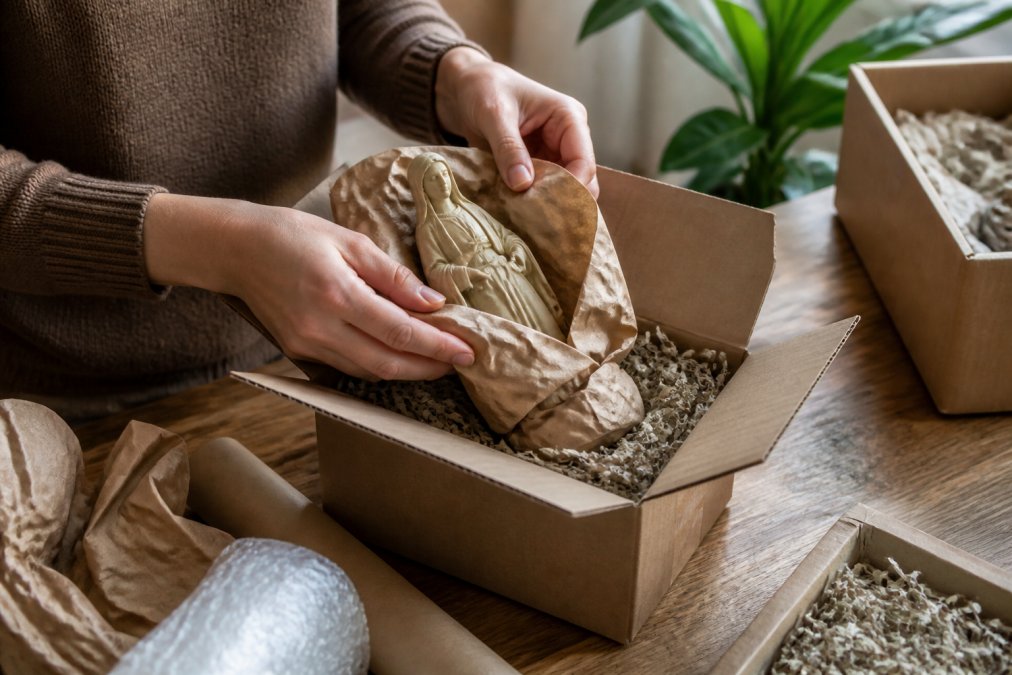
Step 1: Wrap the object in soft paper. Use two layers of acid-free tissue paper or kraft paper. This protects the surface from scratches and prevents direct contact with harder material.
Step 2: Create a primary shock layer. Wrap the packaged object in a layer of the chosen shock-absorbing material. This could be honeycomb paper or a thick layer of recycled cardboard. Ensure all corners and edges are extra protected, as impacts hit hardest there.
Step 3: Place the object in the center of the box. Keep the object suspended in the middle, ensuring equal space on all sides. This is crucial: an object resting against the box wall will directly absorb every impact.
Step 4: Fill all empty space. Work from bottom to top and press the void fill material firmly. The test: gently shake the box. If you hear anything move, there's still space that needs filling.
Step 5: Seal the box crosswise. Use sturdy packaging tape applied both horizontally and vertically over all seams. A box that pops open at the bottom during transit is a guarantee of damage.
Tips for Sending a Fragile Package: Filling, Sealing, and Labeling
Correctly shipping a fragile package requires more than just good packing; sealing and labeling also determine how the package is handled during the sorting process.
Labeling begins with a clearly visible shipping label on the largest flat surface of the box. Never stick the label over a seam or corner, as it can tear during transport. Also, avoid placing labels over existing barcodes or previous shipping labels, as this causes confusion at the sorting center.
Opinions vary on placing a "fragile" sticker. Experience shows that these stickers have little impact on how automated sorting systems handle the package. What does help is choosing a shipping method with careful handling, such as a parcel service with track & trace and an insured option for valuable shipments.
Reusing Packaging Material Without Risk of Damage
Reusing packaging material is one of the most effective ways to reduce the ecological footprint of shipping. With the right guidelines, reuse is perfectly safe.
The golden rule: only reuse material that is in pristine condition. Bubble wrap with deflated bubbles offers only half the cushioning. Cardboard that has been dented once has lost its structural strength. Check every piece of material for damage before reusing it.
What is excellent for reuse: void fill materials like paper shreds, clean pieces of kraft paper, and undamaged cardboard boxes. These materials do not lose their cushioning effect after a single use, provided they have remained dry and clean. Separating materials after use makes recycling easier and extends the lifespan of each component.
At Chez Monique's 2e Leven, we consistently apply this principle. We reuse shipping packaging that arrives in good condition and combine it with new, sustainable void fill material where necessary. The result is a shipment that protects both the fragile object and the environment, without you, the customer, compromising on safety.
Common Mistakes When Shipping Fragile Goods
Even with the best materials, things go wrong when the technique is inadequate. The following mistakes are most commonly observed in damaged shipments.
Mistake 1: Using too little void fill. Many people fill the box to only eighty percent, relying on the remaining air as a buffer. Air is not a shock absorber. Every centimeter of empty space is an invitation for the object to shift and collide with the walls.
Mistake 2: Placing the object directly against the box wall. An object that touches the cardboard box wall directly experiences every external impact. The buffer between the object and the box is your only defense against bumps and falls.
Mistake 3: Using weak or insufficient tape. A box that opens during transit offers zero protection. Always use packaging tape at least five centimeters wide and apply it over all open seams, both at the top and bottom.
Mistake 4: Underestimating the weight of the box. An overly heavy box with too thin cardboard will collapse under its own weight during stacking at the sorting center. Always check the maximum load of your box and choose a heavier quality if in doubt.
Mistake 5: Not accounting for moisture. Cardboard can lose up to half its strength when it gets damp. Protect fragile objects from moisture by first wrapping them in a plastic-free, water-repellent layer, for example, with beeswax cloth or a thin layer of greaseproof paper.
Mistake 6: Not testing the packaging before shipping. This is perhaps the most underestimated mistake. Place the packed box on a table about 80 centimeters high and drop it on each of its six sides and three corners onto a hard surface. After each drop, open the box and check the object for damage. If damage occurs, you'll know exactly which side needs extra cushioning. This test takes ten minutes and can save you a broken object.
Mistake 7: Ignoring legal packaging obligations. Since 2023, Extended Producer Responsibility (EPR) for packaging has been in effect in the Netherlands. This means that as a company placing packaging on the market (including shipping packaging), you are responsible for the collection and recycling of that packaging. You must register for this with Verpact, the organization that implements EPR in the Netherlands. The amount of the waste management contribution you pay depends on the material and weight of the packaging you use. Paper and cardboard have a significantly lower contribution than plastics. This is not only a legal obligation but also a financial incentive to choose more sustainable materials. This registration obligation does not apply to private senders who occasionally ship an object. But for you, as a professional seller or collector who structurally packages, it is essential to be aware of these regulations. Non-compliance can lead to fines. More information can be found via the official information on EPR for packaging.
These mistakes are easily avoided with a careful approach. Sustainable packaging for fragile objects requires attention but rewards you with a purchase that arrives intact.
Conclusion: Protection and Sustainability Go Hand in Hand
Protecting fragile goods during transport doesn't have to come at the expense of the environment. With the right cardboard box, plastic-free void fill, and a careful approach, you provide maximum shock resistance while minimizing packaging waste.
At Chez Monique's 2e Leven, we combine these sustainable shipping principles with careful inspection of every package. Our antique and vintage religious objects, devotional items, and unique collectibles are packaged with the utmost care in reused and recycled materials, ensuring they safely begin their second life in your home. Discover our range and give a special object a new place in your interior.
Protection and sustainability are not opposites, but two sides of the same coin. Choose a shipper who takes both seriously and treats your fragile purchases with the care they deserve. Milieu Centraal on sustainable shipping offers additional guidance for those who wish to further enhance sustainability. Would you like to experience how a carefully packaged antique object enriches your interior? Then check out Chez Monique's 2e Leven collection and add your favorite piece to the shopping cart.
Frequently Asked Questions
What are the best plastic-free alternatives to bubble wrap?
Corrugated cardboard in strips, cellulose flakes, and recycled kraft paper offer excellent shock absorption without plastic. For very fragile items, you can use biodegradable cornstarch flakes. These materials absorb shocks and effectively fill empty spaces. First, wrap the object in acid-free tissue paper to prevent scratches.
Is sustainable packaging as safe as traditional packaging material?
Yes, provided you use the right materials and techniques. A sturdy, double-walled box combined with sufficient filling material made of recycled cardboard or paper offers comparable protection to bubble wrap. The most important thing is that the object cannot move inside the box and that there is at least 3 to 5 centimeters of space on all sides, filled with shock-absorbing material.
How do I know if my packaging will survive shipping?
Perform a simple home test: shake the closed box vigorously. Do you hear movement? Then there is too much empty space, and you should add more filling material. Then drop the box from about 1 meter onto a hard surface. This simulates the roughest handling during transport. A correctly packaged object will survive this test without damage.
This article was written using GrandRanker