

Brocantespecials vs Dekofferzolder: which one will you choose?
Table of contents
- What is brocante and how does it differ from vintage?
- Brocantespecials and dekofferzolder: two approaches compared
- Buying devotional items: what you need to know
- Sustainable interior shopping from specialized retailers
- Vintage interior styling: from purchase to placement
- Which online shop is the best fit for you?
- Conclusion
- Frequently Asked Questions
Last updated: 24 September 2026
What is brocante and how does it differ from vintage?
Brocante is a French term for items with a lived-in appearance and charming character. It refers to second-hand objects that bear signs of use and have authentic patina. These may be furniture, tableware, decorations, or curiosities from various periods.
Vintage, on the other hand, specifically refers to items that are 20-100 years old, usually from the 1920s-2000s. Vintage pieces often have greater value as collectibles and are appreciated for their period style and provenance.
The key difference: condition and authenticity
The most important difference lies not only in age, but in how damage is valued:
Brocante accepts and celebrates damage as part of the story. A lightly weathered statue with signs of use, tableware with small cracks, or a piece of furniture with worn paint - these are precisely the elements that make brocante appealing. The 'lived-in' look is the goal, not an accident.
Vintage, on the other hand, is judged by condition and authenticity. A vintage item from the 1950s should remain as close as possible to its original state. Damage reduces its value unless it is rare or historically significant. An original Eames chair with scratches is still valuable because the design and maker are central, not the patina.
Practical distinguishing criteria
When you buy a second-hand object, you can ask yourself these questions:
1. What determines the value?
- For brocante: the atmosphere, the story, and how well it fits into your interior
- For vintage: the maker, the design, the period, and the original condition
2. How should you treat damage?
- Brocante: small cracks, worn paint, or missing parts are acceptable and add character
- Vintage: damage should be documented and treated carefully, without affecting the original
3. Who determines the price?
- Brocante: mainly supply and demand, plus how well the object fits current interior design trends
- Vintage: collector's value, provenance, and documentation (such as a certificate of authenticity)
Why the difference matters for your purchase
Both styles contribute to sustainable interior shopping. Instead of buying new items, you give existing objects a second life. This is not only more environmentally friendly, but also creates a welcoming home with personality.
But the difference determines which online shop you should choose. If you are looking for brocante, you are seeking atmosphere and a story; a generalist platform such as Brocantespecials or Dekofferzolder is ideal. Browsing around and making discoveries is part of the experience.
If you are looking for vintage items with collector's value, you need a specialized retailer that can guarantee authenticity and document provenance.
Research into sustainable consumer behavior shows that consumers are increasingly choosing second-hand goods.
Brocantespecials and dekofferzolder: two approaches compared
When searching online for antiques and devotional items, you encounter two different approaches. The Brocantespecials vs dekofferzolder comparison is a frequently asked question among collectors and interior enthusiasts. Both online shops offer second-hand items, but their approaches differ significantly.
Range and specialization
Brocantespecials focuses on a wide range of brocante items. They offer everything that falls under brocante: furniture, tableware, home accessories, and decorations. It is a collection where you can browse and make discoveries.
Pricing and value
Prices at Brocantespecials and dekofferzolder vary widely, depending on what you buy.
Buying devotional items: what you need to know
When buying devotional items, there are a few things to consider:
Authenticity: Is it genuinely antique or a later reproduction? Original plaster statues from renowned studios such as Gerard Linssen Venlo often bear a signature. This significantly increases their value.
Sustainable interior shopping from specialized retailers
Sustainable interior shopping goes beyond buying second-hand. It is about making conscious choices that have an impact.
Vintage interior styling: from purchase to placement
Placement and lighting
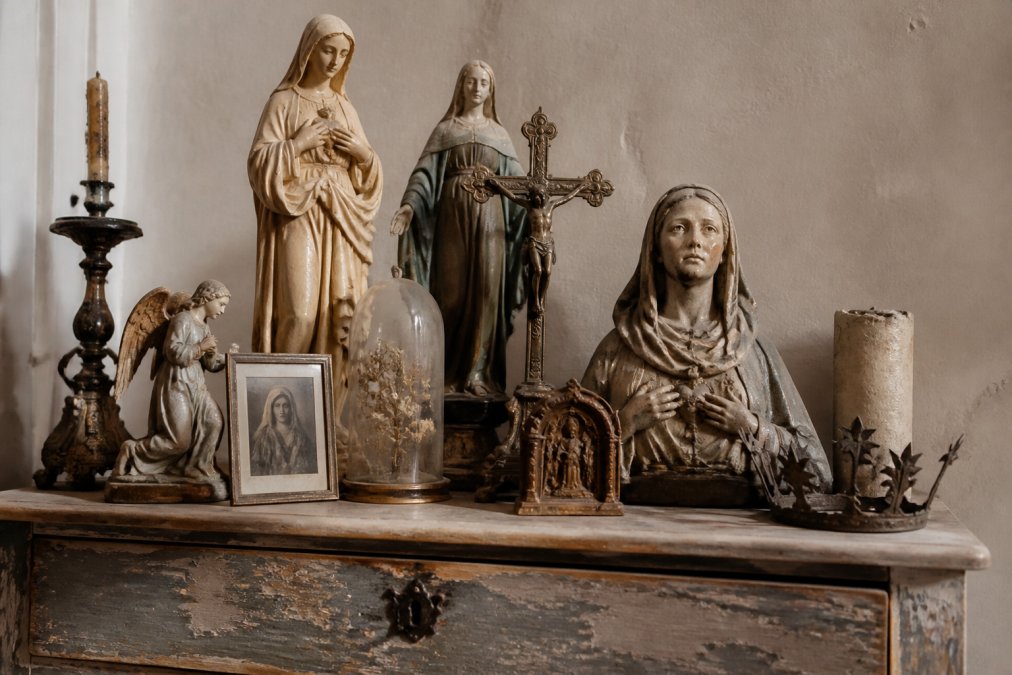
Place with intention: A religious statue or vintage object should not be placed just anywhere. Think about where it will look its best. A prayer corner, a display cabinet, or a prominent spot on a bookshelf. Lighting is crucial. Warm light (2700K-3000K) highlights the patina and authentic appearance. Avoid bright fluorescent lighting, which actually washes away the signs of age.
Maintenance without losing the patina
This is where many collectors go wrong: they want to clean their antique objects, but in doing so they damage the authentic appearance. Here are some practical guidelines:
Dust and surface dirt:
- Use a soft, dry brush (natural bristles, not synthetic) or a microfiber cloth
- Work carefully and in one direction
- For plaster statues (such as religious devotional objects): never use water, as this damages the plaster
- For wooden furniture: a slightly damp cloth is fine, but not wet
Stubborn dirt:
- Never use abrasives, bleach, or harsh cleaning products
- For plaster: a very slightly damp cloth with distilled water, dry immediately
- For wood: a cloth with mild soapy water (1 part soap to 10 parts water), followed by drying
- Make sure water never penetrates cracks or holes
What NOT to do:
- Never varnish, paint, or treat them with modern coatings; this conceals the patina and reduces the value
- Never sand or polish them, as this removes the authentic surface layer
- Never place them in direct sunlight; UV radiation causes fading and damage
- Never place them in damp areas (bathrooms, kitchens); plaster and wood will rot
Restoration: when and how
Sometimes restoration is necessary. But this must be done carefully:
Small cracks in plaster:
- For decorative purposes, you can carefully use plaster filler (the same color as the original)
- This is only necessary if the crack is getting larger or causing a structural problem
- For collectors: leave cracks as they are; they are part of the history
Loose parts:
- Use only plaster adhesive or natural glue (no modern epoxy glue)
- Test first in an inconspicuous area
- Make sure you preserve the original shape
Wooden furniture with damaged paint:
- Never scrape off all the paint, as this removes the patina
- Leave damaged paint in place if it is structurally sound
- Only if it is flaking: add the same color (no new coating)
When a professional is needed:
- Structural damage (broken legs, large cracks)
- Wood rot or insect damage
- Missing original parts that need to be replaced
- Objects with high collector value
Extra caution is important for religious statues and devotional objects. These objects often have spiritual value for their owners, and restoration can compromise that.
Seasonal styling
Christmas decorations can be displayed all year round, but feel especially at home around the holidays. This gives you a reason to refresh your interior regularly and bring objects to the forefront. It is also practical: you rotate your collection, which means not everything is constantly exposed to light and heat, better for long-term preservation.
Climate and storage
Vintage and antique objects are best kept in:
- Temperature: 18-21°C (stable, no major fluctuations)
- Humidity: 45-55% (not too dry, not too humid)
- Light: Indirect, not direct sunlight
- Ventilation: Good, but no drafts
When storing objects (for example, Christmas decorations between seasons), use:
- Acid-free paper or cotton (no plastic)
- Cardboard boxes, not plastic bins
- Add silica gel if you live in a humid climate
- Make sure everything is well padded
Which online shop is the best fit for you?
This depends on three factors: what you are looking for, how you like to shop, and which values are important to you.
| Criterion | Brocantespecials | Dekofferzolder | Chez Monique's 2e Leven |
|---|---|---|---|
| Selection | Broad and mixed | Broad and mixed | Specialized (religious) |
| Price | Variable, low to medium | Variable, low to medium | Medium to high |
| Authenticity | Variable | Variable | Verified and documented |
| Sustainability | Standard | Standard | Reused packaging |
| Specialization | No | No | Yes (devotional items) |
| Collector's value | Low to medium | Low to medium | High |
Choose brocantespecials or dekofferzolder if:
- You are looking for variety and enjoy browsing
- You have a limited budget
- You are not specifically looking for religious objects
Choose Chez Monique's 2e Leven if:
- You are interested in antique religious statues and devotional items
- You value authenticity and documentation
- You value sustainable shipping
- You are willing to pay for quality and specialization
- You look for objects with a story and collector's value
Conclusion
The choice between brocantespecials vs dekofferzolder comparison is essentially a choice between breadth and specialization. Both platforms have their place. But if you are seriously looking for antique religious statues, devotional objects, and unique collectibles, Chez Monique's 2e Leven will get you to what you want faster.
Frequently Asked Questions
What is the difference between brocante and vintage?
Brocante refers to old, used items with a lived-in appearance and characteristic signs of age, such as furniture with a buttered surface and lightly worn edges. Vintage refers to objects from a specific period of design (usually 1920-1980) that are still functional. Brocante places more emphasis on charming imperfections; vintage often retains more of its original condition.
How can you recognize authentic devotional objects from online sellers?
Authentic devotional objects show characteristic signs of age, signs of use, and patina appropriate to their age. Check whether the webshop provides details about the maker, period, and material (for example, 'Gerard Linssen Venlo, 1930s, plaster'). Chez Monique's 2e Leven describes each piece in detail, including its dimensions, condition, and provenance. Be cautious with items without context or visible signs of authenticity.
What are the benefits of sustainable packaging when buying brocante items online?
Sustainable packaging reduces waste and supports the principle of a 'second life' that is central to brocante culture. Reused material is often just as safe as new bubble wrap when applied properly. Chez Monique's 2e Leven carefully packs religious statues with reused materials without compromising protection; the weight and fragility determine the packaging choice, not sustainability.
Can I use vintage religious statues purely as interior decoration without a religious context?
Yes. Saint statues and devotional objects have a strong visual appeal, with warm, authentic character that works beautifully as decoration. Their historical value and artistic finish, such as the details of a Gerard Linssen plaster statue, make them valuable interior pieces regardless of religious use. Many collectors appreciate these objects purely for their aesthetics and atmospheric character.
Discover our complete collection of antique religious statues and give these special objects a second life in your interior. Start exploring our unique selection today.