

Buy antique devotional items in 2026: a guide for collectors
Table of contents
- What are antique devotionalia?
- Types of religious statues and objects
- Recognizing signs of authenticity and forgeries
- Determining the value of religious statues
- Buying a rosary with a silver crucifix: what to look for
- Storage and conservation of antique objects
- Recommended antique devotional objects from our collection
- Legal aspects of relics
- Frequently Asked Questions
Last updated: September 23, 2026
What are antique devotionalia?
Antique devotionalia are religious objects used for personal devotion and spiritual practices, generally dating from the 19th and 20th centuries. These pieces include saint statues, rosaries, crucifixes, holy water bottles and other religious attributes sought today by collectors and enthusiasts of religious art. At Chez Monique's 2e Leven, collectors can find these special pieces.
Devotionalia were an essential part of the Catholic household. Families used these objects daily in their prayers, on home altars and as protective talismans. Today, they form a fascinating collecting category for those drawn to religious art history, spirituality or simply the warmth of vintage interior pieces with character.
The value of these objects lies not only in their age, but also in their authenticity, condition and art-historical significance. A plaster statue of the Virgin Mary from the 1920s may be valuable, while a rare small bronze saint statue or an antique rosary with relics may fetch considerably more. What makes these pieces special is that each one carries its own story, hand-signed details, regional craftsmanship and signs of use that testify to decades of devotion.
Types of religious statues and objects
Religious statues form the core of every devotionalia collection. They vary widely in material, size, period and art-historical value. Understanding the different categories helps collectors focus their search.
Saint statues and their meaning
Saint statues depict specific saints: Mary, Saint Barbara, Saint Anthony, Saint Gerardus Majella and others. Traditionally, each saint statue carried symbolism: Saint Barbara with her mining lamp (patron saint of miners), Saint Gerardus Majella with his attributes (patron saint of pregnant women), and Mary with the Christ Child.
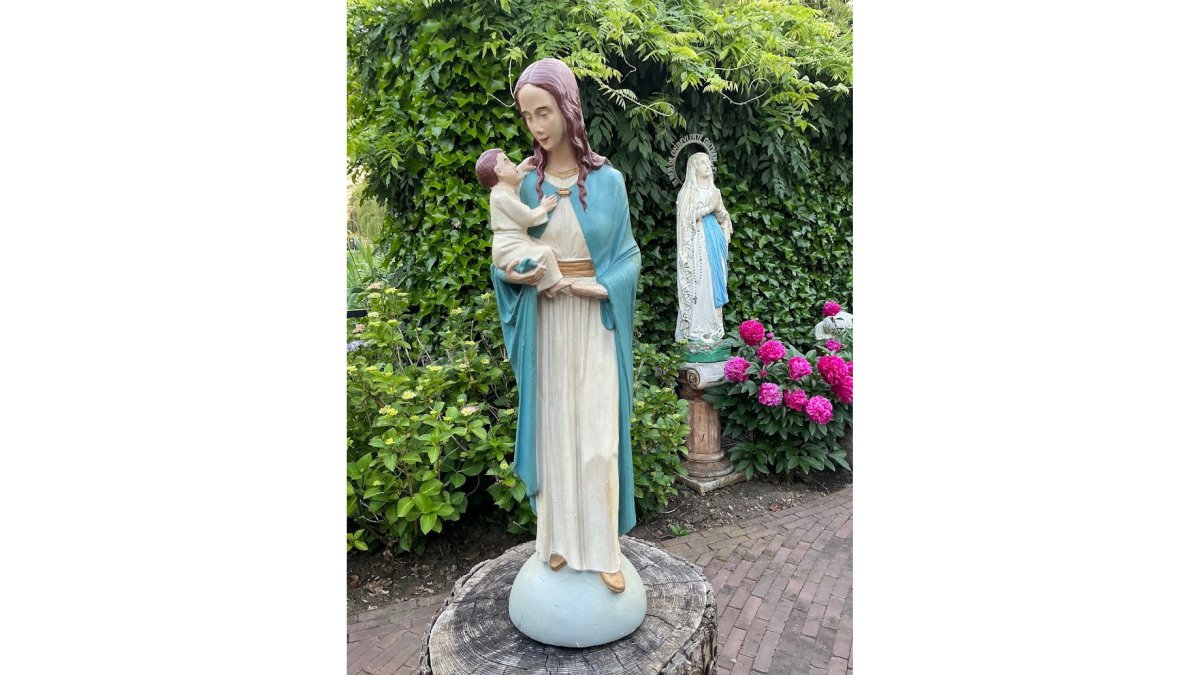
These statues were not merely decorative. They served as visual reminders of spiritual values and offered comfort in difficult times. A 55-centimeter-tall plaster statue of the Virgin Mary from the 1920s-1930s, such as the Antique statue of the Virgin Mary with the infant Jesus - 1920s/1930s from Chez Monique's 2e Leven (€185.00), combines serene beauty with authentic signs of age.

French devotional items, especially those from Marseille, enjoyed international fame. Manufacturers such as 'Aux Santons D'Art' produced plaster statues of saints with distinctive details. The Antique French standing statue of Mary with Child, wall sculpture (€152,50) bears the maker's mark of J Spery from Marseille and can either stand on a surface or hang on the wall, a practical design that was popular at the time.

Rosaries and other objects
Rosaries are more than just prayer aids; they are works of art that bring together craftsmanship and spirituality. Antique rosaries consist of wooden, stone or glass beads with a cross, often featuring fine details and sometimes even relics.
An antique rosary with a reliquary holder from the 1930s-1950s (€185,00), with wooden beads and a cross-shaped reliquary holder that opens with a fine screw, testifies to rarity and significance. The inscription 'T.T Trappist, 3 fountains from Rome' underscores its historical value. Pieces like this appeal to collectors who focus on relics and religious heritage.
Holy water bottles, medals, candlesticks and other religious objects round out collections. A set of six Lourdes Mary holy water bottles (€80,00) combines different periods, the 1950s, 1970s and 1980s, and materials (plaster, plastic, glass), giving collectors an overview of how devotional items evolved.
Recognizing signs of authenticity and forgeries
When buying antique devotional items, authenticity is crucial. Learning to recognize genuine characteristics is important.
Genuine antique plaster statues show natural signs of age: fine hairline cracks in the plaster, gentle discoloration, and wear on corners and edges where the object was held. These traces are difficult to imitate. Hand-signed markings on the back, although sometimes difficult to read, indicate craftsmanship and authenticity.
Material knowledge is essential. Plaster from the 1920s-1940s feels different from modern plaster. It has a warmer, slightly more porous texture. Tin, bronze and copper sculptures show patina that has developed organically and cannot easily be imitated. Genuine wooden rosary beads have a natural sheen and wear that plastic cannot replicate.
Provenance and origin speak volumes. Objects with a clear origin, such as a French statue with a maker's mark and address, carry more weight than anonymous pieces.
Forgeries can be recognized by: overly perfect condition without any wear, modern adhesives or restoration materials, unnatural colors, and a lack of signs of handcraftsmanship. Be cautious with pieces that seem too cheap for their apparent age.
Determining the value of religious statues
The value of antique devotional items depends on several factors. Material, period, size, condition, and art-historical significance determine the market value.
Plaster statues from the 1920s-1940s vary in price depending on size and detail. A small copper-bronze statuette of Saint Anthony (€35,00) is accessible, while a large plaster statue of the Virgin Mary with hand-painted details and glass eyes (€200,00) requires a greater investment. Rare pieces, such as the rare statue of Saint Barbara of Nicomedia (€165,00) from Belgian Limburg, command a premium.
Rosaries with relics and historical inscriptions fall into the higher price category because of their rarity and spiritual value. Collections of holy water bottles are valued differently as lots; the combination of different periods and materials determines the total value.
Condition is decisive. A statue in "pristine" condition, without cracks, missing paint, or damage, is worth considerably more than a piece showing signs of use. However, light signs of age enhance authenticity, while severe damage reduces value.
The art-historical value increases if the statue can be attributed to a renowned maker or factory. A French statue bearing the mark 'Aux Santons D'Art' or a signed piece is worth more than an anonymous plaster statue of the same size and period.
Buying a rosary with a silver crucifix: what to look for
Rosaries with silver crucifixes are among the most sought-after devotional items. Here are the main points to consider when buying.
Check the silver content: Look for hallmarks, small stamps indicating the silver content (800, 925, 950). Dutch silver generally bears the standard mark. The absence of a mark does not automatically mean it is not silver, but it increases the risk of forgery or silver plating.
Antique statue of the Virgin Mary with the infant Jesus →
Assess the beads: Wooden beads should have a natural sheen and show no cracks. Glass beads should be clear and free of air bubbles (unless this is original). Replacement beads reduce the value; collectors prefer original sets.
Inspect the crucifix: The crucifix should be solid, not hollow or damaged. Open it carefully (if it opens) to look for relics. An authentic rosary with relics is rare and valuable. Look for traces of glue or modern repairs.
Length and weight: Traditional rosaries are 57-60 centimetres long (measured double). The weight feels substantial for silver. Lightweight rosaries may be made of sheet metal.
Provenance: Ask about the provenance. Pieces from well-known religious orders (Trappists, for example) have additional significance. A rosary inscribed 'T.T Trappist, 3 fountains from Rome' bears witness to an authentic history.
Storage and conservation of antique objects
Antique devotional objects require careful storage to preserve their value and beauty. Poor conservation can cause irreparable damage.
Place statues in stable, dust-free locations away from direct sunlight. UV radiation fades colours and damages plaster. Relative humidity between 45-55% is ideal; plaster that is too dry becomes brittle, while excessive humidity promotes mould (ICOM-CC). Avoid damp rooms such as bathrooms.
Plaster statues should not be displayed outdoors unless they were specially made for outdoor use (such as the religious wall plaque of St. Gerardus Majella, which is suitable for indoor and outdoor use). Rain and frost permanently damage plaster.
Store rosaries in cotton pouches, not plastic. Plastic causes condensation. Do not hang them continuously, as this weakens the thread. Silver crucifixes can become dull; clean them carefully with a soft cotton cloth.
Never clean plaster statues with water. Carefully dust them with a soft brush or cloth. For stubborn dirt, consult a professional restorer. DIY restoration can reduce their value.
Photos of the piece from multiple angles can help with future sales or insurance purposes.
Recommended antique devotional objects from our collection
At Chez Monique's 2nd Life, we have a carefully curated collection of religious statues and devotional objects. Here are some highlights from our current stock.
Statues of Mary and saints
Statues of Mary are at the heart of our collection. The Antique statue of Mary with the infant Jesus - 1920s/1930s is a large, impressive piece measuring 55 centimetres in height, made of plaster with a serene appearance. The signed marking on the back (although difficult to read) attests to its original craftsmanship. Price: €185.00.
For those looking for a French accent, the Antique French freestanding statue of Mary with Child, wall-mounted statue offers two display options: standing or hanging on the wall.
Crucifixes and religious objects
The Religious standing crucifix with Jesus corpus from the 1920s is a beautiful tin piece measuring 32 centimeters in height. It has distinctive signs of use that tell its story. Price: €39,50.

Holy water bottles and collection pieces
The Lot (6) Lourdes Mary holy water bottles (€80,00) combines six pieces from different periods and materials, from the 1950s, 1970s, and 1980s. This lot gives collectors a complete overview of how holy water bottles evolved.
Legal aspects of relics
Relics, parts of saints, or objects touched by saints have a complex legal status. This is important for collectors who buy devotional objects containing relics.
Frequently Asked Questions
What should I look for when buying antique devotional objects?
Pay attention to material, condition, and authenticity. Check for signatures, manufacturer's marks, and patina indicating genuine age. Examine damage carefully. Ask about origin and provenance. Ship fragile objects carefully in durable, protective materials.
How do I determine the value of religious statues?
Value depends on age, material, condition, and art-historical significance. A plaster statue of Mary from the 1920s-1930s can be valuable, depending on its size and signature. Consult antique dealers or restorers for an appraisal. Document provenance and distinctive features. Compare similar sold pieces to estimate market prices.
What is the difference between antique and vintage religious objects?
Antique generally refers to items made before 1900 or at least 100+ years ago. Vintage items are younger, usually 20-60 years old. Antique devotional objects from the 19th century are rarer and more valuable. Vintage pieces from the 1950s-1980s are more accessible for beginners. Both have value for collectors. Pay attention to the material: plaster, tin, bronze, and wood are common. Original patina and signs of use enhance authenticity.
How do I responsibly care for antique religious objects?
Store them in a dry, stable environment away from direct sunlight. Avoid extreme temperature fluctuations. Do not use harsh cleaning products; gentle dusting with a microfiber cloth is sufficient. For plaster and stone: do not use water. For metals: gently polish with a dry cloth. It is best to entrust damaged pieces to a restorer. Ensure safe packaging during transport using durable protective materials.
Are there specific hallmarks for silver rosaries?
Wooden beads are common. Look for maker's marks or initials. Original reliquaries significantly increase value. Always ask for a certificate or documentation of provenance.