

Antique devotional objects as eye-catching features in your interior
Table of contents
- Antique devotional objects as eye-catching pieces: why they work
- Religious statues in the home: choosing with respect and character
- Styling antique religious statues: scale, balance, and composition
- Protecting religious statues from moisture and mold
- Creating a vintage altar in a modern living room
- Hanging safely, conserving, and pairing with other vintage finds
- Common mistakes with antique devotional objects as a focal point
- Conclusion: Give religious objects a second life
- Frequently Asked Questions
Last updated: October 19, 2026
Antique devotional objects as eye-catching pieces: why they work
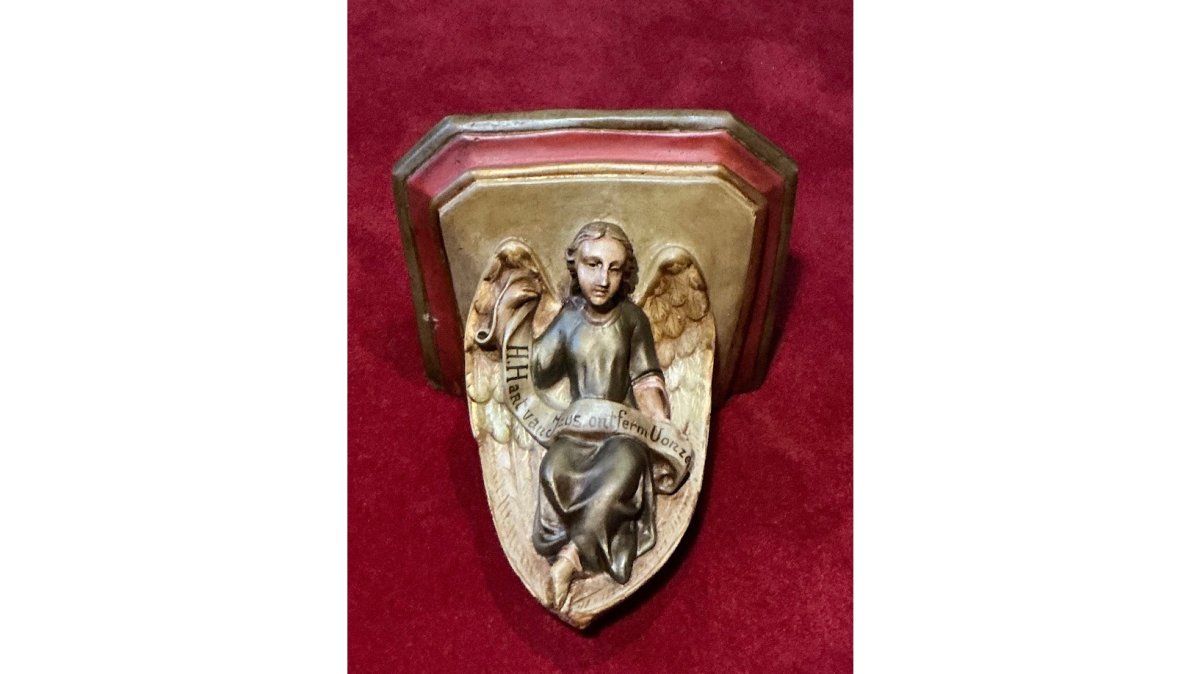
An antique statue of Mary standing 55 cm tall, a shell crucifix from the 1920s, a plaster angel corbel from 1890: these are objects with a story. More and more people are looking for antique devotional objects to give their interiors character. At Chez Monique's 2e Leven, lovers of brocante and rustic styles are especially drawn to the serene look of these religious heirlooms.

Why do they work so well as eye-catching pieces? Three reasons:
- They have patina. Imperfections and soft colors make each object unique.
- They bring a sense of calm. A serene face draws attention without shouting.
- They go with everything. From shabby chic to eclectic interiors.
A devotional object is an object with a religious or spiritual function. Examples include statues of saints, crucifixes, holy water fonts, and prie-dieux.
The art is not to put out many of them. The art is to put out one, well.
Religious statues in the home: choosing with respect and character
Not everyone is religious, and that's fine: many customers choose an antique religious statue purely for its atmosphere and craftsmanship.
Why respect goes beyond solemnity
A devotional object is not an ordinary decorative object, but one made for prayer, processions, or personal devotion.
The art is to honor that meaning without either erasing or exaggerating it. Respect lies not in solemnity, but in attentiveness.
Origin and meaning: what to know before displaying it
Always ask about its origins when purchasing. A statue of Mary from a family chapel carries a different significance than a decorative piece from a living room, and that determines how it should be displayed:
- Family heirloom or devotional object: Give it a quiet, elevated place with space around it. The object carries a story; the display can enhance it.
- Decorative piece: You have more freedom in how you style it, but avoid arrangements that mock its original purpose.
- Object of unclear origin: Treat it as heritage. A careful, respectful display is always appropriate.
Pay attention to what the object itself conveys. A crucifix with a corpus carries more liturgical weight than a simple cross. A reliquary should not stand next to a fruit bowl, and a complete rosary deserves more than a hook.
Practical guidelines for a respectful display
- Do not place a crucifix on the bathroom floor or next to the trash can.
- Place a statue of Mary on a raised surface, not among shoes or wet coats.
- Don't combine devotional objects with ironic or mocking decor.
- Hang a crucifix at eye level or slightly above, not at shoulder height or lower.
- Make a prayer chair or kneeler look functional: don't cover it with plants or magazines.
- Avoid arrangements that resemble a museum display case; a devotional object is not an exhibit.
What most guides miss: context over ceremony
Many guides go too far in one of two directions: treating the object as purely antique or as part of a consecrated display. The reality lies in between. An antique statue of Mary works in a modern interior precisely because of the visible contrast, as long as it isn't disrespectful.
A good rule of thumb: if you could explain the object to someone who understands its meaning without having to apologize, you're on the right track. Specifically:
- Don't place devotional objects in the kitchen next to the stove or dishes.
- Don't use saint statues as bookends or doorstops.
- Don't use a rosary as a keychain or rearview mirror charm.
- Do: choose a separate, quiet spot with side lighting and room around it.
Respect and character go hand in hand
Presenting it respectfully doesn't mean sacrificing character. A shell crucifix from the 1920s looks better against a calm, light wall than amid a jumble of bric-a-brac.

The key is attentiveness: choose deliberately, place deliberately, and give the object room to breathe. Then your devotional object becomes not just a statement piece, but a characterful item you can display with confidence.
Styling antique religious statues: scale, balance, and composition
Scale determines everything: a 55 cm statue next to an 8 cm tealight either disappears or dominates. First measure the height of your furniture, then the object.
But scale is just the beginning. The real question is: how do you turn a standalone object into a statement piece that anchors the room? That takes a plan, not an inspiration board.

Step 1: choose the spot based on the space, not the object
Start with the spot, not the sculpture. Find an area that meets three requirements:
- Side lighting: a north- or east-facing window provides soft, even light. Avoid direct sunlight.
- Clearance: there should be at least one meter of clear passage, otherwise the object becomes an obstacle.
- Background: a plain wall or a calm wall with few patterns. Busy wallpaper or a crowded gallery wall competes with your statement piece.
A console in the hallway, a wall shelf in the living room, or a bedroom alcove often works better than a busy mantel or windowsill.
Step 2: determine the height of the focal point
The height of your object determines the height of your furniture: its center should be about eye level (1.50 to 1.60 meters) or slightly higher.
For a wall shelf, the shelf itself should be about 1.40 to 1.50 meters high, so the object sits at eye level.
Step 3: choose the background
The background is your quiet ally. Three options work well:
- Light, solid-colored wall: brings out a dark wooden crucifix or bronze candlestick to its best advantage.
- Dark wall: gives a plaster statue of Mary or a white shell crucifix a serene, almost museum-like appearance.
- Wood or linen: a wooden wall panel or linen cloth behind the object softens sound and adds warmth.
Avoid mirrors directly behind the object: they duplicate the image and make the composition feel busy.
Step 4: build the vignette in layers
A focal point is never on its own. Build the vignette in three layers:
Antique statue of Mary with the infant Jesus – 1920s/’30s – large plaster statue →
- The focal point: the devotional object, positioned slightly farther back.
- The supporting pieces: two low objects on the left and right, for example, a candlestick and a small book or a dried branch.
- The base: a calm surface, such as a linen runner or a wooden top.
Follow three rules:
- No more than three objects beside the focal point.
- Vary the heights, not the amount of clutter.
- Leave at least a hand's width of empty space between the pieces.
Step 5: position the lighting to the side
Lighting can make or break a vignette. Direct overhead light creates harsh shadows and flat faces; side light from a north-facing window is ideal.
A warm bulb (2700K) works better with wood and plaster than cool white light.
Step 6: check the composition
Set your phone at eye level and take a photo: this helps you spot imbalances you might miss with the naked eye. Look for:
- Is the focal point truly centered, or just off to the side?
- Are the supporting objects balanced, or does everything lean to one side?
- Is there enough empty space, or does it feel crowded?
A good composition feels calm and effortless. If you have to explain why something works, it usually doesn't.
An example of a complete vignette
A 26 cm antique black wooden crucifix on an 85 cm console, against a light wall.
What to avoid
- A focal point between two equally large objects: there’s no hierarchy.
- A busy, patterned background: it competes with the object.
- Direct sunlight: it causes discoloration and drying.
- A spot that's too low: the object disappears from view.
With these six steps, you can create a vignette with the right scale, lighting, and composition - exactly what a focal point needs.
Protecting religious statues from moisture and mold
Plaster and wood are sensitive: moisture causes mold, salt efflorescence, and cracking. So never place an antique statue above a radiator, in a damp cellar, or next to a shower.
Here's how to do it:
- Keep the humidity between 40 and 60 percent.
- Keep the statue at least 30 cm from a poorly insulated wall.
- Clean with a soft, dry brush, never with a wet cloth.
- Let a damp object dry slowly at room temperature first.
For the basics of indoor climate control, we recommend consulting the Cultural Heritage Agency of the Netherlands on preserving heritage.
Creating a vintage altar in a modern living room
A small altar is a small, raised arrangement with a central object and a few accompanying pieces. The contrast is precisely what makes it work so surprisingly well in a modern interior.
Here's how to create one in five steps:
- Choose a sturdy console or wall shelf at eye level.
- Place your focal point in the center, slightly toward the back.
- Add two low objects, one on either side.
- Place a light source to the side, never directly above.
- Leave the rest of the furniture empty.
An antique black wooden crucifix measuring 26 cm works well here: eye-catching, but not too large. Pair it with a copper candlestick and you have a complete vignette.
Hanging safely, conserving, and pairing with other vintage finds
An 1890 angel corbel weighs more than you might think: plaster is hollow yet heavy. Use wall plugs suited to your wall type, and if in doubt, have two people hang a heavy piece.
Checklist for hanging safely:
- Determine the object's weight
- Choose wall plugs suited to stone, concrete, or drywall
- Use two hanging points for wide pieces
- Test the fastening with extra weight
- Check after a month that everything is still secure
Combining it with other vintage finds works best with understated materials: linen, pottery, dried flowers. Avoid too many patterns around a devotional object.
For advice on conserving religious heritage, contact Museum Catharijneconvent, which manages a large collection of religious art.
Common mistakes with antique devotional objects as a focal point
The biggest mistake is overdoing it. Four objects on one shelf compete for attention and all lose.
Other common mistakes:
| Mistake | Consequence | Solution |
|---|---|---|
| Object on the floor | Disrespectful and fragile | Place it on a raised surface |
| Use a damp cloth | Damage to plaster and paint | Dust with a dry brush |
| Direct sunlight | Discoloration and drying out | Side light, never direct |
| Too many objects | No focal point left | Maximum of three additional pieces |
| Not checking the fastening | Object falls down | Test with extra weight |
A fifth mistake is buying an antique piece without checking its condition. Always ask about its condition, age, and any restoration work.
Conclusion: Give religious objects a second life
An antique religious statue deserves a place where it can be seen. Make the most of it with one central focal point, a simple display, and protection from damp.
At Chez Monique's 2e Leven, we carefully select antique and vintage objects, from statues of the Virgin Mary to shell crucifixes. Each piece is carefully packed and shipped with tracking. We reuse packing materials without compromising the safety of your purchase. This helps protect the environment while bringing a unique collectible into your home.
Add your favorite religious objects to your cart and give them a second life in your home.
Frequently Asked Questions
How do you use antique religious objects as a focal point in your home?
Choose one standout piece, such as a large statue of the Virgin Mary or a crucifix, and give it a dedicated spot with room around it. Place it on a console table, wall shelf, or in an alcove where it catches the light. Keep the rest of the display simple: two or three smaller objects in complementary shades are enough. This keeps the focus on the religious objects and prevents the display from feeling cluttered.
Where is the best place to put an antique religious statue?
A spot with indirect daylight and a stable temperature works best. Avoid the bathroom, a windowsill above a radiator, and the area near an open fireplace, as damp and dry heat can damage plaster and wood. A console table in the living room, a wall shelf, or a sheltered alcove are all suitable. Always place heavy statues on a flat, sturdy surface.
How do you protect antique religious objects from damp and mold?
Keep your home’s humidity around 40 to 60 percent and ventilate regularly. Don’t place plaster or wooden statues against a cold exterior wall or directly on a stone floor. Check the backs and hollow spaces for damp spots a few times a year. If a statue is damp, let it dry slowly at room temperature first, not on a radiator, and only then put it back on display.
How do you combine religious objects with a modern interior?
Create contrast rather than matching everything. A plaster statue of the Virgin Mary next to streamlined furniture in natural wood or matte black stands out without clashing. Stick to two or three shades, such as cream, black, and copper, and repeat one color in another object. This makes the religious piece feel like a deliberate choice in your interior rather than a standalone decoration.