

Antique vs Modern Living Room Design: 2026 Guide
Table of Contents
- Antiques vs Modern Design for the Living Room: The Comparison at a Glance
- Finding the Balance Between Old and New
- Eclectic Interior Tips: Mixing Styles Without Creating Clutter
- Combining Vintage Furniture with Modern Pieces: Contrast as a Design Tool
- Styling Antique Religious Statues as a Statement Piece
- Care, Restoration, and Budget-Friendly Sourcing
- Conclusion: Choose Character, Not a Style Prescription
- Frequently Asked Questions
Last updated: October 1, 2026
Antiques vs Modern Design for the Living Room: The Comparison at a Glance
The question of antiques vs modern design for the living room is not about which style wins, but how you make them work together. At Chez Monique's 2e Leven, we see every day that a single vintage piece adds more atmosphere than an entirely new interior. An antique vase or copper calendar immediately gives a streamlined interior character and history.
Below, we compare both directions fairly, with the pros and cons of each style.
| Aspect | Antiques | Modern design |
|---|---|---|
| Appearance | Character, patina, history | Calm, lines, simplicity |
| Uniqueness | Each piece is unique | Often produced in series |
| Maintenance | Periodic, careful | Minimal |
| Price | €40 to €215 per piece | Varies greatly |
| Sustainability | Reuse, second life | Newly produced |
| Best for | Atmosphere and collectors | Small, streamlined spaces |
Where Antiques Win in the Living Room
Antiques win on character and uniqueness. An antique enamel wall plate from the 1940s, with its bright colors and warm sheen, simply exists only once. That is exactly what gives a room a personal touch.

Antiques also fit perfectly with sustainable living. You give an existing object a second life instead of having something new produced, which aligns with the values of Milieu Centraal on reuse and circularity.
The downside: antiques require attention. A copper piece develops patina, and that is not a flaw but a characteristic.
Where Modern Design Wins
Modern design wins on calm and ease of use. Clean lines and a limited color palette create visual calm, especially in smaller living rooms where too many objects can feel cluttered.
Maintenance is also minimal. A modern sofa or table can withstand daily use without special care, while antiques often require a fixed place and a soft cloth.
Where modern design falls short, however: it lacks a story. A room full of new furniture looks neat, but is rarely memorable.
Finding the Balance Between Old and New
The key is the 80/20 rule: keep about eighty percent of your interior calm and modern, and let twenty percent do the work as a focal point. One antique statement piece draws attention; five compete with one another.
Start with a neutral foundation. Think of a sleek sofa, a plain floor, and walls in warm tones. Then add one antique object you truly love, such as a hand-painted vase with a gold rim from the 19th century. That combination of classic and minimalist elements creates just enough contrast.

Eclectic Interior Tips: Mixing Styles Without Creating Clutter
An eclectic interior only works when there is a common thread. Choose one recurring element, such as brass or copper, and repeat it in three or four objects. This ties different styles together.
Next, pay attention to materials and texture. Combine smooth surfaces with rougher materials such as wood, glass, or enamel. Repeat one or two colors from your color palette in accessories so the whole look feels cohesive.
What most people get wrong: they pile up vintage finds without selecting carefully. An eclectic interior is not a collection; it is a composition.
Combining Vintage Furniture with Modern Pieces: Contrast as a Design Tool
Combining vintage furniture with modern pieces is all about contrast. An antique wooden cabinet next to a sleek modern sofa works because the shapes and materials differ, not despite that difference.
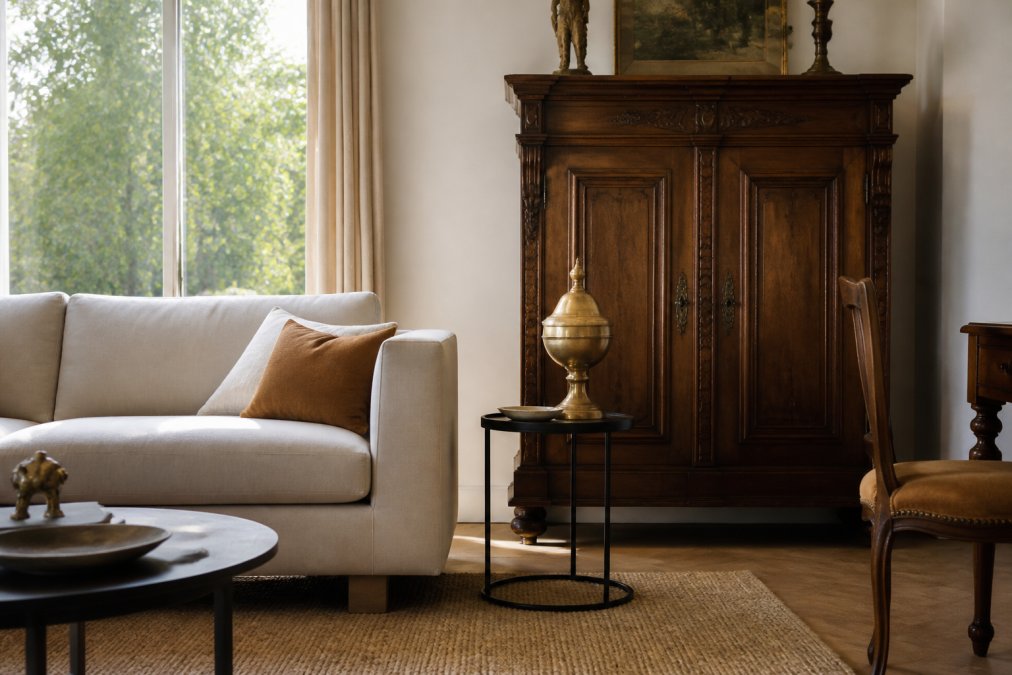
Pay attention to proportions. A large antique piece next to small modern furniture looks unbalanced. Keep the volume roughly equal, and use color to create a bridge between old and new.
A vintage set of brass urns with lids from the 1970s, each 30 cm high, works well here: the size is modest enough for a side table, but the copper immediately draws attention.
Vintage Brass/Copper Temple Urns →
Styling Antique Religious Statues as a Statement Piece
Styling antique religious statues calls for calm surroundings. Never place a statue among other objects; instead, give it a space of its own with room around it.
Use lighting to let the piece speak for itself.
Care, Restoration, and Budget-Friendly Sourcing
Most articles about antiques vs. modern design stop at atmosphere and styling. What they leave out is the real work: how to keep an antique piece looking beautiful in a modern home, and how to find affordable pieces without searching endlessly. This is the practical guide you will not find elsewhere.
Care by Material Type
Antiques are not made from just one material, and each material requires its own approach. The biggest mistakes happen when one cleaning product is used on everything.
- Copper and brass: leave the patina in place wherever possible. Clean with a soft cloth and mild soapy water; never use abrasive cleaner or steel wool, as this removes the protective layer and authentic sheen. For stubborn dirt in relief, a soft toothbrush is sufficient.
- Enamel: enamel is glass-like and breaks when knocked. Clean it with lukewarm water and a non-abrasive product. Avoid sudden temperature changes, as they can cause the enamel to crack.
- Wood: keep wood out of direct sunlight, as UV light discolors and dries out the surface. A damp cloth is enough for dust; do not use all-purpose cleaner on untreated wood.
- Textiles and paper: antique prints and devotional items on paper are sensitive to moisture and light. Store them behind glass with an acid-free backing, and never hang them above a radiator.
Restoration: when to do it, when not to
The basic rule is simple: restoration must not erase history. A copper piece with an even patina is worth more than one polished until it looks new. The same applies to enamel: a small chip is often acceptable, but a crude repair is not.
What you can do yourself:
- Remove dust with a soft brush or microfiber cloth, always working from top to bottom.
- Remove grease with a mild cleaner, then pat dry immediately.
- Do not glue loose parts yourself with superglue; it leaves stains and is difficult to reverse.
Budget-friendly sourcing: focused searching wins
The biggest cost when mixing antiques and modern pieces isn’t the item itself, but the wrong purchases. Those who search broadly buy three mediocre items; those who search selectively buy one good piece that lasts for years.
A working approach:
- Choose one category and get to know it well. Copper desk accessories, enamel wall plaques, or devotional objects: each has its own characteristics that help you recognize quality.
- Set a price ceiling per piece and stick to it. This prevents you from following impulses instead of building a composition.
- Look for function as well as form. An antique perpetual desk calendar from 1941 to 1962 costs around €49 and remains useful year after year: functionality and decoration in one.
- Check for completeness. Missing parts, cracks, or non-original repairs reduce value more than superficial wear.
A realistic maintenance routine
You don’t have to be a collector to keep antiques in good condition. A short routine is enough:
- Weekly: dust with a soft cloth or brush.
- Seasonally: check for moisture, loose parts, and discoloration; turn pieces exposed to direct light by a quarter turn.
- Annually: assess whether a piece is still in the right place in terms of light and heat, and move it if necessary.
Conclusion: Choose Character, Not a Style Prescription
The best living room doesn’t follow a style rule, but a feeling. Antique versus modern design isn’t a contest you have to settle: it’s a balance you determine yourself, piece by piece.
Frequently Asked Questions
How do you combine antique furniture with a modern interior?
Choose one or two antique pieces as focal points and keep the rest of the living room calm. An antique cabinet or a vintage brass urn next to a sleek modern sofa works well because the contrast draws attention. Pay attention to your color palette: use no more than three shades and repeat one color from the antique piece in a modern accessory, such as a cushion or vase. This creates cohesion without looking cluttered.
How do you prevent a mix of old and new from looking cluttered?
Limit the number of antique pieces per room to three or four and give each piece space. Do not put everything together; distribute the objects throughout the living room. Work with a fixed color palette and repeat materials, such as copper or brass, in several places. A calm modern design foundation with a few carefully selected vintage finds provides both visual tranquility and character.
Which antique objects work best in a modern design?
Small, sculptural pieces often work best: an antique perpetual copper desk calendar, a vintage brass urn, or an antique enamel wall plate. They draw attention without filling the room. Larger antique furniture can also work, provided you use it as a single statement piece and keep the rest of the decor minimal. Choose objects with a clear shape or texture that contrasts with sleek modern lines.
How do you care for antique pieces in a modern living room?
Keep antique objects out of direct sunlight to prevent discoloration and avoid damp areas. You can carefully clean copper and brass with a dry, soft cloth; do not use harsh products that could damage the patina. Clean enamel with lukewarm water and a soft cloth. Do not place fragile pieces where they could be knocked over, such as on the edge of a busy table.
What are the benefits of an eclectic interior style?
An eclectic interior style gives you the freedom to combine personal pieces without adhering to a single period. You can place a 19th-century vase next to a modern lamp and still create a cohesive look, as long as the colors and materials are echoed. The result is a characterful living room that does not quickly look dated. In addition, vintage finds and heirlooms can help you create a unique atmosphere that you will not find in a standard store.